The Miracle of King Jehoshaphat – How Did He Win a War Without Fighting? | Bible Stories
What if I told you that the greatest military victory in ancient history was one without a single sword being drawn? Picture this. A king receives a death sentence. Three armies converging on his small nation like a tidal wave of destruction. The odds impossible. The outcome certain annihilation. But then something happens that shatters every law of warfare. A mysterious prophet emerges from the crowd with a message so bold, so absurd that it could only come from heaven itself. The battle is not yours. Stand still and watch. What follows defies human logic. Singers replace soldiers at the front lines. Worship becomes a weapon. And the enemy destroys itself. No military strategy, no bloodshed, just an unexplainable supernatural intervention that left neighboring kingdoms trembling in fear. This is the story of King Jehoshaphat, a man who discovered that sometimes the path to victory requires laying down your sword and lifting your voice. Prepare to witness how one moment of radical faith unleashed a divine ambush that changed the course of history and proved that God fights battles in ways humanity could never imagine. The kingdom of Judah was about to face its darkest hour. Jehoshaphat had been ruling as king, trying his best to lead God's people in the right direction. He had spent years teaching them about the Lord, sending priests and Levites throughout the land to help people understand God's ways. Things seemed to be going well. The kingdom was at peace, and Jehoshaphat thought his efforts to follow God were paying off. Then one ordinary day, everything changed. Messengers came running into the royal palace with terrible news. As we read in 2 Chronicles 21, after this the Moabites and Ammonites with some of the Munites came to wage war against Jehoshaphat. This wasn't just a small group of raiders looking to steal some livestock. This was a full-scale invasion force made up of three different nations who had joined together with one goal, to destroy Judah completely. The Moabites lived east of the Dead Sea. They were descendants of Lot and had a long complicated history with Israel. Sometimes there was peace between them. Sometimes there was conflict. The Ammonites were their neighbors, also descendants of Lot, and they too had fought against God's people many times before. The Munites were a lesserknown group. But their presence made the army even larger and more dangerous. What made this situation so terrifying was that these nations had put aside their own differences to unite against Judah. When enemies who normally compete with each other decide to work together, you know something serious is happening. They had crossed the Dead Sea and were marching toward Jerusalem. The army was massive and it was getting closer every hour. The messengers continued their report with more disturbing details. In verse two, someone came and told Jehoshaphat, "A vast army is coming against you from Edom, from the other side of the Dead Sea. It is already in Hazison Tamar, that is Enghedi." Hazison Tamar was another name for Enghedi, a place known for its beautiful oasis and springs. But more importantly for Jehoshaphat, Engetedi was only about 30 mi from Jerusalem. The enemy wasn't some distant threat that might arrive in weeks. They were already dangerously close. When Jehoshaphat heard this news, he could have responded in several different ways. He could have immediately called his military commanders and started planning battle strategies. He could have sent urgent messages to neighboring kingdoms begging for help. He could have ordered his army to march out and meet the enemy before they got any closer. But Jehoshaphat did none of these things first. The Bible tells us in verse three that Jehoshaphat resolved to inquire of the Lord and he proclaimed a fast for all Judah. Notice that word resolved. It means he made a firm decision. This wasn't a panic reaction or a last resort after trying everything else. Jehoshaphat deliberately chose to seek God first. Before military meetings, before war councils, before anything else, he decided that prayer was the most important response. But Jehoshaphat was also honest about his feelings. The verse says he was alarmed. He didn't pretend to be brave when he was actually scared. He didn't put on a false face of confidence to impress his people. The Hebrew word used here means he was afraid, troubled, and deeply concerned. And why wouldn't he be? A massive army was coming to destroy everything he loved. His people, his family, his kingdom, all of it was in danger. Here's what made Jehoshaphat different from many other kings. He knew what to do with his fear. Instead of letting fear drive him to make rash decisions or freeze him into doing nothing, he channeled that fear into seeking God. His alarm pushed him toward prayer, not away from it. He understood something crucial. Being afraid doesn't make you weak or unfaithful. What matters is where you take that fear. Jehoshaphat also understood that this wasn't just his problem to solve. This threat affected every single person in Judah. The enemy army wouldn't just attack the palace or the military. When invading armies conquered cities in those days, they killed men, took women and children as slaves, burned homes, and destroyed everything. Everyone in the kingdom was in danger. So, everyone needed to be part of seeking God's help. The decision to proclaim a fast throughout all Judah was significant. Fasting meant stopping normal life and focusing completely on God. People would skip meals, leave their work, and spend time praying instead. It was a way of saying to God, "Nothing matters more right now than hearing from you. We're setting aside everything else to seek your face." Jehoshaphat wasn't asking people to fast because he thought it would magically fix the problem. He was calling them to fast because the situation was so serious that only God could save them. The proclamation went out across the entire kingdom. In verse three, we see that Jehoshaphat proclaimed a fast for all Judah. This wasn't just a suggestion or an invitation. It was an official royal decree. Messengers rode to every town and village spreading the word that the king had called everyone to fast and pray. From the biggest cities to the smallest farming communities, people heard the same message. Stop what you're doing and seek the Lord. Imagine being a farmer in a remote village and hearing this news. You're in the middle of harvest season, one of the busiest times of the year. Your crops need to be gathered before the weather turns. Your family depends on this harvest to survive the winter. But the king's messenger arrives and tells you to leave your fields and come to Jerusalem to pray. Would you go? The people of Judah did. Or imagine being a merchant in one of the market towns. You have business deals to complete, goods to sell, money to earn. Your shop needs your attention. But the message comes, the kingdom is in danger, and the king is calling everyone to prayer. Do you close your shop and make the journey the people of Judah did? This fast wasn't just for the religious leaders or the people who lived in Jerusalem. It was for everyone, rich and poor, young and old, men and women, farmers and craftsmen, priests and ordinary citizens. All of them were called to participate. Jehoshaphat understood that when a nation faces destruction, the entire nation needs to cry out to God together. The response was remarkable. Verse four tells us, "The people of Judah came together to seek help from the Lord. Indeed, they came from every town in Judah to seek him. This wasn't a small gathering of concerned citizens. This was a nationwide movement. People dropped what they were doing and traveled to Jerusalem. They left their homes, their businesses, their daily routines. They came because they understood the seriousness of what they were facing. Think about what this meant practically. In those days, there were no cars or trains. People had to walk, sometimes for days, to reach Jerusalem. They had to bring food for the journey, arrange for someone to watch their homes, and deal with all the complications of sudden travel. Yet, they came anyway. The roads leading to Jerusalem must have been crowded with families making their way to the temple. All of them with the same purpose, to seek God's help. This gathering showed something beautiful about the people of Judah at this moment in their history. They believed that prayer mattered. They believed that seeking God was worth the inconvenience, worth the cost, worth the disruption to their normal lives. They didn't stay home thinking the king and the priests can pray for us. They understood that this was a time when everyone needed to participate. The people gathered at the temple, the holiest place in their nation. This was where God's presence dwelled, where sacrifices were offered, where prayers were heard. If there was anywhere to meet with God in their time of desperate need, this was it. Verse 5 gives us a specific detail. Then Jehoshaphat stood up in the assembly of Judah and Jerusalem at the temple of the Lord in the front of the new courtyard. The king himself was there, not hiding in his palace or making plans in a war room, but standing with his people in God's house. The temple complex had several courtyards where people could gather. The new courtyard mentioned here was probably a recently constructed or renovated area that could hold large crowds. Jehoshaphat positioned himself where everyone could see and hear him. This wasn't going to be a private prayer in a quiet room. This was going to be a public cry for help with the whole nation as witnesses. Look at who was there. The verse mentions the assembly of Judah and Jerusalem. But verse 13 adds even more detail about the crowd. All the men of Judah with their wives and children and little ones stood there before the Lord. This wasn't just an assembly of adult men, which was often how official gatherings worked in that culture. Entire families had come. Mothers held their babies. Children stood beside their parents. Elderly grandparents were there. Everyone had come because everyone was affected by the crisis. Picture the scene. The temple courtyard packed with people as far as you could see. Babies crying, children fidgeting, parents trying to keep their families together in the crowd. Everyone's face marked with worry and fear. conversations in hush tones about the approaching army and then silence falling as King Jehoshaphat stepped forward to speak. The fact that families brought even their smallest children tells us something important. They wanted their kids to see this moment. They wanted them to witness what it looks like when God's people face impossible situations. They wanted them to remember that when trouble comes, you go to God. These children would grow up with the memory of standing in the temple courtyard surrounded by the entire nation watching their king pray. The temple itself stood as a reminder of God's promises. King Solomon had built it generations earlier as a house for God's name. It represented God's commitment to dwell among his people. When Solomon dedicated the temple, he had prayed specifically about moments like this. He had asked God to hear prayers offered in that place when the nation faced enemies. Now Jehoshaphat and his people were coming to collect on that promise. Jehoshaphat began to pray and his words were captured in scripture for us to read. This wasn't a short simple prayer. It was a carefully thoughtout conversation with God that revealed both the king's theology and his trust. He started in verse 6 by saying,"Lord, the God of our ancestors, are you not the God who is in heaven? You rule over all the kingdoms of the nations. Power and might are in your hand, and no one can withstand you." Notice how Jehoshaphat started. He didn't immediately jump to his request. He didn't begin by describing the problem or begging for help. He started by declaring who God is. He reminded himself and everyone listening of God's identity and character. God is in heaven above all earthly powers. God rules over every kingdom, not just Judah. All power and might belong to him, and no one can successfully oppose him. This wasn't information God needed to hear. God already knew who he was. But Jehoshaphat needed to say it out loud. The people needed to hear it. When you're facing a terrifying situation, you need to remind yourself of the truth about God before you get to your problem. The enemy army seemed overwhelmingly powerful. But Jehoshaphat was declaring that God was infinitely more powerful. Then Jehoshaphat moved to God's historical relationship with his people. In verse 7, he prayed, "Our God, did you not drive out the inhabitants of this land before your people Israel and give it forever to the descendants of Abraham, your friend?" This was a reference to the conquest of Canaan hundreds of years earlier. When Israel first entered the promised land, God had driven out the nations living there and given the land to his people. The word forever was important. God hadn't given them the land temporarily or with conditions that meant they might lose it to invaders. He had given it as a permanent inheritance to Abraham's descendants. By bringing this up, Jehoshaphat was essentially saying, "God, you gave us this land. It belongs to us because you gave it to us." Jehoshaphat also called Abraham your friend. This was a special title. Abraham was the father of the nation, the man with whom God had made his covenant. The relationship between God and Israel wasn't just about law or duty. It was personal. It was friendship. Jehoshaphat was appealing to that friendship, that special relationship God had with his people through Abraham. In verse 8, the prayer continued, "They have lived in it and have built in it a sanctuary for your name, saying, "Here Jehoshaphat reminded God that his people had settled in the land and done exactly what they were supposed to do. They hadn't just occupied the land for their own benefit. They had built a temple for God's name to dwell." Then Jehoshaphat quoted from Solomon's dedication prayer. In verse 9, he said, "If calamity comes upon us, whether the sword of judgment or plague or famine, we will stand in your presence before this temple that bears your name and will cry out to you in our distress, and you will hear us and save us." This was brilliant. Jehoshaphat was reminding God of what Solomon had prayed and what God had promised in response. Jehoshaphat then brought up a specific piece of history that was directly relevant to their current crisis. In verse 10, he prayed, "But now here are men from Ammon, Moab, and Mount S whose territory you would not allow Israel to invade when they came from Egypt. So they turned away from them and did not destroy them." This was a reference to events that happened during Israel's wilderness journey approximately 600 years earlier. When Moses was leading Israel toward the promised land, they had to pass near the territories of Edom, Moab, and Ammon. These nations were related to Israel through family connections. Edom descended from Esau, Jacob's brother. Moab and Ammon descended from Lot, Abraham's nephew. Because of these family ties, God specifically commanded Israel not to attack these nations or take their land. God told Moses that the land of Edom belonged to the descendants of Esau and Israel shouldn't disturb them. The same was true for Moab and Ammon. Even though Israel was powerful enough to conquer them, even though it would have been militarily advantageous, God said no. So, Israel went around their territories instead of through them, respecting God's command. Even though it made their journey longer and harder, Israel had shown mercy to these nations because God commanded it. They could have destroyed them, but chose not to. They honored the family relationship and obeyed God's instructions. Now, Jehoshaphat was pointing out the bitter irony of the current situation. Those same nations that Israel had spared were now coming to destroy Israel. The mercy Israel had shown them was being repaid with violence and invasion. Verse 11 made the situation even clearer. See how they are repaying us by coming to drive us out of the possession you gave us as an inheritance. The contrast was stark. God had given this land to Israel. It was their inheritance, their home, their God-given possession. And now the very nations that Israel had shown mercy to were trying to take it away from them. The word repaying suggested a debt being settled in the wrong direction. Israel had given them the gift of mercy and safe passage. The proper repayment would have been friendship or at least peaceful coexistence. Instead, these nations were repaying good with evil, mercy with aggression, kindness with an invasion intended to wipe out God's people entirely. Jehoshaphat wasn't just listing historical facts. He was building a case. He was showing God that this invasion wasn't just a political conflict or a land dispute. It was an attack on God's own promises and God's own people. Now, Jehoshaphat reached the heart of his prayer. And what he said next was remarkable for its honesty. Verse 12 records these words, "Our God, will you not judge them? For we have no power to face this vast army that is attacking us. The first part was a question almost a plea. Jehoshaphat asked God to judge the situation. Since these nations were attacking God's people unjustly, Jehoshaphat was appealing to God as the ultimate judge who sees all and makes things right. But then came the confession that made this prayer so powerful. We have no power to face this vast army. Jehoshaphat didn't try to sound brave or confident. He didn't make grand claims about Judah's military capabilities. He didn't suggest they had a clever strategy that just needed God's blessing. He told the absolute truth. They were powerless. They had no ability to win this fight on their own. This was a king speaking. Kings were supposed to be strong leaders who inspired confidence. They were supposed to rally troops and project strength. But Jehoshaphat did the opposite. He stood before his entire nation and admitted complete helplessness. He acknowledged that no matter what they did, no matter how hard they fought, they couldn't defeat this enemy in their own strength. The army was described as vast. This wasn't just a large military force. It was overwhelming in size. Three nations had combined their armies, and the result was a force that made Judah's army look tiny by comparison. Jehoshaphat wasn't exaggerating to make his prayer more dramatic. He was stating the military reality. But Jehoshaphat didn't stop with that confession of weakness. He continued with these crucial words, "We do not know what to do." Think about what this means. The king, the person everyone looked to for leadership and direction, was saying he had no plan. He wasn't holding back his strategy to reveal it later. He genuinely didn't know what to do. This level of honesty before God is rare. Most people when they pray try to maintain at least some appearance of having things under control. They admit they need help, but they usually have some idea of what they think should be done. But Jehoshaphat went further. He had no plan. He didn't know what to do. He was completely dependent on God to provide not just the strength to execute a plan, but the plan itself. After confessing complete helplessness, Jehoshaphat made one final statement that transformed his entire prayer. He said, "But our eyes are on you." With these six simple words, he shifted everything. Yes, they were powerless. Yes, they didn't know what to do. But their eyes, their focus, their attention, their hope were fixed on God. They weren't looking at the size of the enemy army. They weren't looking at their own weakness. They were looking at God. This phrase, "Our eyes are on you," meant more than just a casual glance in God's direction. In Hebrew culture, to set your eyes on something meant to focus on it intently, to wait for it expectantly, to look to it as your source of help. It was the posture of a servant watching their master's hand for instructions, or a watchman staring into the darkness for the first sign of dawn. Jehoshaphat was saying that despite not having power and despite not knowing what to do, he and his people were going to keep their focus on God. They weren't going to panic. They weren't going to run away. They weren't going to try desperate strategies that God hadn't approved. They were simply going to watch and wait for God to act, trusting that he would do something, even though they couldn't see what that something might be. This declaration came at the end of the prayer. But it was really the foundation of everything Jehoshaphat had said. All the theology, all the history, all the promises he had mentioned, they all pointed to this moment of trust. When you've acknowledged God's power, when you've reminded yourself of his past faithfulness, when you've honestly admitted your own helplessness, there's only one thing left to do. Trust him completely. The prayer didn't include a list of suggestions for how God might save them. Jehoshaphat didn't say, "Here's what I think you should do." He didn't try to instruct God or bargain with him. He simply put the situation in God's hands and declared that he and his people would keep their eyes fixed on him, waiting to see what he would do. And then, according to verse 13, something beautiful happened. All the men of Judah with their wives and children and little ones stood there before the Lord. After the king finished praying, everyone just stood there. They didn't rush to make plans. They didn't scatter to prepare defenses. They stood in God's presence, joining their king in his posture of complete dependence. Families stood together. Fathers, mothers, children, even the smallest babies. All of them waiting. All of them watching. All of them with their eyes on God. The entire nation stood in silence before the Lord. Jehoshaphat had finished his prayer and now everyone was waiting. The temple courtyard was packed with families. All of them watching. All of them hoping that God would speak. The tension in the air was thick. An enemy army was getting closer by the hour and they had just confessed they had no power and no plan. What would God say? Would he even answer? Then something unexpected happened. In verse 14, the Bible tells us, "Then the spirit of the Lord came on Jahaziel, son of Zechariah, the son of Banayiah, the son of Jal, the son of Mataniah, a Levite and descendant of Asaf. As he stood in the assembly, the spirit of the Lord came upon a man, not just any man, but someone specific. His name was Jahazil." Notice how the Bible gives us his complete family line. Jehaziel was the son of Zechariah who was the son of Banayiah who was the son of Jal who was the son of Mataniah. This detailed genealogy tells us something important. Jahaziel was a real person with a real family history. This wasn't a legend or a madeup story. This was an actual man standing in an actual crowd on an actual day when his nation desperately needed to hear from God. The text also tells us that Jehaziel was a Levite and a descendant of Asaf. The Levites were the tribe set apart for temple service. They helped with worship, sacrifices, and maintaining God's house. Asaf was one of the chief musicians appointed by King David generations earlier. He had written psalms and led worship before the ark of God. So Jahazil came from a family line dedicated to serving God and leading his people in worship. But here's what makes this moment so remarkable. Jahazil wasn't the high priest. He wasn't one of the king's official advisers. He wasn't a famous prophet whose name everyone knew. He was just a regular Levite standing in the crowd with everyone else. He was doing his job, serving in the temple, participating in the national fast like all his fellow citizens. He had no idea that God was about to use him in such a powerful way. When the spirit of the Lord came upon Jehaziel, it changed everything. This was God's way of speaking to his people. In the Old Testament, the Spirit would come upon specific people at specific times to deliver God's message or accomplish God's purposes. When the Spirit came on someone, they spoke with divine authority. Their words weren't just their own opinions or good advice. They were the very words of God himself. Imagine being Jahaziel in that moment. You're standing in a massive crowd surrounded by thousands of worried, frightened people. The king has just finished praying one of the most powerful prayers ever recorded. And suddenly you feel the overwhelming presence of God's spirit come upon you. You know you're about to speak. And you know that what you're about to say isn't coming from you. It's coming from God. The weight of that moment must have been incredible. Jehazil didn't waste any time. The spirit had come upon him and he had a message to deliver. Verse 15 records the beginning of what he said. He said, "Listen, King Jehoshaphat and all who live in Judah and Jerusalem." Notice that first word, "Listen." This wasn't a suggestion or a casual greeting. It was a command. Jahaziel was telling everyone to pay attention because what came next was critically important. He addressed his message to specific people. First, he spoke directly to King Jehoshaphat. The king had just poured out his heart to God, confessing the nation's helplessness and declaring their trust. Now, God was answering him personally. But Jahaziel didn't stop with the king. He also addressed all who live in Judah and Jerusalem. This message wasn't just for the leadership. It was for every single person standing in that courtyard. The command to listen was crucial because people don't always pay attention even when God is speaking. Sometimes we're distracted by our problems. Sometimes we're so focused on our fear that we can't hear anything else. Sometimes we're already thinking about what we're going to do next instead of focusing on what's being said right now. Jahaziel needed everyone to stop everything else and focus completely on the words that were about to come. Think about the different people in that crowd. Some were probably still praying silently. Some were holding their children and trying to keep them quiet. Some were thinking about the enemy army and calculating how much time they had left. Some were making mental plans for what they would do if the city was attacked. But Jahazil's command cut through all of that. Listen, stop thinking about everything else and listen. This is how God often works. He waits until we're ready to hear. Jehoshaphat and the people had done everything right. They had fasted. They had gathered. They had prayed. They had confessed their need. They had declared their trust. And now, in this moment of focused attention, God was ready to speak. But first, they needed to be told to listen because the message he was about to give them would be unlike anything they expected. After commanding their attention, Jahaziel delivered the first part of God's message. He said, "This is what the Lord says to you. Do not be afraid or discouraged because of this vast army, for the battle is not yours, but God's." These words must have hit the crowd like a wave. do not be afraid. Do not be discouraged. Those were direct commands from God himself. Notice that God acknowledged the reality of their situation. He didn't say, "Don't be afraid because the army isn't really that big." He said, "Don't be afraid or discouraged because of this vast army." God recognized that the army was indeed vast. He wasn't minimizing the threat or pretending it wasn't serious. The enemy force was massive and dangerous. That was a fact. But God was giving them a reason not to fear that went beyond the size of the threat. The word discouraged is important here. It's one thing to be afraid when you see a huge army coming to destroy you. That's a natural human reaction, but discouragement goes deeper. Discouragement means losing hope, feeling like there's no point in trying, believing that failure is inevitable. God was telling them not just to control their fear, but also not to let their spirits be crushed by the impossibility of their situation. Then came the reason they shouldn't be afraid. For the battle is not yours, but God's. This was the key to everything. Jehoshaphat had prayed and said, "We have no power to face this vast army." He was right. It wasn't their battle to win in their own strength. But that didn't mean they were going to lose. It meant that God was taking responsibility for the outcome. He was saying, "This fight belongs to me now. I'm taking it over." Think about what this means practically. When a battle belongs to you, you have to figure out the strategy. You have to train the troops. You have to make sure you have enough weapons and supplies. You have to outthink and outfight your enemy. The pressure is all on you. But when a battle belongs to God, all of that changes. You don't have to be strong enough or smart enough or brave enough. You just have to trust that God is all of those things. This statement transformed the entire situation. Yes, the enemy army was vast. Yes, Judah had no power to defeat them. But none of that mattered anymore because the battle belonged to God. And when God fights a battle, the size of the enemy army is irrelevant. Their weapons don't matter. Their strategy doesn't matter. Nothing they bring to the fight can stand against the God who rules over all the kingdoms of the nations. The God in whose hand is all power and might. After telling them not to fear, Jahaziel moved on to give them specific instructions. Verse 16 records what he said next. Tomorrow, march down against them. They will be climbing up by the pass of Ziz and you will find them at the end of the gorge in the desert of Gerel. God wasn't just giving them encouragement. He was giving them a detailed battle plan. Notice the specificity. tomorrow, not today, not next week, but tomorrow. They would have one more night to rest and prepare their hearts. Then in the morning, they would need to act. God also told them exactly where the enemy would be. The enemy would be climbing up by the pass of Ziz, and Judah would find them at the end of the gorge in the desert of Geru. The pass of Ziz was a known location. It was a steep, narrow pass that armies would use when traveling from the Dead Sea area toward Jerusalem. The desert of Jerel was also a specific place, a wilderness area where the terrain was rough and difficult. God knew exactly where the enemy army was and exactly where they would be tomorrow. He had been watching their movements. He knew their route. Nothing about this invasion had caught him by surprise. This level of detail must have been reassuring. God wasn't speaking in vague generalities. He wasn't saying go out and see what happens. He was giving precise geographical information. He was telling them exactly where to go and what they would find when they got there. This showed that God was completely in control of the situation. He knew the enemy's plans better than the enemy did. The instruction to march down against them is interesting. God was telling them to go toward the enemy, not run away. They weren't to hide behind their city walls and hope the enemy would leave. They weren't to scatter into the hills. They were to deliberately march toward the very army they had no power to defeat. This required courage and faith. They would have to trust that God knew what he was doing. Then Jahaziel said something that must have sounded absolutely crazy. In verse 17, he declared, "You will not have to fight this battle. Take up your positions. Stand firm and see the deliverance the Lord will give you, Judah and Jerusalem. Do not be afraid. Do not be discouraged. Go out to face them tomorrow, and the Lord will be with you." Read that first sentence again. You will not have to fight this battle. This wasn't a metaphor. God wasn't saying, "I'll help you fight or I'll give you strength in the battle." He was saying they wouldn't fight at all. Not one sword would need to be swung. Not one arrow would need to be shot. Not one soldier would need to engage the enemy in combat. They would not have to fight. Instead, they were given different instructions. Take up your positions. Stand firm and see the deliverance the Lord will give you. Their job was to position themselves correctly, stand firm where God told them to stand and watch. Just watch. They would be spectators to their own victory. They would witness God's deliverance without participating in the actual fighting. This goes against everything we know about warfare. Armies win battles by fighting. Soldiers train for years to be effective in combat. Military strategy is all about how to fight better than your enemy. But God was completely overturning all of that. In this battle, the key to victory wasn't fighting skill or superior weapons or clever tactics. The key to victory was standing still and watching God work. The phrase see the deliverance is powerful. They weren't just going to hear about it later. They weren't going to find evidence of it after the fact. They were going to see it happen with their own eyes. They would be eyewitnesses to a miracle. They would watch as God delivered them in a way that made it absolutely clear that he was the one who had won the battle. Then God repeated the command he had given earlier. Do not be afraid. Do not be discouraged. Even though he had just told them they wouldn't have to fight, he knew they would still need this reminder because marching toward an enemy army that outnumbers you, even when God has promised to save you, still requires courage. Standing still while your enemies approach, even when God has told you to stand still, still requires trust. The final part of Jaziel's message emphasized one more time the command not to fear. He said, "Go out to face them tomorrow, and the Lord will be with you." This was both a command and a promise wrapped together. They were commanded to go out, to deliberately leave the safety of the city and march toward danger. But attached to that command was a promise. The Lord would be with them. The promise of God's presence changes everything. It's one thing to face an enemy alone. It's completely different to face an enemy with God beside you. The people of Judah weren't being sent out by themselves to stand in front of a vast army. They were going out with the Lord. His presence would be with them every step of the way. Notice that God told them to go out tomorrow. He gave them one night to process this message, to let it sink into their hearts, to prepare themselves mentally and spiritually for what they were about to witness. They would need that time. What God was asking them to do was completely contrary to human wisdom and natural instinct. They would need the night to strengthen their faith and steal their courage. The repetition of do not be afraid, do not be discouraged throughout this message shows how well God understands human nature. He knows we need to hear things multiple times. He knows that fear doesn't disappear just because we hear one promise. We need reassurance. We need reminders. We need the truth spoken to us again and again until it penetrates through our anxiety and takes root in our hearts. God had now given them everything they needed. He had told them when to go, tomorrow, where to go, the pass of Ziz in the desert of Jerel, what to do, take positions and stand firm. what not to do, don't fight, what they would see, his deliverance, and what attitude to have, don't be afraid or discouraged. The message was complete. The question now was, would they believe it? Would they obey it? As soon as Jehaziel finished delivering God's message, something beautiful happened. Verse 18 tells us, "Jehoshaphat bowed down with his face to the ground, and all the people of Judah and Jerusalem fell down in worship before the Lord." The king's response was immediate. He didn't call a meeting to discuss the prophecy. He didn't ask for time to think about whether this plan made sense. He simply bowed down in worship. This wasn't a casual bow or a polite gesture of respect. The text says he bowed down with his face to the ground. This was complete prostration. The posture of total submission and worship. Jehoshaphat was physically demonstrating what was happening in his heart. He was accepting God's word. He was surrendering to God's plan. He was worshiping the God who had answered his prayer. Think about what Jehoshaphat had just heard. God told him to march his people toward an army they couldn't defeat and then just stand there without fighting. By any human measure, this was a suicide mission. But Jehoshaphat didn't question it. He didn't express doubt. He didn't ask for clarification or a backup plan. He bowed down and worshiped. This is the response of genuine faith. Jehoshaphat's worship in this moment is remarkable because the victory hadn't happened yet. The enemy army was still out there, still getting closer. Nothing in the physical realm had changed. They were still in the same desperate situation they had been in an hour ago. The only thing that had changed was that God had spoken. And for Jehoshaphat, God's word was enough. He worshiped God for a victory he hadn't yet seen. This is what it means to walk by faith and not by sight. Sight would tell you to worry because the army is still coming. Sight would tell you to be skeptical because God's plan sounds impossible. But faith trusts God's word more than it trusts what the eyes can see or what human logic can comprehend. Jehoshaphat had faith and that faith expressed itself in worship. Jehoshaphat didn't worship alone. The verse continues, "And all the people of Judah and Jerusalem fell down in worship before the Lord." The king's example was immediately followed by the entire nation. Everyone in that courtyard, the men, the women, the children, the elderly, all of them fell down in worship. This was a unified response of faith. But they didn't stop with silent worship. Verse 19 adds, "Then some Levites from the Kohathites and Korites stood up and praised the Lord, the God of Israel, with a very loud voice. The Levites, the ones whose job was to lead worship, stood up and began to praise God out loud. And they didn't praise him quietly or politely. They praised him with a very loud voice. The Kohathites and Korahites were specific families within the tribe of Levi. The Kohathites were responsible for carrying the most sacred objects of the tabernacle in the wilderness. The Korites were singers and gatekeepers. These were people who knew how to worship. They had been trained in it. And now at this crucial moment, they did what they did best. They led the nation in loud, passionate praise to God. Why did they pray so loudly? Maybe because they were overwhelmed with joy at God's answer. Maybe because loud praise was their way of declaring their faith to each other and to the enemy. Maybe because the situation was so dire that quiet, reserved worship didn't seem appropriate. Whatever the reason, they praised God with everything they had. And their voices filled the temple courtyard. This is the sound of faith. This is what it looks like when a nation receives a word from God and chooses to believe it. They had come to the temple in fear and desperation. They had prayed and confessed their helplessness. God had answered and given them an impossible plan. And now they were worshiping and praising him with loud voices, celebrating a victory that wouldn't happen until tomorrow, trusting in a deliverance they couldn't yet see. The temple courts that had been silent with waiting were now erupting with the sound of faithfilled praise. The sun rose over Jerusalem on a day that would be remembered forever. The people had spent the night processing God's message through Jaziel. They had worshiped late into the evening, their voices ringing through the temple courts. Now morning had come and it was time to act. Verse 20 tells us, "Early in the morning they left for the desert of Takcoa. As they set out, Jehoshaphat stood and said, "Listen to me, Judah and people of Jerusalem. Have faith in the Lord your God and you will be upheld. Have faith in his prophets and you will be successful. Notice the timing. They left early in the morning. There was no delay, no hesitation, no last minute second thoughts. As soon as dawn broke, they were on the move. This showed their obedience to God's instructions. He had told them to go out tomorrow and they went. They didn't wait to see if the circumstances would change or if a better plan would present itself. They simply obeyed. They headed toward the desert of Tcoa, which was in the direction God had specified. This was the wilderness area near where the enemy would be found. As they began their march, Jehoshaphat stopped to address his people one more time. He knew this moment required encouragement. They were about to do something that made no human sense and they needed their faith strengthened. His message was simple and direct. Listen to me, he said, demanding their attention just as Jahaziel had done the day before. Then he gave them the key to success. Have faith in the Lord your God and you will be upheld. Have faith in his prophets and you will be successful. Everything depended on faith. faith in God himself and faith in the prophetic word he had given through Jehaziel. Jehoshaphat made two specific promises connected to faith. First, if they had faith in the Lord, they would be upheld. The word upheld means to be established, to stand firm, to be secure. They wouldn't fall or collapse. They would remain standing. Second, if they had faith in God's prophets, they would be successful. The prophet had said they would see God's deliverance without fighting. If they believed that word and acted on it, they would succeed. This speech was crucial because what they were about to do looked like certain death. They were marching toward an enemy that vastly outnumbered them. They had been told not to fight. Everything about this situation screamed disaster from a human perspective. But Jehoshaphat was calling them to look beyond what they could see and trust what God had said. Faith was the bridge between the impossible situation they were in and the miraculous victory God had promised. After encouraging the people to have faith, Jehoshaphat did something that has to be one of the strangest military decisions ever made. Verse 21 records what happened next. After consulting the people, Jehoshaphat appointed men to sing to the Lord and to praise him for the splendor of his holiness as they went out at the head of the army saying, "Give thanks to the Lord for his love endures forever." Let's break this down because it's so unusual. Jehoshaphat consulted with the people. This wasn't a decision he made alone. He talked with them about it and they agreed together on what to do. Then he appointed specific men to be singers. These weren't soldiers. They weren't armed warriors. They were singers whose job was to praise God. But here's the really remarkable part. These singers were positioned at the head of the army. In normal warfare, you put your strongest, most experienced warriors at the front. They're the first ones to engage the enemy. They're your best fighters, the ones who can handle whatever comes at them. But Jehoshaphat put unarmed singers at the front of his army. These men had one job, to sing praises to God for the splendor of his holiness. They weren't singing war songs to pump up the troops. They weren't singing songs about military victory or the strength of their army. They were singing about God's holiness, his character, his nature. They were declaring who God is as they marched toward battle. The specific song they sang was simple. Give thanks to the Lord for his love endures forever. This was a well-known refrain in Israel. It appears multiple times in the Psalms and was sung at major celebrations and worship gatherings. It was a declaration of God's faithful love, his steadfast mercy that never fails, his covenant commitment to his people that lasts forever. Think about the faith required to do this. You're marching toward an enemy army. You know they're close. You know they're massive. You know they're coming to kill you. And instead of weapons at the front of your formation, you have singers. Instead of battle cries, you have worship songs. Instead of preparing for combat, you're praising God's enduring love. This was faith in action. This was trust made visible. The singers went ahead of everyone else. As the army of Judah marched toward the desert of Geru, the first thing the enemy would hear wasn't the sound of marching soldiers or the clash of armor. It would be the sound of singing. Give thanks to the Lord for his love endures forever. Over and over, these words rang out across the wilderness. This was unlike any military campaign in history. As the singers began their song and the army marched forward, something happened that the people of Judah couldn't see. Verse 22 tells us what occurred. As they began to sing and praise, the Lord set ambushes against the men of Ammon and Moab and Mount Seir who were invading Judah and they were defeated. The moment the singing started, God went into action. The text says, "The Lord set ambushes." God himself was the one who arranged what happened next. This wasn't luck or coincidence. This wasn't the result of clever human planning. God actively intervened in the situation. He set up ambushes against the invading armies. The word ambush suggests a surprise attack, something unexpected that catches an enemy offguard. Notice the timing. It happened as they began to sing and praise. The connection is clear. When God's people started worshiping, God started working. Their praise didn't cause God to act as if he needed to be convinced. Rather, their praise was the obedient response he had commanded. And as they obeyed, he did what he had promised. The worship and the victory were connected because both were part of God's plan. The text says the invading armies were defeated. Past tense. By the time this verse ends, the battle is already over. The vast army that had terrified Judah, the combined forces of three nations, the threat that had seemed impossible to overcome, defeated. Just like that, God had said the battle belonged to him and he had won it. But how exactly did this happen? The verse doesn't give us details yet. It just tells us that God set ambushes and the enemy was defeated. We know it happened as the singers sang. We know it was God's doing. But what specifically occurred? The next verses will explain, but for now, we're left with the simple fact God did it. The victory belonged to him just as he had said. Now, the Bible explains exactly what happened to the invading armies. Verses 23 and 24 give us the shocking details. The men of Ammon and Moab rose up against the men from Mount Seir to destroy and annihilate them. After they finished slaughtering the men from Sea, they helped to destroy one another. When the men of Judah came to the place that overlooks the desert and looked toward the vast army, they saw only dead bodies lying on the ground. No one had escaped. Read that carefully. The enemy armies turned on each other. The Ammonites and Moabites attacked the men from Mount S. They completely destroyed them, killing every single one. And then after finishing that slaughter, the Ammonites and Moabites turned on each other. They helped to destroy one another. The alliance that had seemed so threatening fell apart in the most violent way possible. This was the ambush God had set. He didn't send angels with flaming swords. He didn't rain fire from heaven. He didn't open up the ground to swallow the armies. Instead, he confused the enemy and caused them to attack each other. The very armies that had united to destroy Judah ended up destroying themselves. Not a single soldier of Judah lifted a weapon, yet the entire invading force was eliminated. Why did this happen? The Bible doesn't give us a detailed explanation of God's method. We're not told if he sent confusion into their minds or if old rivalries between the nations suddenly erupted or if he made them mistake each other for the enemy in the chaos of battle. What we do know is that God orchestrated it. He was the one who set the ambush. He was the one who caused three armies to destroy each other. When the men of Judah finally arrived at the place that overlooks the desert, they could see the vast army's location. Remember, they had been told they would find the enemy at the end of the gorge in the desert of Geru. They reached the overlook point where they could see into that area. And what did they see? Dead bodies. Nothing but dead bodies lying on the ground. The text emphasizes this stunning reality. No one had escaped. The entire army was dead. All three nations forces, every soldier who had come to destroy Judah, lay dead in the desert. There were no survivors fleeing back to their homelands. There were no wounded soldiers trying to crawl away. There was no one left alive at all. The victory was complete and total. When Judah saw that the entire enemy army was dead, they realized something else. Verse 25 tells us what they discovered. So Jehoshaphat and his men went to carry off their plunder, and they found among them a great amount of equipment and clothing, and also articles of value, more than they could take away. There was so much plunder that it took 3 days to collect it. The dead army had left behind everything they brought. When armies march to war, they bring supplies, equipment, weapons, food, clothing, valuables, and treasure. An army of that size would have massive amounts of goods with them. And now all of it belonged to Judah. What the enemy had brought to use in destroying God's people became a blessing for God's people instead. The Bible specifies what they found. Equipment, clothing, and articles of value. Equipment would include weapons, armor, tools, and military supplies. Clothing in ancient times could be quite valuable, especially fine garments and expensive fabrics. Articles of value could mean jewelry, gold, silver, precious stones, or other treasures. Some of these items probably belong to the soldiers themselves, while others might have been plunder these armies had taken from other places they had raided. The text emphasizes how much there was, more than they could take away. Think about that. This wasn't just a nice bonus or a small windfall. There was so much wealth and so many goods that they literally couldn't carry it all. They had to make decisions about what to take and what to leave behind because the amount exceeded their ability to transport it. Then we're told something that really drives home how much plunder there was. It took 3 days to collect it. Three full days. They spent day after day gathering up equipment, clothing, and valuables. They had to organize it, sort it, load it, and prepare to transported back to Jerusalem. This wasn't a quick afternoon of picking up a few items. This was a massive operation that required 3 days of sustained effort. Remember, these people had come expecting to watch God deliver them from an enemy. They had obeyed his command to march out and stand firm. They had put singers at the front of their army and praised God as they marched. And not only did God give them complete victory without them having to fight, he also gave them more wealth than they could carry. God's provision exceeded their needs and their expectations. The process of gathering the plunder took those three days. And verse 25 reminds us just how thorough they were in collecting everything of value. The people of Judah worked together, going through the battlefield systematically, gathering equipment, clothing, and treasures. Each family probably took what they could carry, loading up donkeys and carts with the spoils of this miraculous victory. Imagine the conversations happening during those three days. Families who had been terrified just days earlier were now walking through a battlefield where they hadn't fought, collecting wealth they hadn't earned through their own military prowess. They were receiving the reward of a victory that God alone had won. Every piece of equipment they picked up, every valuable item they found was a reminder of God's faithfulness. Think about what this meant practically for the people of Judah. Many of them were ordinary farmers, merchants, and craftsmen. They had left their homes and businesses to come to Jerusalem for the national fast. They had marched out, not knowing if they would return alive. Now they were going home, not just alive, but wealthy. The plunder they were gathering would benefit their families for years to come. The three days of collecting also gave them time to process what had happened. They could walk through the battlefield and see the evidence of God's intervention with their own eyes. They could count the dead bodies of three armies that had destroyed each other. They could witness the fulfillment of Jahaziel's prophecy. Every moment of those three days reinforced the reality that God had done exactly what he promised. After 3 days of gathering plunder, there was still more they couldn't take. The battlefield must have been littered with equipment and goods that they had to leave behind because there was simply too much. This overflow of blessing was characteristic of how God often works. He doesn't just meet our needs barely or minimally. He provides abundantly, more than we can contain. After the 3 days of collecting plunder, it was time to return home. But the people didn't rush back. Verse 26 tells us what happened next. On the fourth day, they assembled in the valley of Bareraka where they praised the Lord. This is why it is called the valley of Bareraka to this day. They gathered together in a specific valley for a specific purpose to praise God. The name Baraka means blessing or praise. In the valley got this name because of what happened there that day. The people assembled, meaning they came together deliberately and formally, not just a casual gathering. They organized themselves, probably in much the same way they had assembled at the temple in Jerusalem, and they praised the Lord. This was worship as a response to what God had done. They had seen his deliverance with their own eyes. They had walked through a battlefield where God had won the victory for them. They had spent 3 days gathering the abundant provision God had given them. Now before returning home they stopped to praise him. They didn't take the blessing and run. They acknowledge the source of their blessing. The text notes that this valley is still called the valley of Berka to this day. This means that even when the book of Chronicles was being written generations later, people still knew that valley by that name. It became a permanent memorial of what God had done. Every time someone mentioned the valley of Barakar, it was a reminder of the day when God won a battle without his people having to fight. After praising God in the valley of Barakar, they began the journey back to Jerusalem. Verse 27 describes the return. Then led by Jehoshaphat, all the men of Judah and Jerusalem returned joyfully to Jerusalem. For the Lord had given them cause to rejoice over their enemies. A D. This was a completely different journey from the one they had made just days earlier. When they had marched out to face the enemy, they went in faith, but also in fear. They were obeying God, but they were marching toward a massive army that wanted to destroy them. Now they were returning joyfully. The atmosphere had completely changed. They were celebrating, rejoicing, probably singing and shouting as they traveled. The Lord had given them cause to rejoice over their enemies, not because they had defeated those enemies themselves, but because God had done it for them. The return journey brought them back to Jerusalem. but this time with musical accompaniment. Verse 28 describes their arrival. They entered Jerusalem and went to the temple of the Lord with harps and liars and trumpets. This was a victory parade, but instead of celebrating their own military prowess, they went straight to the temple to give glory to God. The instruments they brought, harps, liars, and trumpets, were the instruments of worship. These were the same instruments the Levites used in temple services. The people were making music, but not music about themselves or their courage. They were playing worship music as they entered the city. Their first stop wasn't the palace to report to the king about their success. It was the temple to worship the God who had given them the victory. Picture the scene. The streets of Jerusalem lined with people who had stayed behind. the elderly, the very young, those who couldn't make the journey. They hear music in the distance. They see the army returning, but not with the wounds and weariness of battle. Instead, everyone is joyful, playing instruments, singing praises, loaded down with plunder. The entire city must have erupted in celebration as the news spread of what God had done. But the impact of this miraculous victory didn't stop at Jerusalem's walls. Verse 29 tells us about a much wider effect. The fear of God came on all the surrounding kingdoms when they heard how the Lord had fought against the enemies of Israel. Word spread quickly. The surrounding nations heard what happened in the desert of Geru. They heard how three armies had destroyed each other. They heard how Judah hadn't even had to fight. The fear of God that came upon these kingdoms wasn't just a healthy respect. It was a terrified awareness that the God of Israel was real, powerful, and willing to fight for his people. These nations understood that what had happened couldn't be explained by military strategy or human effort. This was divine intervention. This was the work of a God who could not be opposed. This fear had a practical result. Verse 30 explains, "And the kingdom of Jehoshaphat was at peace, for his God had given him rest on every side. The surrounding nations were too afraid to attack Judah. Who would want to fight against a nation whose God could cause entire armies to destroy themselves. The fear that fell on these kingdoms created a protective barrier around Judah. They had peace because their god had won a battle in such a spectacular way that no one dared to challenge them. Jehoshaphat's kingdom experienced rest on every side. This was the fulfillment of everything he had hoped for when he first heard about the invading army. He had wanted safety for his people. He had wanted to protect his kingdom. And God had provided that security in a way that went beyond just defeating one enemy. God had created a situation where all the potential enemies around them were too frightened to even consider attacking. The victory was complete. The blessing was abundant and the peace was established. If this story encouraged your faith and reminded you of God's power, please hit that subscribe button and turn on notifications so you never miss our biblical stories. Share this video with someone who needs to be reminded that God fights for those who trust in him. Leave a comment below telling us how this story impacted you. Thank you for watching and may you always remember the battle belongs to the Lord.
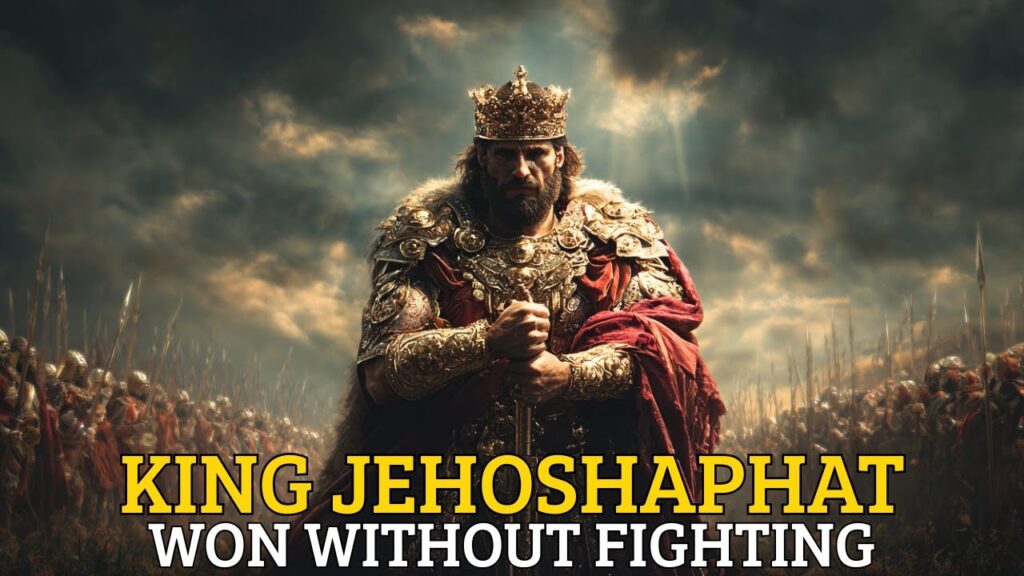


What if I told you that the greatest military victory in ancient history was one without a single sword being drawn? Picture this. A king receives a death sentence. Three armies converging on his small nation like a tidal wave of destruction. The odds impossible. The outcome certain annihilation. But then something happens that shatters every law of warfare. A mysterious prophet emerges from the crowd with a message so bold, so absurd that it could only come from heaven itself. The battle is not yours. Stand still and watch. What follows defies human logic. Singers replace soldiers at the front lines. Worship becomes a weapon. And the enemy destroys itself. No military strategy, no bloodshed, just an unexplainable supernatural intervention that left neighboring kingdoms trembling in fear. This is the story of King Jehoshaphat, a man who discovered that sometimes the path to victory requires laying down your sword and lifting your voice. Prepare to witness how one moment of radical faith unleashed a divine ambush that changed the course of history and proved that God fights battles in ways humanity could never imagine. The kingdom of Judah was about to face its darkest hour. Jehoshaphat had been ruling as king, trying his best to lead God's people in the right direction. He had spent years teaching them about the Lord, sending priests and Levites throughout the land to help people understand God's ways. Things seemed to be going well. The kingdom was at peace, and Jehoshaphat thought his efforts to follow God were paying off. Then one ordinary day, everything changed. Messengers came running into the royal palace with terrible news. As we read in 2 Chronicles 21, after this the Moabites and Ammonites with some of the Munites came to wage war against Jehoshaphat. This wasn't just a small group of raiders looking to steal some livestock. This was a full-scale invasion force made up of three different nations who had joined together with one goal, to destroy Judah completely. The Moabites lived east of the Dead Sea. They were descendants of Lot and had a long complicated history with Israel. Sometimes there was peace between them. Sometimes there was conflict. The Ammonites were their neighbors, also descendants of Lot, and they too had fought against God's people many times before. The Munites were a lesserknown group. But their presence made the army even larger and more dangerous. What made this situation so terrifying was that these nations had put aside their own differences to unite against Judah. When enemies who normally compete with each other decide to work together, you know something serious is happening. They had crossed the Dead Sea and were marching toward Jerusalem. The army was massive and it was getting closer every hour. The messengers continued their report with more disturbing details. In verse two, someone came and told Jehoshaphat, "A vast army is coming against you from Edom, from the other side of the Dead Sea. It is already in Hazison Tamar, that is Enghedi." Hazison Tamar was another name for Enghedi, a place known for its beautiful oasis and springs. But more importantly for Jehoshaphat, Engetedi was only about 30 mi from Jerusalem. The enemy wasn't some distant threat that might arrive in weeks. They were already dangerously close. When Jehoshaphat heard this news, he could have responded in several different ways. He could have immediately called his military commanders and started planning battle strategies. He could have sent urgent messages to neighboring kingdoms begging for help. He could have ordered his army to march out and meet the enemy before they got any closer. But Jehoshaphat did none of these things first. The Bible tells us in verse three that Jehoshaphat resolved to inquire of the Lord and he proclaimed a fast for all Judah. Notice that word resolved. It means he made a firm decision. This wasn't a panic reaction or a last resort after trying everything else. Jehoshaphat deliberately chose to seek God first. Before military meetings, before war councils, before anything else, he decided that prayer was the most important response. But Jehoshaphat was also honest about his feelings. The verse says he was alarmed. He didn't pretend to be brave when he was actually scared. He didn't put on a false face of confidence to impress his people. The Hebrew word used here means he was afraid, troubled, and deeply concerned. And why wouldn't he be? A massive army was coming to destroy everything he loved. His people, his family, his kingdom, all of it was in danger. Here's what made Jehoshaphat different from many other kings. He knew what to do with his fear. Instead of letting fear drive him to make rash decisions or freeze him into doing nothing, he channeled that fear into seeking God. His alarm pushed him toward prayer, not away from it. He understood something crucial. Being afraid doesn't make you weak or unfaithful. What matters is where you take that fear. Jehoshaphat also understood that this wasn't just his problem to solve. This threat affected every single person in Judah. The enemy army wouldn't just attack the palace or the military. When invading armies conquered cities in those days, they killed men, took women and children as slaves, burned homes, and destroyed everything. Everyone in the kingdom was in danger. So, everyone needed to be part of seeking God's help. The decision to proclaim a fast throughout all Judah was significant. Fasting meant stopping normal life and focusing completely on God. People would skip meals, leave their work, and spend time praying instead. It was a way of saying to God, "Nothing matters more right now than hearing from you. We're setting aside everything else to seek your face." Jehoshaphat wasn't asking people to fast because he thought it would magically fix the problem. He was calling them to fast because the situation was so serious that only God could save them. The proclamation went out across the entire kingdom. In verse three, we see that Jehoshaphat proclaimed a fast for all Judah. This wasn't just a suggestion or an invitation. It was an official royal decree. Messengers rode to every town and village spreading the word that the king had called everyone to fast and pray. From the biggest cities to the smallest farming communities, people heard the same message. Stop what you're doing and seek the Lord. Imagine being a farmer in a remote village and hearing this news. You're in the middle of harvest season, one of the busiest times of the year. Your crops need to be gathered before the weather turns. Your family depends on this harvest to survive the winter. But the king's messenger arrives and tells you to leave your fields and come to Jerusalem to pray. Would you go? The people of Judah did. Or imagine being a merchant in one of the market towns. You have business deals to complete, goods to sell, money to earn. Your shop needs your attention. But the message comes, the kingdom is in danger, and the king is calling everyone to prayer. Do you close your shop and make the journey the people of Judah did? This fast wasn't just for the religious leaders or the people who lived in Jerusalem. It was for everyone, rich and poor, young and old, men and women, farmers and craftsmen, priests and ordinary citizens. All of them were called to participate. Jehoshaphat understood that when a nation faces destruction, the entire nation needs to cry out to God together. The response was remarkable. Verse four tells us, "The people of Judah came together to seek help from the Lord. Indeed, they came from every town in Judah to seek him. This wasn't a small gathering of concerned citizens. This was a nationwide movement. People dropped what they were doing and traveled to Jerusalem. They left their homes, their businesses, their daily routines. They came because they understood the seriousness of what they were facing. Think about what this meant practically. In those days, there were no cars or trains. People had to walk, sometimes for days, to reach Jerusalem. They had to bring food for the journey, arrange for someone to watch their homes, and deal with all the complications of sudden travel. Yet, they came anyway. The roads leading to Jerusalem must have been crowded with families making their way to the temple. All of them with the same purpose, to seek God's help. This gathering showed something beautiful about the people of Judah at this moment in their history. They believed that prayer mattered. They believed that seeking God was worth the inconvenience, worth the cost, worth the disruption to their normal lives. They didn't stay home thinking the king and the priests can pray for us. They understood that this was a time when everyone needed to participate. The people gathered at the temple, the holiest place in their nation. This was where God's presence dwelled, where sacrifices were offered, where prayers were heard. If there was anywhere to meet with God in their time of desperate need, this was it. Verse 5 gives us a specific detail. Then Jehoshaphat stood up in the assembly of Judah and Jerusalem at the temple of the Lord in the front of the new courtyard. The king himself was there, not hiding in his palace or making plans in a war room, but standing with his people in God's house. The temple complex had several courtyards where people could gather. The new courtyard mentioned here was probably a recently constructed or renovated area that could hold large crowds. Jehoshaphat positioned himself where everyone could see and hear him. This wasn't going to be a private prayer in a quiet room. This was going to be a public cry for help with the whole nation as witnesses. Look at who was there. The verse mentions the assembly of Judah and Jerusalem. But verse 13 adds even more detail about the crowd. All the men of Judah with their wives and children and little ones stood there before the Lord. This wasn't just an assembly of adult men, which was often how official gatherings worked in that culture. Entire families had come. Mothers held their babies. Children stood beside their parents. Elderly grandparents were there. Everyone had come because everyone was affected by the crisis. Picture the scene. The temple courtyard packed with people as far as you could see. Babies crying, children fidgeting, parents trying to keep their families together in the crowd. Everyone's face marked with worry and fear. conversations in hush tones about the approaching army and then silence falling as King Jehoshaphat stepped forward to speak. The fact that families brought even their smallest children tells us something important. They wanted their kids to see this moment. They wanted them to witness what it looks like when God's people face impossible situations. They wanted them to remember that when trouble comes, you go to God. These children would grow up with the memory of standing in the temple courtyard surrounded by the entire nation watching their king pray. The temple itself stood as a reminder of God's promises. King Solomon had built it generations earlier as a house for God's name. It represented God's commitment to dwell among his people. When Solomon dedicated the temple, he had prayed specifically about moments like this. He had asked God to hear prayers offered in that place when the nation faced enemies. Now Jehoshaphat and his people were coming to collect on that promise. Jehoshaphat began to pray and his words were captured in scripture for us to read. This wasn't a short simple prayer. It was a carefully thoughtout conversation with God that revealed both the king's theology and his trust. He started in verse 6 by saying,"Lord, the God of our ancestors, are you not the God who is in heaven? You rule over all the kingdoms of the nations. Power and might are in your hand, and no one can withstand you." Notice how Jehoshaphat started. He didn't immediately jump to his request. He didn't begin by describing the problem or begging for help. He started by declaring who God is. He reminded himself and everyone listening of God's identity and character. God is in heaven above all earthly powers. God rules over every kingdom, not just Judah. All power and might belong to him, and no one can successfully oppose him. This wasn't information God needed to hear. God already knew who he was. But Jehoshaphat needed to say it out loud. The people needed to hear it. When you're facing a terrifying situation, you need to remind yourself of the truth about God before you get to your problem. The enemy army seemed overwhelmingly powerful. But Jehoshaphat was declaring that God was infinitely more powerful. Then Jehoshaphat moved to God's historical relationship with his people. In verse 7, he prayed, "Our God, did you not drive out the inhabitants of this land before your people Israel and give it forever to the descendants of Abraham, your friend?" This was a reference to the conquest of Canaan hundreds of years earlier. When Israel first entered the promised land, God had driven out the nations living there and given the land to his people. The word forever was important. God hadn't given them the land temporarily or with conditions that meant they might lose it to invaders. He had given it as a permanent inheritance to Abraham's descendants. By bringing this up, Jehoshaphat was essentially saying, "God, you gave us this land. It belongs to us because you gave it to us." Jehoshaphat also called Abraham your friend. This was a special title. Abraham was the father of the nation, the man with whom God had made his covenant. The relationship between God and Israel wasn't just about law or duty. It was personal. It was friendship. Jehoshaphat was appealing to that friendship, that special relationship God had with his people through Abraham. In verse 8, the prayer continued, "They have lived in it and have built in it a sanctuary for your name, saying, "Here Jehoshaphat reminded God that his people had settled in the land and done exactly what they were supposed to do. They hadn't just occupied the land for their own benefit. They had built a temple for God's name to dwell." Then Jehoshaphat quoted from Solomon's dedication prayer. In verse 9, he said, "If calamity comes upon us, whether the sword of judgment or plague or famine, we will stand in your presence before this temple that bears your name and will cry out to you in our distress, and you will hear us and save us." This was brilliant. Jehoshaphat was reminding God of what Solomon had prayed and what God had promised in response. Jehoshaphat then brought up a specific piece of history that was directly relevant to their current crisis. In verse 10, he prayed, "But now here are men from Ammon, Moab, and Mount S whose territory you would not allow Israel to invade when they came from Egypt. So they turned away from them and did not destroy them." This was a reference to events that happened during Israel's wilderness journey approximately 600 years earlier. When Moses was leading Israel toward the promised land, they had to pass near the territories of Edom, Moab, and Ammon. These nations were related to Israel through family connections. Edom descended from Esau, Jacob's brother. Moab and Ammon descended from Lot, Abraham's nephew. Because of these family ties, God specifically commanded Israel not to attack these nations or take their land. God told Moses that the land of Edom belonged to the descendants of Esau and Israel shouldn't disturb them. The same was true for Moab and Ammon. Even though Israel was powerful enough to conquer them, even though it would have been militarily advantageous, God said no. So, Israel went around their territories instead of through them, respecting God's command. Even though it made their journey longer and harder, Israel had shown mercy to these nations because God commanded it. They could have destroyed them, but chose not to. They honored the family relationship and obeyed God's instructions. Now, Jehoshaphat was pointing out the bitter irony of the current situation. Those same nations that Israel had spared were now coming to destroy Israel. The mercy Israel had shown them was being repaid with violence and invasion. Verse 11 made the situation even clearer. See how they are repaying us by coming to drive us out of the possession you gave us as an inheritance. The contrast was stark. God had given this land to Israel. It was their inheritance, their home, their God-given possession. And now the very nations that Israel had shown mercy to were trying to take it away from them. The word repaying suggested a debt being settled in the wrong direction. Israel had given them the gift of mercy and safe passage. The proper repayment would have been friendship or at least peaceful coexistence. Instead, these nations were repaying good with evil, mercy with aggression, kindness with an invasion intended to wipe out God's people entirely. Jehoshaphat wasn't just listing historical facts. He was building a case. He was showing God that this invasion wasn't just a political conflict or a land dispute. It was an attack on God's own promises and God's own people. Now, Jehoshaphat reached the heart of his prayer. And what he said next was remarkable for its honesty. Verse 12 records these words, "Our God, will you not judge them? For we have no power to face this vast army that is attacking us. The first part was a question almost a plea. Jehoshaphat asked God to judge the situation. Since these nations were attacking God's people unjustly, Jehoshaphat was appealing to God as the ultimate judge who sees all and makes things right. But then came the confession that made this prayer so powerful. We have no power to face this vast army. Jehoshaphat didn't try to sound brave or confident. He didn't make grand claims about Judah's military capabilities. He didn't suggest they had a clever strategy that just needed God's blessing. He told the absolute truth. They were powerless. They had no ability to win this fight on their own. This was a king speaking. Kings were supposed to be strong leaders who inspired confidence. They were supposed to rally troops and project strength. But Jehoshaphat did the opposite. He stood before his entire nation and admitted complete helplessness. He acknowledged that no matter what they did, no matter how hard they fought, they couldn't defeat this enemy in their own strength. The army was described as vast. This wasn't just a large military force. It was overwhelming in size. Three nations had combined their armies, and the result was a force that made Judah's army look tiny by comparison. Jehoshaphat wasn't exaggerating to make his prayer more dramatic. He was stating the military reality. But Jehoshaphat didn't stop with that confession of weakness. He continued with these crucial words, "We do not know what to do." Think about what this means. The king, the person everyone looked to for leadership and direction, was saying he had no plan. He wasn't holding back his strategy to reveal it later. He genuinely didn't know what to do. This level of honesty before God is rare. Most people when they pray try to maintain at least some appearance of having things under control. They admit they need help, but they usually have some idea of what they think should be done. But Jehoshaphat went further. He had no plan. He didn't know what to do. He was completely dependent on God to provide not just the strength to execute a plan, but the plan itself. After confessing complete helplessness, Jehoshaphat made one final statement that transformed his entire prayer. He said, "But our eyes are on you." With these six simple words, he shifted everything. Yes, they were powerless. Yes, they didn't know what to do. But their eyes, their focus, their attention, their hope were fixed on God. They weren't looking at the size of the enemy army. They weren't looking at their own weakness. They were looking at God. This phrase, "Our eyes are on you," meant more than just a casual glance in God's direction. In Hebrew culture, to set your eyes on something meant to focus on it intently, to wait for it expectantly, to look to it as your source of help. It was the posture of a servant watching their master's hand for instructions, or a watchman staring into the darkness for the first sign of dawn. Jehoshaphat was saying that despite not having power and despite not knowing what to do, he and his people were going to keep their focus on God. They weren't going to panic. They weren't going to run away. They weren't going to try desperate strategies that God hadn't approved. They were simply going to watch and wait for God to act, trusting that he would do something, even though they couldn't see what that something might be. This declaration came at the end of the prayer. But it was really the foundation of everything Jehoshaphat had said. All the theology, all the history, all the promises he had mentioned, they all pointed to this moment of trust. When you've acknowledged God's power, when you've reminded yourself of his past faithfulness, when you've honestly admitted your own helplessness, there's only one thing left to do. Trust him completely. The prayer didn't include a list of suggestions for how God might save them. Jehoshaphat didn't say, "Here's what I think you should do." He didn't try to instruct God or bargain with him. He simply put the situation in God's hands and declared that he and his people would keep their eyes fixed on him, waiting to see what he would do. And then, according to verse 13, something beautiful happened. All the men of Judah with their wives and children and little ones stood there before the Lord. After the king finished praying, everyone just stood there. They didn't rush to make plans. They didn't scatter to prepare defenses. They stood in God's presence, joining their king in his posture of complete dependence. Families stood together. Fathers, mothers, children, even the smallest babies. All of them waiting. All of them watching. All of them with their eyes on God. The entire nation stood in silence before the Lord. Jehoshaphat had finished his prayer and now everyone was waiting. The temple courtyard was packed with families. All of them watching. All of them hoping that God would speak. The tension in the air was thick. An enemy army was getting closer by the hour and they had just confessed they had no power and no plan. What would God say? Would he even answer? Then something unexpected happened. In verse 14, the Bible tells us, "Then the spirit of the Lord came on Jahaziel, son of Zechariah, the son of Banayiah, the son of Jal, the son of Mataniah, a Levite and descendant of Asaf. As he stood in the assembly, the spirit of the Lord came upon a man, not just any man, but someone specific. His name was Jahazil." Notice how the Bible gives us his complete family line. Jehaziel was the son of Zechariah who was the son of Banayiah who was the son of Jal who was the son of Mataniah. This detailed genealogy tells us something important. Jahaziel was a real person with a real family history. This wasn't a legend or a madeup story. This was an actual man standing in an actual crowd on an actual day when his nation desperately needed to hear from God. The text also tells us that Jehaziel was a Levite and a descendant of Asaf. The Levites were the tribe set apart for temple service. They helped with worship, sacrifices, and maintaining God's house. Asaf was one of the chief musicians appointed by King David generations earlier. He had written psalms and led worship before the ark of God. So Jahazil came from a family line dedicated to serving God and leading his people in worship. But here's what makes this moment so remarkable. Jahazil wasn't the high priest. He wasn't one of the king's official advisers. He wasn't a famous prophet whose name everyone knew. He was just a regular Levite standing in the crowd with everyone else. He was doing his job, serving in the temple, participating in the national fast like all his fellow citizens. He had no idea that God was about to use him in such a powerful way. When the spirit of the Lord came upon Jehaziel, it changed everything. This was God's way of speaking to his people. In the Old Testament, the Spirit would come upon specific people at specific times to deliver God's message or accomplish God's purposes. When the Spirit came on someone, they spoke with divine authority. Their words weren't just their own opinions or good advice. They were the very words of God himself. Imagine being Jahaziel in that moment. You're standing in a massive crowd surrounded by thousands of worried, frightened people. The king has just finished praying one of the most powerful prayers ever recorded. And suddenly you feel the overwhelming presence of God's spirit come upon you. You know you're about to speak. And you know that what you're about to say isn't coming from you. It's coming from God. The weight of that moment must have been incredible. Jehazil didn't waste any time. The spirit had come upon him and he had a message to deliver. Verse 15 records the beginning of what he said. He said, "Listen, King Jehoshaphat and all who live in Judah and Jerusalem." Notice that first word, "Listen." This wasn't a suggestion or a casual greeting. It was a command. Jahaziel was telling everyone to pay attention because what came next was critically important. He addressed his message to specific people. First, he spoke directly to King Jehoshaphat. The king had just poured out his heart to God, confessing the nation's helplessness and declaring their trust. Now, God was answering him personally. But Jahaziel didn't stop with the king. He also addressed all who live in Judah and Jerusalem. This message wasn't just for the leadership. It was for every single person standing in that courtyard. The command to listen was crucial because people don't always pay attention even when God is speaking. Sometimes we're distracted by our problems. Sometimes we're so focused on our fear that we can't hear anything else. Sometimes we're already thinking about what we're going to do next instead of focusing on what's being said right now. Jahaziel needed everyone to stop everything else and focus completely on the words that were about to come. Think about the different people in that crowd. Some were probably still praying silently. Some were holding their children and trying to keep them quiet. Some were thinking about the enemy army and calculating how much time they had left. Some were making mental plans for what they would do if the city was attacked. But Jahazil's command cut through all of that. Listen, stop thinking about everything else and listen. This is how God often works. He waits until we're ready to hear. Jehoshaphat and the people had done everything right. They had fasted. They had gathered. They had prayed. They had confessed their need. They had declared their trust. And now, in this moment of focused attention, God was ready to speak. But first, they needed to be told to listen because the message he was about to give them would be unlike anything they expected. After commanding their attention, Jahaziel delivered the first part of God's message. He said, "This is what the Lord says to you. Do not be afraid or discouraged because of this vast army, for the battle is not yours, but God's." These words must have hit the crowd like a wave. do not be afraid. Do not be discouraged. Those were direct commands from God himself. Notice that God acknowledged the reality of their situation. He didn't say, "Don't be afraid because the army isn't really that big." He said, "Don't be afraid or discouraged because of this vast army." God recognized that the army was indeed vast. He wasn't minimizing the threat or pretending it wasn't serious. The enemy force was massive and dangerous. That was a fact. But God was giving them a reason not to fear that went beyond the size of the threat. The word discouraged is important here. It's one thing to be afraid when you see a huge army coming to destroy you. That's a natural human reaction, but discouragement goes deeper. Discouragement means losing hope, feeling like there's no point in trying, believing that failure is inevitable. God was telling them not just to control their fear, but also not to let their spirits be crushed by the impossibility of their situation. Then came the reason they shouldn't be afraid. For the battle is not yours, but God's. This was the key to everything. Jehoshaphat had prayed and said, "We have no power to face this vast army." He was right. It wasn't their battle to win in their own strength. But that didn't mean they were going to lose. It meant that God was taking responsibility for the outcome. He was saying, "This fight belongs to me now. I'm taking it over." Think about what this means practically. When a battle belongs to you, you have to figure out the strategy. You have to train the troops. You have to make sure you have enough weapons and supplies. You have to outthink and outfight your enemy. The pressure is all on you. But when a battle belongs to God, all of that changes. You don't have to be strong enough or smart enough or brave enough. You just have to trust that God is all of those things. This statement transformed the entire situation. Yes, the enemy army was vast. Yes, Judah had no power to defeat them. But none of that mattered anymore because the battle belonged to God. And when God fights a battle, the size of the enemy army is irrelevant. Their weapons don't matter. Their strategy doesn't matter. Nothing they bring to the fight can stand against the God who rules over all the kingdoms of the nations. The God in whose hand is all power and might. After telling them not to fear, Jahaziel moved on to give them specific instructions. Verse 16 records what he said next. Tomorrow, march down against them. They will be climbing up by the pass of Ziz and you will find them at the end of the gorge in the desert of Gerel. God wasn't just giving them encouragement. He was giving them a detailed battle plan. Notice the specificity. tomorrow, not today, not next week, but tomorrow. They would have one more night to rest and prepare their hearts. Then in the morning, they would need to act. God also told them exactly where the enemy would be. The enemy would be climbing up by the pass of Ziz, and Judah would find them at the end of the gorge in the desert of Geru. The pass of Ziz was a known location. It was a steep, narrow pass that armies would use when traveling from the Dead Sea area toward Jerusalem. The desert of Jerel was also a specific place, a wilderness area where the terrain was rough and difficult. God knew exactly where the enemy army was and exactly where they would be tomorrow. He had been watching their movements. He knew their route. Nothing about this invasion had caught him by surprise. This level of detail must have been reassuring. God wasn't speaking in vague generalities. He wasn't saying go out and see what happens. He was giving precise geographical information. He was telling them exactly where to go and what they would find when they got there. This showed that God was completely in control of the situation. He knew the enemy's plans better than the enemy did. The instruction to march down against them is interesting. God was telling them to go toward the enemy, not run away. They weren't to hide behind their city walls and hope the enemy would leave. They weren't to scatter into the hills. They were to deliberately march toward the very army they had no power to defeat. This required courage and faith. They would have to trust that God knew what he was doing. Then Jahaziel said something that must have sounded absolutely crazy. In verse 17, he declared, "You will not have to fight this battle. Take up your positions. Stand firm and see the deliverance the Lord will give you, Judah and Jerusalem. Do not be afraid. Do not be discouraged. Go out to face them tomorrow, and the Lord will be with you." Read that first sentence again. You will not have to fight this battle. This wasn't a metaphor. God wasn't saying, "I'll help you fight or I'll give you strength in the battle." He was saying they wouldn't fight at all. Not one sword would need to be swung. Not one arrow would need to be shot. Not one soldier would need to engage the enemy in combat. They would not have to fight. Instead, they were given different instructions. Take up your positions. Stand firm and see the deliverance the Lord will give you. Their job was to position themselves correctly, stand firm where God told them to stand and watch. Just watch. They would be spectators to their own victory. They would witness God's deliverance without participating in the actual fighting. This goes against everything we know about warfare. Armies win battles by fighting. Soldiers train for years to be effective in combat. Military strategy is all about how to fight better than your enemy. But God was completely overturning all of that. In this battle, the key to victory wasn't fighting skill or superior weapons or clever tactics. The key to victory was standing still and watching God work. The phrase see the deliverance is powerful. They weren't just going to hear about it later. They weren't going to find evidence of it after the fact. They were going to see it happen with their own eyes. They would be eyewitnesses to a miracle. They would watch as God delivered them in a way that made it absolutely clear that he was the one who had won the battle. Then God repeated the command he had given earlier. Do not be afraid. Do not be discouraged. Even though he had just told them they wouldn't have to fight, he knew they would still need this reminder because marching toward an enemy army that outnumbers you, even when God has promised to save you, still requires courage. Standing still while your enemies approach, even when God has told you to stand still, still requires trust. The final part of Jaziel's message emphasized one more time the command not to fear. He said, "Go out to face them tomorrow, and the Lord will be with you." This was both a command and a promise wrapped together. They were commanded to go out, to deliberately leave the safety of the city and march toward danger. But attached to that command was a promise. The Lord would be with them. The promise of God's presence changes everything. It's one thing to face an enemy alone. It's completely different to face an enemy with God beside you. The people of Judah weren't being sent out by themselves to stand in front of a vast army. They were going out with the Lord. His presence would be with them every step of the way. Notice that God told them to go out tomorrow. He gave them one night to process this message, to let it sink into their hearts, to prepare themselves mentally and spiritually for what they were about to witness. They would need that time. What God was asking them to do was completely contrary to human wisdom and natural instinct. They would need the night to strengthen their faith and steal their courage. The repetition of do not be afraid, do not be discouraged throughout this message shows how well God understands human nature. He knows we need to hear things multiple times. He knows that fear doesn't disappear just because we hear one promise. We need reassurance. We need reminders. We need the truth spoken to us again and again until it penetrates through our anxiety and takes root in our hearts. God had now given them everything they needed. He had told them when to go, tomorrow, where to go, the pass of Ziz in the desert of Jerel, what to do, take positions and stand firm. what not to do, don't fight, what they would see, his deliverance, and what attitude to have, don't be afraid or discouraged. The message was complete. The question now was, would they believe it? Would they obey it? As soon as Jehaziel finished delivering God's message, something beautiful happened. Verse 18 tells us, "Jehoshaphat bowed down with his face to the ground, and all the people of Judah and Jerusalem fell down in worship before the Lord." The king's response was immediate. He didn't call a meeting to discuss the prophecy. He didn't ask for time to think about whether this plan made sense. He simply bowed down in worship. This wasn't a casual bow or a polite gesture of respect. The text says he bowed down with his face to the ground. This was complete prostration. The posture of total submission and worship. Jehoshaphat was physically demonstrating what was happening in his heart. He was accepting God's word. He was surrendering to God's plan. He was worshiping the God who had answered his prayer. Think about what Jehoshaphat had just heard. God told him to march his people toward an army they couldn't defeat and then just stand there without fighting. By any human measure, this was a suicide mission. But Jehoshaphat didn't question it. He didn't express doubt. He didn't ask for clarification or a backup plan. He bowed down and worshiped. This is the response of genuine faith. Jehoshaphat's worship in this moment is remarkable because the victory hadn't happened yet. The enemy army was still out there, still getting closer. Nothing in the physical realm had changed. They were still in the same desperate situation they had been in an hour ago. The only thing that had changed was that God had spoken. And for Jehoshaphat, God's word was enough. He worshiped God for a victory he hadn't yet seen. This is what it means to walk by faith and not by sight. Sight would tell you to worry because the army is still coming. Sight would tell you to be skeptical because God's plan sounds impossible. But faith trusts God's word more than it trusts what the eyes can see or what human logic can comprehend. Jehoshaphat had faith and that faith expressed itself in worship. Jehoshaphat didn't worship alone. The verse continues, "And all the people of Judah and Jerusalem fell down in worship before the Lord." The king's example was immediately followed by the entire nation. Everyone in that courtyard, the men, the women, the children, the elderly, all of them fell down in worship. This was a unified response of faith. But they didn't stop with silent worship. Verse 19 adds, "Then some Levites from the Kohathites and Korites stood up and praised the Lord, the God of Israel, with a very loud voice. The Levites, the ones whose job was to lead worship, stood up and began to praise God out loud. And they didn't praise him quietly or politely. They praised him with a very loud voice. The Kohathites and Korahites were specific families within the tribe of Levi. The Kohathites were responsible for carrying the most sacred objects of the tabernacle in the wilderness. The Korites were singers and gatekeepers. These were people who knew how to worship. They had been trained in it. And now at this crucial moment, they did what they did best. They led the nation in loud, passionate praise to God. Why did they pray so loudly? Maybe because they were overwhelmed with joy at God's answer. Maybe because loud praise was their way of declaring their faith to each other and to the enemy. Maybe because the situation was so dire that quiet, reserved worship didn't seem appropriate. Whatever the reason, they praised God with everything they had. And their voices filled the temple courtyard. This is the sound of faith. This is what it looks like when a nation receives a word from God and chooses to believe it. They had come to the temple in fear and desperation. They had prayed and confessed their helplessness. God had answered and given them an impossible plan. And now they were worshiping and praising him with loud voices, celebrating a victory that wouldn't happen until tomorrow, trusting in a deliverance they couldn't yet see. The temple courts that had been silent with waiting were now erupting with the sound of faithfilled praise. The sun rose over Jerusalem on a day that would be remembered forever. The people had spent the night processing God's message through Jaziel. They had worshiped late into the evening, their voices ringing through the temple courts. Now morning had come and it was time to act. Verse 20 tells us, "Early in the morning they left for the desert of Takcoa. As they set out, Jehoshaphat stood and said, "Listen to me, Judah and people of Jerusalem. Have faith in the Lord your God and you will be upheld. Have faith in his prophets and you will be successful. Notice the timing. They left early in the morning. There was no delay, no hesitation, no last minute second thoughts. As soon as dawn broke, they were on the move. This showed their obedience to God's instructions. He had told them to go out tomorrow and they went. They didn't wait to see if the circumstances would change or if a better plan would present itself. They simply obeyed. They headed toward the desert of Tcoa, which was in the direction God had specified. This was the wilderness area near where the enemy would be found. As they began their march, Jehoshaphat stopped to address his people one more time. He knew this moment required encouragement. They were about to do something that made no human sense and they needed their faith strengthened. His message was simple and direct. Listen to me, he said, demanding their attention just as Jahaziel had done the day before. Then he gave them the key to success. Have faith in the Lord your God and you will be upheld. Have faith in his prophets and you will be successful. Everything depended on faith. faith in God himself and faith in the prophetic word he had given through Jehaziel. Jehoshaphat made two specific promises connected to faith. First, if they had faith in the Lord, they would be upheld. The word upheld means to be established, to stand firm, to be secure. They wouldn't fall or collapse. They would remain standing. Second, if they had faith in God's prophets, they would be successful. The prophet had said they would see God's deliverance without fighting. If they believed that word and acted on it, they would succeed. This speech was crucial because what they were about to do looked like certain death. They were marching toward an enemy that vastly outnumbered them. They had been told not to fight. Everything about this situation screamed disaster from a human perspective. But Jehoshaphat was calling them to look beyond what they could see and trust what God had said. Faith was the bridge between the impossible situation they were in and the miraculous victory God had promised. After encouraging the people to have faith, Jehoshaphat did something that has to be one of the strangest military decisions ever made. Verse 21 records what happened next. After consulting the people, Jehoshaphat appointed men to sing to the Lord and to praise him for the splendor of his holiness as they went out at the head of the army saying, "Give thanks to the Lord for his love endures forever." Let's break this down because it's so unusual. Jehoshaphat consulted with the people. This wasn't a decision he made alone. He talked with them about it and they agreed together on what to do. Then he appointed specific men to be singers. These weren't soldiers. They weren't armed warriors. They were singers whose job was to praise God. But here's the really remarkable part. These singers were positioned at the head of the army. In normal warfare, you put your strongest, most experienced warriors at the front. They're the first ones to engage the enemy. They're your best fighters, the ones who can handle whatever comes at them. But Jehoshaphat put unarmed singers at the front of his army. These men had one job, to sing praises to God for the splendor of his holiness. They weren't singing war songs to pump up the troops. They weren't singing songs about military victory or the strength of their army. They were singing about God's holiness, his character, his nature. They were declaring who God is as they marched toward battle. The specific song they sang was simple. Give thanks to the Lord for his love endures forever. This was a well-known refrain in Israel. It appears multiple times in the Psalms and was sung at major celebrations and worship gatherings. It was a declaration of God's faithful love, his steadfast mercy that never fails, his covenant commitment to his people that lasts forever. Think about the faith required to do this. You're marching toward an enemy army. You know they're close. You know they're massive. You know they're coming to kill you. And instead of weapons at the front of your formation, you have singers. Instead of battle cries, you have worship songs. Instead of preparing for combat, you're praising God's enduring love. This was faith in action. This was trust made visible. The singers went ahead of everyone else. As the army of Judah marched toward the desert of Geru, the first thing the enemy would hear wasn't the sound of marching soldiers or the clash of armor. It would be the sound of singing. Give thanks to the Lord for his love endures forever. Over and over, these words rang out across the wilderness. This was unlike any military campaign in history. As the singers began their song and the army marched forward, something happened that the people of Judah couldn't see. Verse 22 tells us what occurred. As they began to sing and praise, the Lord set ambushes against the men of Ammon and Moab and Mount Seir who were invading Judah and they were defeated. The moment the singing started, God went into action. The text says, "The Lord set ambushes." God himself was the one who arranged what happened next. This wasn't luck or coincidence. This wasn't the result of clever human planning. God actively intervened in the situation. He set up ambushes against the invading armies. The word ambush suggests a surprise attack, something unexpected that catches an enemy offguard. Notice the timing. It happened as they began to sing and praise. The connection is clear. When God's people started worshiping, God started working. Their praise didn't cause God to act as if he needed to be convinced. Rather, their praise was the obedient response he had commanded. And as they obeyed, he did what he had promised. The worship and the victory were connected because both were part of God's plan. The text says the invading armies were defeated. Past tense. By the time this verse ends, the battle is already over. The vast army that had terrified Judah, the combined forces of three nations, the threat that had seemed impossible to overcome, defeated. Just like that, God had said the battle belonged to him and he had won it. But how exactly did this happen? The verse doesn't give us details yet. It just tells us that God set ambushes and the enemy was defeated. We know it happened as the singers sang. We know it was God's doing. But what specifically occurred? The next verses will explain, but for now, we're left with the simple fact God did it. The victory belonged to him just as he had said. Now, the Bible explains exactly what happened to the invading armies. Verses 23 and 24 give us the shocking details. The men of Ammon and Moab rose up against the men from Mount Seir to destroy and annihilate them. After they finished slaughtering the men from Sea, they helped to destroy one another. When the men of Judah came to the place that overlooks the desert and looked toward the vast army, they saw only dead bodies lying on the ground. No one had escaped. Read that carefully. The enemy armies turned on each other. The Ammonites and Moabites attacked the men from Mount S. They completely destroyed them, killing every single one. And then after finishing that slaughter, the Ammonites and Moabites turned on each other. They helped to destroy one another. The alliance that had seemed so threatening fell apart in the most violent way possible. This was the ambush God had set. He didn't send angels with flaming swords. He didn't rain fire from heaven. He didn't open up the ground to swallow the armies. Instead, he confused the enemy and caused them to attack each other. The very armies that had united to destroy Judah ended up destroying themselves. Not a single soldier of Judah lifted a weapon, yet the entire invading force was eliminated. Why did this happen? The Bible doesn't give us a detailed explanation of God's method. We're not told if he sent confusion into their minds or if old rivalries between the nations suddenly erupted or if he made them mistake each other for the enemy in the chaos of battle. What we do know is that God orchestrated it. He was the one who set the ambush. He was the one who caused three armies to destroy each other. When the men of Judah finally arrived at the place that overlooks the desert, they could see the vast army's location. Remember, they had been told they would find the enemy at the end of the gorge in the desert of Geru. They reached the overlook point where they could see into that area. And what did they see? Dead bodies. Nothing but dead bodies lying on the ground. The text emphasizes this stunning reality. No one had escaped. The entire army was dead. All three nations forces, every soldier who had come to destroy Judah, lay dead in the desert. There were no survivors fleeing back to their homelands. There were no wounded soldiers trying to crawl away. There was no one left alive at all. The victory was complete and total. When Judah saw that the entire enemy army was dead, they realized something else. Verse 25 tells us what they discovered. So Jehoshaphat and his men went to carry off their plunder, and they found among them a great amount of equipment and clothing, and also articles of value, more than they could take away. There was so much plunder that it took 3 days to collect it. The dead army had left behind everything they brought. When armies march to war, they bring supplies, equipment, weapons, food, clothing, valuables, and treasure. An army of that size would have massive amounts of goods with them. And now all of it belonged to Judah. What the enemy had brought to use in destroying God's people became a blessing for God's people instead. The Bible specifies what they found. Equipment, clothing, and articles of value. Equipment would include weapons, armor, tools, and military supplies. Clothing in ancient times could be quite valuable, especially fine garments and expensive fabrics. Articles of value could mean jewelry, gold, silver, precious stones, or other treasures. Some of these items probably belong to the soldiers themselves, while others might have been plunder these armies had taken from other places they had raided. The text emphasizes how much there was, more than they could take away. Think about that. This wasn't just a nice bonus or a small windfall. There was so much wealth and so many goods that they literally couldn't carry it all. They had to make decisions about what to take and what to leave behind because the amount exceeded their ability to transport it. Then we're told something that really drives home how much plunder there was. It took 3 days to collect it. Three full days. They spent day after day gathering up equipment, clothing, and valuables. They had to organize it, sort it, load it, and prepare to transported back to Jerusalem. This wasn't a quick afternoon of picking up a few items. This was a massive operation that required 3 days of sustained effort. Remember, these people had come expecting to watch God deliver them from an enemy. They had obeyed his command to march out and stand firm. They had put singers at the front of their army and praised God as they marched. And not only did God give them complete victory without them having to fight, he also gave them more wealth than they could carry. God's provision exceeded their needs and their expectations. The process of gathering the plunder took those three days. And verse 25 reminds us just how thorough they were in collecting everything of value. The people of Judah worked together, going through the battlefield systematically, gathering equipment, clothing, and treasures. Each family probably took what they could carry, loading up donkeys and carts with the spoils of this miraculous victory. Imagine the conversations happening during those three days. Families who had been terrified just days earlier were now walking through a battlefield where they hadn't fought, collecting wealth they hadn't earned through their own military prowess. They were receiving the reward of a victory that God alone had won. Every piece of equipment they picked up, every valuable item they found was a reminder of God's faithfulness. Think about what this meant practically for the people of Judah. Many of them were ordinary farmers, merchants, and craftsmen. They had left their homes and businesses to come to Jerusalem for the national fast. They had marched out, not knowing if they would return alive. Now they were going home, not just alive, but wealthy. The plunder they were gathering would benefit their families for years to come. The three days of collecting also gave them time to process what had happened. They could walk through the battlefield and see the evidence of God's intervention with their own eyes. They could count the dead bodies of three armies that had destroyed each other. They could witness the fulfillment of Jahaziel's prophecy. Every moment of those three days reinforced the reality that God had done exactly what he promised. After 3 days of gathering plunder, there was still more they couldn't take. The battlefield must have been littered with equipment and goods that they had to leave behind because there was simply too much. This overflow of blessing was characteristic of how God often works. He doesn't just meet our needs barely or minimally. He provides abundantly, more than we can contain. After the 3 days of collecting plunder, it was time to return home. But the people didn't rush back. Verse 26 tells us what happened next. On the fourth day, they assembled in the valley of Bareraka where they praised the Lord. This is why it is called the valley of Bareraka to this day. They gathered together in a specific valley for a specific purpose to praise God. The name Baraka means blessing or praise. In the valley got this name because of what happened there that day. The people assembled, meaning they came together deliberately and formally, not just a casual gathering. They organized themselves, probably in much the same way they had assembled at the temple in Jerusalem, and they praised the Lord. This was worship as a response to what God had done. They had seen his deliverance with their own eyes. They had walked through a battlefield where God had won the victory for them. They had spent 3 days gathering the abundant provision God had given them. Now before returning home they stopped to praise him. They didn't take the blessing and run. They acknowledge the source of their blessing. The text notes that this valley is still called the valley of Berka to this day. This means that even when the book of Chronicles was being written generations later, people still knew that valley by that name. It became a permanent memorial of what God had done. Every time someone mentioned the valley of Barakar, it was a reminder of the day when God won a battle without his people having to fight. After praising God in the valley of Barakar, they began the journey back to Jerusalem. Verse 27 describes the return. Then led by Jehoshaphat, all the men of Judah and Jerusalem returned joyfully to Jerusalem. For the Lord had given them cause to rejoice over their enemies. A D. This was a completely different journey from the one they had made just days earlier. When they had marched out to face the enemy, they went in faith, but also in fear. They were obeying God, but they were marching toward a massive army that wanted to destroy them. Now they were returning joyfully. The atmosphere had completely changed. They were celebrating, rejoicing, probably singing and shouting as they traveled. The Lord had given them cause to rejoice over their enemies, not because they had defeated those enemies themselves, but because God had done it for them. The return journey brought them back to Jerusalem. but this time with musical accompaniment. Verse 28 describes their arrival. They entered Jerusalem and went to the temple of the Lord with harps and liars and trumpets. This was a victory parade, but instead of celebrating their own military prowess, they went straight to the temple to give glory to God. The instruments they brought, harps, liars, and trumpets, were the instruments of worship. These were the same instruments the Levites used in temple services. The people were making music, but not music about themselves or their courage. They were playing worship music as they entered the city. Their first stop wasn't the palace to report to the king about their success. It was the temple to worship the God who had given them the victory. Picture the scene. The streets of Jerusalem lined with people who had stayed behind. the elderly, the very young, those who couldn't make the journey. They hear music in the distance. They see the army returning, but not with the wounds and weariness of battle. Instead, everyone is joyful, playing instruments, singing praises, loaded down with plunder. The entire city must have erupted in celebration as the news spread of what God had done. But the impact of this miraculous victory didn't stop at Jerusalem's walls. Verse 29 tells us about a much wider effect. The fear of God came on all the surrounding kingdoms when they heard how the Lord had fought against the enemies of Israel. Word spread quickly. The surrounding nations heard what happened in the desert of Geru. They heard how three armies had destroyed each other. They heard how Judah hadn't even had to fight. The fear of God that came upon these kingdoms wasn't just a healthy respect. It was a terrified awareness that the God of Israel was real, powerful, and willing to fight for his people. These nations understood that what had happened couldn't be explained by military strategy or human effort. This was divine intervention. This was the work of a God who could not be opposed. This fear had a practical result. Verse 30 explains, "And the kingdom of Jehoshaphat was at peace, for his God had given him rest on every side. The surrounding nations were too afraid to attack Judah. Who would want to fight against a nation whose God could cause entire armies to destroy themselves. The fear that fell on these kingdoms created a protective barrier around Judah. They had peace because their god had won a battle in such a spectacular way that no one dared to challenge them. Jehoshaphat's kingdom experienced rest on every side. This was the fulfillment of everything he had hoped for when he first heard about the invading army. He had wanted safety for his people. He had wanted to protect his kingdom. And God had provided that security in a way that went beyond just defeating one enemy. God had created a situation where all the potential enemies around them were too frightened to even consider attacking. The victory was complete. The blessing was abundant and the peace was established. If this story encouraged your faith and reminded you of God's power, please hit that subscribe button and turn on notifications so you never miss our biblical stories. Share this video with someone who needs to be reminded that God fights for those who trust in him. Leave a comment below telling us how this story impacted you. Thank you for watching and may you always remember the battle belongs to the Lord.