From the Burning Bush to the Red Sea: Moses’ Epic Journey
From the Burning Bush to the Red Sea: Moses' Epic Journey
0:00 /
0:00
A burning bush, but the flames don’t consume it. From within the fire, a voice calls a name. Moses. That impossible encounter in the desert would trigger the confrontation with the most powerful man on earth. 10 devastating plagues. A night when death swept through Egypt and the moment when the sea literally split in half from the burning bush to the Red Sea. This is the complete story of the greatest deliverance ever recorded in history. Moses wasn’t looking for God. He was running from him. 40 years earlier, he had been a prince of Egypt, raised in the halls of ferionic power, educated in the mysteries of the court, destined perhaps for political greatness. But an act of violence, the death of an Egyptian taskmaster who was beating a Hebrew had destroyed everything. In a moment of righteous fury, Moses killed the oppressor and hid the body in the sand. But the secret leaked out. Pharaoh ordered his execution and Moses ran. Now he was in Midian, an arid land south of Si, married to Zippora, daughter of a local priest named Jethro. He was no longer a prince. He was a shepherd. His days consisted of guiding sheep over rocky slopes, protecting them from predators, finding water in dry waddies. The routine was silent, anonymous, safe. exactly what a fugitive needed. But the Egypt Moses left behind continued to bleed. His Hebrew brothers, descendants of Abraham, Isaac, and Jacob, groaned under the weight of brutal slavery. They made bricks without straw. They built storage cities for an empire that despised them. Their children were murdered at birth. Their prayers seemed to echo in a cosmic void. They cried out for deliverance, but the heavens remained silent. or so it seemed because while Moses shepherded sheep in the desert, something was about to happen. It was an ordinary day. Moses had led Jethro’s flock beyond the usual limits of pasture, penetrating deeper into the desert toward Mount Horeb, the mountain the locals called the mountain of God. The terrain was rugged, covered with dark volcanic rocks and thorny bushes that managed to survive on almost nothing. And then he saw it. In the middle of the arid vastness, a bush was on fire. There was nothing special about that. The Sinai sun was relentless, and occasionally dry bushes caught fire spontaneously or from lightning. What captured Moses’ attention wasn’t the fire. It was what the fire wasn’t doing. It wasn’t consuming. The flames danced over the dry branches of the bush, alive, bright, intense, but the branches remained intact. No black smoke, no falling ash, no smell of burning wood. The bush burned, but didn’t turn to charcoal. It was as if the fire existed in a parallel dimension, touching matter without destroying it. Moses stopped. His rational mind, trained in Egyptian sciences, searched for an explanation. Perhaps it was an optical illusion caused by heat. Perhaps natural vapors rising from the ground. But no, the fire was real, and it was defying all the laws of physics, he knew. I will now turn aside and see this great sight. Why the bush is not burnt. Exodus 3:3. He began to approach, and that’s when everything changed. A voice emerged from within the flames, not loud, not thundering, but unmistakably present, carrying a weight that made the surrounding air seemed dense. Moses, Moses, his name, repeated twice. There was no one nearby, only him, the sheep, and that impossible fire. Moses felt his heart race. Something in that voice was ancient, eternal, as if it had echoed since before the creation of the world. “Here am I,” he responded, almost without realizing he had spoken. Exodus 3:4. The voice continued, and its words carried absolute authority. “Draw not nigh hither, put off thy shoes from off thy feet, for the place whereon thou standest is holy ground.” Exodus 3:5. holy ground there in that anonymous piece of desert. Moses obeyed immediately, his fingers trembling as he untied his leather sandals. The ground under his bare feet was warm, but not from temperature. It was as if the very presence emanating from that fire made the ground sacred. And then came the revelation that would change his life forever. I am the God of thy father, the God of Abraham, the God of Isaac, and the God of Jacob. Exodus 3:6. Moses hid his face. Terror and reverence flooded him simultaneously. This wasn’t a nature spirit. It wasn’t a lesser deity among many. It was the God of his ancestors. The God who had been silent for 400 years was speaking again. What God said next wasn’t an invitation. It was a summons. I have surely seen the affliction of my people which are in Egypt, and have heard their cry by reason of their task masters, for I know their sorrows. Exodus 3:7. Each word carried the weight of centuries of suffering. God wasn’t distant. He had seen every lash, heard every mother’s lament over her son’s body drowned in the Nile, felt every tear shed under the scorching sun, while Hebrews made bricks for Egyptian monuments. Divine silence wasn’t indifference. It was strategic patience, waiting for the exact moment, and that moment had arrived. And I am come down to deliver them out of the hand of the Egyptians, and to bring them up out of that land, unto a good land, and a large, unto a land flowing with milk and honey. Exodus 3:8. A land flowing with milk and honey. The promise made to Abraham centuries before hadn’t been forgotten. The covenant remained active. But then came the part that made Moses blood freeze. Come now, therefore, and I will send thee unto Pharaoh, that thou mayest bring forth my people, the children of Israel, out of Egypt. Exodus 3:10. Silence, the crackling of flames, the hot desert wind. Moses processed what he had just heard. He, a fugitive, a wanted murderer, an 80-year-old sheep shepherd, should return to Egypt. Face Pharaoh, the most powerful man in the known world, demand the liberation of millions of slaves who sustained the Egyptian economy. It was madness. It was impossible. It was suicide. Who am I that I should go unto Pharaoh and that I should bring forth the children of Israel out of Egypt? Exodus 3:11. The first objection, not from rebellion, but from genuine terror. Moses knew Egypt. He knew Pharaoh’s absolute power. He knew the armies, the prisons, the methods of execution. He had witnessed the empire’s cruelty. How could a simple man challenge a living deity? Because that’s how Pharaoh was seen as an incarnation of the gods. God’s answer was simple but profound. Certainly, I will be with thee. Exodus 3:12. Not an explanation, not a detailed military plan, just a promise of presence and a sign. When Moses freed the people, they would return to this very mountain to worship God. Success itself would be the proof. But Moses still wasn’t convinced. His mind searched for loopholes, escape routes, logical reasons why someone more qualified should go. Behold, when I come unto the children of Israel, and shall say unto them, the God of your fathers hath sent me unto you, and they shall say to me, what is his name? What shall I say unto them? Exodus 3:13. The second objection. And this one was clever. In the ancient near east, names had power. They defined essence, authority, jurisdiction. The Egyptians had hundreds of gods, each with specific names and delimited domains. Rah governed the son. Osiris the afterlife. Horus royalty. If Moses came to the Hebrews saying, “A God sent me,” they would naturally ask, “which God? What authority does he have? Why should we obey?” And that’s when God revealed something never before declared with such clarity. I am that I am. Exodus 3:14. Four words that would forever change human theology. Not a name like the others, not a function or title, a pure ontological declaration, self-derived existence, non-contingent being, the eternal who depends on nothing and no one to exist. While all Egyptian gods were personified forces, the sun, the river, death, this god was different. He simply was. Thus shalt thou say unto the children of Israel, I am hath sent me unto you. Exodus 3:14. More than that, God added, “The Lord God of your fathers, the God of Abraham, the God of Isaac, and the God of Jacob, hath sent me unto you. This is my name forever, and this is my memorial unto all generations.” Exodus 3:15. This wasn’t a new God. It was the same one who had walked with Abraham, who had promised a nation, who had protected Jacob. Continuity was guaranteed. The covenant remained. But even in the face of this monumental revelation, Moses still hesitated. Fear was greater than faith, and his objections were just beginning. God had given Moses his name, had promised his presence, had guaranteed victory. But Moses was still paralyzed by fear. And now came his third objection, perhaps the most honest of all. Behold, they will not believe me, nor hearken unto my voice, for they will say, The Lord hath not appeared unto thee. Exodus 4:1. It was a legitimate concern. 400 years had passed since God clearly spoke with the patriarchs. Entire generations of Hebrews were born, suffered, and died without a single divine word. Why would they believe that now suddenly an unknown shepherd who had fled Egypt decades ago was the promised deliverer? God didn’t rebuke Moses doubt. Instead, he asked a simple question. What is that in thine hand? Exodus 4:2. Moses looked down. A rod. It was just a shepherd’s staff, a worn piece of wood used to guide sheep, ward off predators, lean on during long walks. There was nothing special about it. It was common, ordinary, mundane. Cast it on the ground, God commanded. Exodus 4:3. Moses obeyed. The rod fell on the stones, and the instant it touched the ground, it happened. The wood writhed, elongated, came to life. Scales sprouted where there had been bark. The rod transformed into a serpent. And not just any serpent, but a real living dangerous creature. Moses recoiled, his heart racing, the instinctive fear of a predator. Put forth thine hand and take it by the tail, God said. Exodus 4:4. By the tail. The most dangerous part. Anyone with common sense knows you don’t grab a serpent by the tail, it can turn instantly and strike. But this was a test of obedience, not logic. Moses took a deep breath, extended his trembling hand, his fingers closed around the cold, scaly tail, and at the moment of contact, the serpent became a rod in his hand again. that they may believe that the Lord God of their fathers, the God of Abraham, the God of Isaac, and the God of Jacob, hath appeared unto thee. Exodus 4:5. The first sign, a demonstration of creative and transformative power. But God didn’t stop there. Put now thine hand into thy bosom, God instructed. Exodus 4:6. Moses slid his hand under his tunic against his chest. When he withdrew it, his blood froze. His hand was leaprous, white as snow. The biblical text says the skin was covered with pale spots, the unmistakable mark of one of the most feared diseases of the ancient world. Leprosy meant isolation, social death, slow degeneration of the body. Put thine hand into thy bosom again, God said immediately. Exodus 4:7. Moses obeyed, fighting against panic. When he withdrew his hand again, it was completely restored. Healthy skin without marks as if nothing had happened. Two signs, transformation and healing, power over nature and power over disease. If the Hebrews didn’t believe the first sign, they would believe the second. And if they still doubted, and it shall come to pass, if they will not believe thee, neither hearken to the voice of the first sign, that they will believe the voice of the latter sign. And it shall come to pass, if they will not believe also these two signs, neither hearken unto thy voice, that thou shalt take of the water of the river, and pour it upon the dry land, and the water which thou takest out of the river shall become blood upon the dry land. Exodus 4:8-9. Water transformed into blood. The Nile, Egypt’s source of life, worshiped as a god, would be transformed into a symbol of death. It was a foreshadowing of what was to come. Three signs, undeniable authority, divine credentials. Any rational person would be satisfied. But Moses still had an objection. And this one revealed something deeper than fear. It revealed shame. Oh my Lord, I am not eloquent, neither hereto for, nor since thou hast spoken unto thy servant, but I am slow of speech and of a slow tongue. Exodus 4:10. The fourth objection. Moses stuttered or had some speech impediment, perhaps the result of trauma, perhaps a physical condition since childhood. He was being called to confront the most powerful speaker in the world. Pharaoh, trained in rhetoric, surrounded by eloquent scribes. And Moses could barely form fluent sentences. How could he persuade a king? How would he convince crowds? Words stumbled in his mouth before they were even pronounced. God’s answer was devastating in its simplicity. Who hath made man’s mouth? Or who maketh the dumb or deaf or the seeing or the blind? Have not I the Lord? Exodus 4:11. The creator of all things was questioning whether he had the capacity to use an imperfect instrument. Moses limitation wasn’t an obstacle for God. It was an opportunity because when deliverance happened, no one would credit human eloquence. The glory would be entirely divine. Now therefore, go and I will be with thy mouth and teach thee what thou shalt say. Exodus 4:12. But even now, after everything, the burning bush, the divine name, the three miraculous signs, the promise of empowerment, Moses made his final objection. And this was the most honest and desperate of all. Oh my Lord, send, I pray thee, by the hand of him whom thou wilt send. Exodus 4:13. In other words, send someone else. anyone else, just not me. And for the first time, divine patience wavered. And the anger of the Lord was kindled against Moses. Exodus 4:14. Five words that reveal something rarely discussed about God. He can get frustrated, not with sin or open rebellion, but with persistent refusal to trust. Moses had received everything. direct revelation, supernatural signs, personal promises, guarantee of divine presence, and still he refused to go. God’s anger, however, didn’t result in abandonment. It resulted in concession, but a concession that carried consequences. Is not Aaron the Levite thy brother? I know that he can speak well. And also, behold, he cometh forth to meet thee, and when he seeth thee, he will be glad in his heart. And thou shalt speak unto him, and put words in his mouth, and I will be with thy mouth, and with his mouth, and will teach you what ye shall do, and he shall be thy spokesman unto the people, and he shall be even he shall be to thee instead of a mouth, and thou shalt be to him instead of God. Exodus 4:14-16. Aaron would be the spokesman. Moses would speak with God. Aaron would speak with the people. It was a practical solution but also a demotion. The position that could have been exclusively Moses would now be shared. And later this same concession would bring problems. It would be Aaron who built the golden calf while Moses was on Mount Si. But for now it was what Moses needed to move forward. Take this rod in thine hand wherewith thou shalt do signs. Exodus 4:17. The same shepherd’s rod. But now it was no longer just a piece of wood. It was a scepter of divine authority. It would be used to transform the Nile into blood to divide the Red Sea to make water gush from rocks. The common tool in the hands of an extraordinary god. Moses finally accepted. He returned to Jethro and asked permission to return to Egypt. Go in peace, his father-in-law responded. Exodus 4:18. There was no way for Jethro to know he was releasing the man who would shake empires. God spoke again, “Go, return into Egypt, for all the men are dead which sought thy life.” Exodus 4:19. The Pharaoh who had ordered Moses’ execution was dead. A new pharaoh reigned, one who didn’t know Moses, nor cared about the story of Joseph and how a Hebrew had saved Egypt from famine centuries before. Moses took his wife and his sons, placed them on a donkey, and began the journey back. In his hand, he carried the rod of God. Exodus 4:20. But before reaching Egypt, God gave him a prophetic warning and a message for Pharaoh that revealed the true nature of the conflict about to begin. And thou shalt say unto Pharaoh, thus sayeth the Lord, Israel is my son, even my firstborn. And I say unto thee, let my son go that he may serve me. And if thou refuse to let him go, behold, I will slay thy son, even thy firstborn. Exodus 4:22-23. This wouldn’t just be a political battle between a liberator and a tyrant. It would be a theological confrontation between the God of Israel and the gods of Egypt. Each plague would attack a specific Egyptian deity. Each miracle would prove the supremacy of the God who revealed himself in the burning bush. And the climax would be personal. Son for son. Israel was called God’s firstborn. If Pharaoh refused to free God’s son, he would lose his own firstborn. The prophecy was cast. Destiny was sealed. But Pharaoh didn’t know it yet. Moses crossed the desert. Each step bringing him closer to Egypt. Aaron, moved by God, went out to meet him. The two brothers met at the mountain of God, the same place where the bush had burned. There Moses told everything, the voice, the fire, the name, the signs, the mission. And then together they began the final walk toward the confrontation that would change the world. But before facing Pharaoh, they needed to convince their own people. Because a nation enslaved for 400 years, rarely manages to imagine freedom. And hope, when repeatedly crushed, becomes harder to ignite than a bush in the desert. Moses and Aaron entered Egypt not as conquerors, but as messengers. Their first stop wasn’t Pharaoh’s palace, but the Hebrew communities scattered throughout the land of Goshan, the region where Jacob’s descendants had been confined for generations. What they found was a broken nation. 400 years of slavery had done more than destroy bodies. They had destroyed the collective soul. Men bent under the weight of bricks, women with empty eyes, having buried too many children. Children who knew only whips and orders shouted in Egyptian. The promise made to Abraham that his descendants would inherit a land seemed a distant legend, perhaps just a tale to calm children before they slept. Moses and Aaron summoned the elders, the tribal leaders who still maintained some structure of authority among the Hebrews. Old men, scars on their backs, memories of lashings, humiliation, sons drowned in the Nile during the genocidal decree decades ago. And there, before these weary men, Aaron spoke. He conveyed everything God had revealed to Moses at the burning bush. He spoke of the divine name I am. He spoke of the promise of deliverance. He spoke of a land flowing with milk and honey. He spoke of how God had seen, heard, and known their sorrows. But words, however beautiful, rarely convince those who have suffered too much. So Moses, through Aaron, performed the signs. The rod transformed into a serpent before their eyes. The hand became lepous and was instantly healed. These weren’t tricks. They weren’t illusions. They were impossibilities manifested in physical reality. And something extraordinary happened. And the people believed, and when they heard that the Lord had visited the children of Israel, and that he had looked upon their affliction, then they bowed their heads and worshiped. Exodus 4:31. After 400 years of silence, God had spoken. After generations of seemingly unanswered prayers, God had seen. And they didn’t just believe. They bowed. Old men fell to their knees. Tears ran down faces hardened by the sun and pain. Worship burst from hearts that had almost forgotten how to hope. It was the beginning of something impossible. But the impossible would require a price, and that price would begin in Pharaoh’s palace. Moses and Aaron left the Hebrew community and headed to the heart of Egyptian power. The palace was a monumental structure. Columns covered with hieroglyphs proclaiming Pharaoh’s divinity. Statues of gods with animal heads flanking each corridor. Guards armed with bronze spears watching every door. This was the center of the civilized world. Egypt was the unquestioned superpower of the era. Its pyramids defied time. Its armies were invincible. Its economy dominated international trade. And at the center of all this was Pharaoh. Not just a king, but a living God, mediator between heaven and earth, absolute lord. Moses had grown up there. He knew the corridors, the rituals, the language of power. But now he didn’t come as a prince. He came as an adversary. They were introduced into Pharaoh’s presence. The monarch sat on his elevated throne dressed in royal insignia. the striped neems, the ceremonial false beard, the crook and flail crossed over his chest. Around him, scribes, priests, counselors, court magicians, and then Moses through Aaron pronounced the words that would initiate the greatest confrontation in ancient history. Thus saith the Lord God of Israel, “Let my people go that they may hold a feast unto me in the wilderness.” Exodus 5:1. The hall fell silent. Counsillors exchanged glances. Some laughed discreetly. The audacity was incredible. Two Hebrews, members of the lowest slave class, entering the palace and demanding that Pharaoh free his workforce. Pharaoh’s answer was predictable and devastating. Who is the Lord that I should obey his voice to let Israel go? I know not the Lord, neither will I let Israel go. Exodus 5:2. It wasn’t just refusal. It was theological contempt. Pharaoh didn’t know this Lord in the Egyptian pantheon of hundreds of deities. Where was this God of the Hebrew slaves? What temples did he possess? What priests served him? What military victories proved his power? To Pharaoh, the God of Israel was non-existent or irrelevant. just another tribal deity of a conquered people. Why would a god king of Egypt bow before such a claim? Moses and Aaron tried again, adjusting the language. The God of the Hebrews hath met with us. Let us go, we pray thee, 3 days journey into the desert, and sacrifice unto the Lord our God. Exodus 5:3. They appealed to religious reasons, not political, just 3 days, just a festival. But Pharaoh saw through the strategy, and his response wasn’t just refusal, it was punishment. Wherefore do ye, Moses and Aaron, let the people from their works get you unto your burdens. Exodus 5:4. And then he issued a cruel decree. Ye shall no more give the people straw to make brick as hereto for. Let them go and gather straw for themselves. And the tail of the bricks which they did make hereto for, ye shall lay upon them. Ye shall not diminish ought thereof. Exodus 5:7 to8. It was a brutal move. Before the Egyptians provided the straw necessary to make bricks, straw acted as structural reinforcement in the clay. Now the Hebrews would have to find their own straw while maintaining the same production quotota. It was physically impossible. It was deliberately cruel. The decrees spread through the Hebrew communities like fire. Egyptian task masters shouted the new orders. Hebrew officers, men of their own people forced to enforce the quotas, trembled as they realized the impossibility that had been imposed on them. The Hebrews scattered across the fields, searching for straw, stubble, anything that could serve. But Egypt was an efficient agricultural civilization. Straw didn’t just lie scattered on the ground. It was collected, stored, controlled. Finding it meant wandering for miles, negotiating with Egyptian farmers who despised them, sifting through garbage heaps. And meanwhile, time was running. The quotas didn’t change. The numbers remained the same. At the end of the day, the count didn’t add up. It could never add up. And the Egyptian task masters did what they always did when quotas weren’t met. And the officers of the children of Israel did see that they were in evil case. Exodus 5:14, not the common workers, the Hebrew officers, those who were responsible for supervising their own people, men who already carried the impossible weight of mediating between oppressors and oppressed. Now they were publicly whipped, humiliated. Blood stained their backs while Egyptian voices shouted, “Wherefore have ye not fulfilled your task in making brick both yesterday and today as hereto for?” Exodus 5:14. The answer was obvious. It was impossible, and everyone knew it. But systems of oppression don’t care about impossibilities. They thrive on them. The Hebrew officers, desperate and humiliated, did what anyone would do. They went directly to the one responsible, not to the Egyptians. They knew there would be no mercy there. They went to Pharaoh, the only one who could change the decree. Wherefore dealest thou thus with thy servants? They cried before him. There is no straw given unto thy servants, and they say to us, make brick, and behold, thy servants are beaten, but the fault is in thine own people. Exodus 5:15-16. They appealed to logic, to basic justice, to economic efficiency itself. How could Pharaoh expect production if workers were made unable to work? Pharaoh’s answer was cold and calculated. Ye are idle. Ye are idol. Therefore ye say, Let us go and do sacrifice to the Lord. Go therefore now and work, for there shall no straw be given you, yet shall ye deliver the tail of bricks. Exodus 5:17 to18. He transformed his cruelty into accusation. They weren’t overworked. They were lazy. Their religion wasn’t legitimate. It was an excuse to avoid work. And the solution was to work more, not less. The officers left the palace destroyed. The hope they had felt days ago when Moses brought the signs when God seemed to finally answer 400 years of prayers. That hope now seemed a cruel trap. And then they saw Moses and Aaron waiting outside the palace. All the anger, all the pain, all the frustration exploded. The Lord look upon you and judge because ye have made our savor to be abhored in the eyes of Pharaoh and in the eyes of his servants to put a sword in their hands to slay us. Exodus 5:21. It wasn’t gratitude. It was accusation. You made everything worse. Before you came, our slavery was bearable. Brutal, yes. Unjust, yes, but survivable. Now you awakened Pharaoh’s wrath and he’s killing us. You didn’t bring deliverance. you brought destruction. Moses stood there in silence absorbing the words. He had obeyed God. He had done exactly what he was commanded. And the result, his own people hated him. The situation had worsened dramatically. Pharaoh was more entrenched than ever. For the first time since the burning bush, Moses questioned not just his capacity, but the divine plan itself. He turned not toward the palace, not toward his people, but toward God. And what came from him wasn’t a reverent prayer. It was a desperate cry, almost an accusation. Lord, wherefore hast thou so evil intreated this people? Why is it that thou hast sent me? For since I came to Pharaoh to speak in thy name, he hath done evil to this people, neither hast thou delivered thy people at all. Exodus 5:22-23. It was the brutal honesty of a man who had risked everything and seen everything crumble. Why? Why would God send him only to make things worse? Why awaken hope only to crush it? Why promise deliverance and then allow intensified cruelty? Moses was at the breaking point. His people rejected him. Pharaoh despised him. And now he was alone in the spiritual desert questioning whether he had heard correctly at the burning bush. But God wasn’t silent and his answer wouldn’t be empty comfort. It would be the revelation of a much larger plan. A plan where present darkness was necessary prelude to coming light. God’s answer didn’t come immediately. There was no thunder. There was no fire. Just the heavy silence of the desert under the night sky. And then, as if the air itself became dense with divine presence, God spoke, “Now shalt thou see what I will do to Pharaoh, for with a strong hand shall he let them go, and with a strong hand shall he drive them out of his land.” Exodus 6:1. It wasn’t an explanation of present suffering. It was a promise of what was to come. And then God did something extraordinary. He revealed deeper layers of his own identity. I am the Lord, and I appeared unto Abraham, unto Isaac, and unto Jacob, by the name of God Almighty, but by my name Jehovah, was I not known to them. Exodus 6:2:3. This was a monumental theological revelation. The patriarchs had known God as El Shadai, God Almighty, the provider, the one who blesses. But now through Moses, a deeper dimension would be revealed. The name Yahweh I am wasn’t just a title. It was the essence of a God who acts in history, who fulfills promises, who liberates. And I have also established my covenant with them to give them the land of Canaan, the land of their pilgrimage, wherein they were strangers. Exodus 6:4. The covenant hadn’t been forgotten. The promise made centuries ago remained active. And now finally it would be fulfilled. And I have also heard the groaning of the children of Israel whom the Egyptians keep in bondage. And I have remembered my covenant. Exodus 6:5. Every tear had been seen. Every cry had been heard. Divine silence wasn’t absence. It was strategic timing. And now the prophetic clock had struck midnight. God then gave Moses a series of linked promises. each building on the previous seven declarations that shaped Israel’s identity as a nation. Wherefore say unto the children of Israel, I am the Lord, and I will bring you out from under the burdens of the Egyptians, and I will rid you out of their bondage, and I will redeem you with a stretched out arm, and with great judgments, and I will take you to me for a people, and I will be to you a god. And ye shall know that I am the Lord your God, which bringeth you out from under the burdens of the Egyptians, and I will bring you in unto the land concerning the which I did swear to give it to Abraham, to Isaac, and to Jacob, and I will give it you for an heritage. I am the Lord. Exodus 66 to8 7 I wills, I will bring, I will rid, I will redeem, I will take, I will be, I will bring in, I will give. Each promise was a divine commitment. Each verb was a guarantee of action. And twice as a frame for this monumental declaration, God repeated, “I am the Lord.” Not a God among many, not a limited force. The Lord, the only one, the eternal, the absolute sovereign over all things. But there was something more in this revelation. The great judgments God mentioned wouldn’t just be demonstrations of power. They would be surgical theological attacks against the entire Egyptian religious system. Each plague would dismantle an Egyptian deity. Each miracle would prove that Egypt’s gods were powerless before Israel’s God. Moses returned to the Hebrews with these promises. He spoke the exact words God had given. But something had changed. But they hearkened not unto Moses for anguish of spirit and for cruel bondage. Exodus 6:9. Pain had become a barrier to faith. The intensified suffering had closed their hearts. They couldn’t hear promises of deliverance because they were too busy trying to survive the next day. Hope when repeatedly crushed eventually dies. And resurrecting it requires more than words. It requires action. And God was about to act in a way he had never acted before. Not through arguments, not through diplomacy, but through 10 progressive demonstrations of power that would shake the most powerful empire on earth. Go in, speak unto Pharaoh, king of Egypt, that he let the children of Israel go out of his land. God commanded again. Exodus 6:11. Moses hesitated one last time, repeating his old objection. Behold, the children of Israel have not hearkened unto me. How then shall Pharaoh hear me, who am of uncircumcised lips? Exodus 6:12. But this time there was no negotiation. God simply commissioned both Moses and Aaron and gave them clear authority. And then he revealed something crucial. And I will harden Pharaoh’s heart and multiply my signs and my wonders in the land of Egypt. Exodus 7:3. Here was the divine mystery. God would harden Pharaoh’s heart. Not to make him a villain, but because Pharaoh already was a villain. Divine hardening would only confirm and intensify what already existed in the tyrant’s heart. And the purpose to multiply signs and wonders. Each refusal from Pharaoh would be an opportunity for another miracle, another demonstration, another revelation of divine supremacy. And the Egyptians shall know that I am the Lord when I stretch forth mine hand upon Egypt and bring out the children of Israel from among them. Exodus 7:5. This wouldn’t just be a rescue of slaves. It would be theological education on a national scale. All of Egypt, from Pharaoh to peasants, would learn that there is only one true God, and his name is I am. Moses and Aaron, now 80 and 83 years old, respectively, were finally ready. Not because they had conquered their fears, not because they trusted in their own abilities, but because they had finally accepted that the battle didn’t depend on them. They returned to the palace. And this time they didn’t come just with words. They came with power. Moses and Aaron entered the throne room again. This time the atmosphere was different. There was no nervousness. There was no hesitation. They carried the authority of those who had been in the presence of the eternal. Pharaoh received them with the same disdain as before. Around him his magicians, priests of Rah, masters of Egyptian occult arts, men who claimed to manipulate cosmic forces through incantations and rituals. They had studied for decades in the temples. They knew the secrets of sacred serpents, chemical transformations, illusions that impressed crowds. Show a miracle, Pharaoh challenged. Exodus 7:9. If this Hebrew god was so powerful, let him demonstrate. Egypt had its own wonders, its own gods, its own marvels. Aaron cast his rod before Pharaoh and before his servants, and it became a serpent. Exodus 7:10. Not a common snake. The Hebrew word used here, tannin, can mean a great serpent, even a dragon or monstrous creature. It was impressive, threatening, unmistakably supernatural. But Pharaoh wasn’t shaken. He gestured to his magicians. Do the same, and they did, or at least seemed to. Then Pharaoh also called the wise men and the sorcerers. Now the magicians of Egypt, they also did in like manner with their enchantments, for they cast down every man his rod, and they became serpents. Exodus 7:11 to12. The hall was now full of serpents. The rods of the Egyptian magicians through some combination of trickery, occult art, or demonic power also transformed. It was an apparent tie. Egypt’s gods could match Israel’s god. The magician smiled. Pharaoh leaned back on his throne, satisfied. See, his eyes said, “You have nothing we can’t replicate.” But then something happened that no one expected. But Aaron’s rod swallowed up their rods. Exodus 7:12. Aaron’s serpent, larger and more powerful, opened its mouth and swallowed each of the magicians serpents. It wasn’t a battle. It was complete absorption. The Egyptian serpents simply disappeared inside the Hebrew creature as if they had never existed. It was a symbolic statement impossible to ignore. Israel’s God doesn’t just rival Egypt’s gods. He consumes them. He is categorically superior, totally sovereign. But Pharaoh didn’t bow. On the contrary, and he hardened Pharaoh’s heart that he hearkened not unto them, as the Lord had said. Exodus 7:13. Pride stubbornness political self-preservation, perhaps all of it together. Admitting that the Hebrews had a more powerful god meant admitting that the entire Egyptian worldview was wrong, that Pharaoh wasn’t divine, that the temples, the rituals, the centuries of theology, all was empty. For a man who saw himself as an incarnate God, such admission was impossible. So God intensified the conflict. No more symbolic demonstrations. Now would come real, tangible, devastating judgment. The next morning, Moses found Pharaoh at the banks of the Nile. The king came daily to the river for private rituals. Some scholars speculate he secretly used the river as a toilet. An irony considering he was worshiped as a god. But the Nile was more than a river to Egypt. It was the source of all life, the artery that fed civilization. The Nile itself was deified as happy, the god of the annual flood that made agriculture possible. Attacking the Nile was attacking Egypt’s theological heart. Thus saith the Lord, in this thou shalt know that I am the Lord. Behold, I will smite with the rod that is in mine hand upon the waters which are in the river, and they shall be turned to blood, and the fish that is in the river shall die, and the river shall stink, and the Egyptians shall loathe to drink of the water of the river. Exodus 7:17 to 18. Moses raised the rod. Aaron stretched it over the waters of the Nile, and instantly something impossible happened, and all the waters that were in the river were turned to blood, and the fish that was in the river died, and the river stank, and the Egyptians could not drink of the water of the river, and there was blood throughout all the land of Egypt. Exodus 7:20 to 21. It wasn’t metaphorical. It wasn’t red algae bloom. It was literal blood. The water that sustained the entire nation became liquid of death. The smell of decomposition filled the air. Fish rotted on the banks. Water reservoirs, wells, clay jars in houses, everything containing Nile water was contaminated. The river god was dead. But the Egyptian magicians, desperate to maintain their relevance, performed their enchantments again. And the magicians of Egypt did so with their enchantments. Exodus 7:22. They transformed water, presumably from some source not yet contaminated, into blood as well. It was an empty victory. They proved they could replicate the plague, but couldn’t reverse it. They could create more destruction, but couldn’t offer a solution. It was the essence of powerlessness disguised as power. And Pharaoh, seeing that his magicians apparently matched the miracle, hardened his heart, and hearkened not unto them, as the Lord had said. Exodus 7:22. The Egyptians dug around the river, searching for drinking water in the soil. Exodus 7:24. For 7 days, Egypt suffered with thirst. 7 days of the smell of death. Seven days of water crisis in a nation that depended totally on a single river. And then came the second plague. And the third and the fourth frogs, millions of them. They emerged from the Nile like a living flood, jumping over the banks, invading homes, covering beds, leaping into ovens still hot, filling food bowls. The goddess Hecet, represented as a woman with a frog’s head, was a symbol of fertility and birth in Egypt. Now her image was everywhere, but not as blessing, as plague. And the river shall bring forth frogs abundantly, which shall go up and come into thine house, and into thy bed chamber, and upon thy bed, and into the house of thy servants, and upon thy people, and into thine ovens, and into thy kneading troughs. Exodus 8:3. There was no escape. Rich and poor, priests and slaves, everyone woke with frogs on their faces, stepped on them while walking, found them inside their food. The Egyptian magicians, still trying to prove relevance, made more frogs appear. Exodus 8:7. Again, destruction without solution. They could intensify the problem, but not resolve it. For the first time, Pharaoh wavered. He called Moses and Aaron and made an offer. Entreat the Lord that he may take away the frogs from me and from my people, and I will let the people go, that they may do sacrifice unto the Lord. Exodus 88. Moses prayed, and God responded. The frogs died all at the same time, and they gathered them together upon heaps, and the land stank. Exodus 8:14. Heaps of frog corpses rotting under the Egyptian sun. The smell was unbearable. But when relief came, Pharaoh broke his promise. But when Pharaoh saw that there was restbite, he hardened his heart and hearkened not unto them, as the Lord had said. Exodus 8:15. It was a pattern that would repeat. Crisis, promise, relief, broken promise. The third plague came without warning. Aaron stretched out his rod and struck the dust of the earth, and all the dust became lice, tiny creatures that infested men and animals throughout all Egypt. Exodus 8:17. It was a direct attack on Egyptian priests who needed to maintain absolute ritual purity. They shaved their entire bodies to avoid contamination. Now they were covered with parasitic insects. They couldn’t perform rituals. They couldn’t enter the temples. Egyptian religion was paralyzed and for the first time the magicians completely failed and the magicians did so with their enchantments to bring forth lice but they could not. Exodus 8:18 They tried. They repeated their enchantments. They invoked their gods but nothing happened. There was a limit to their powers and that limit had just been reached. And then they said something extraordinary to Pharaoh. This is the finger of God. Exodus 8:19. The magicians themselves, representatives of the Egyptian religious system, admitted they were being overcome by genuine divine power, not magic, not trickery, but direct intervention from the creator of the universe. Pharaoh, however, refused to listen, and Pharaoh’s heart was hardened, and he hearkened not unto them, as the Lord had said. Exodus 8:19. Flies, not just common flies, dense swarms, living clouds of insects that filled houses, covered faces, made it impossible to breathe without inhaling flies. The Hebrew description suggests flies that bit that stung that carried diseases. But this time God made a crucial distinction. And I will sever in that day the land of Goshan in which my people dwell that no swarms of flies shall be there to the end thou mayest know that I am the Lord in the midst of the earth. Exodus 8:22. The Hebrews who had suffered alongside the Egyptians in the first plagues were now protected. An invisible line divided Egypt. On the Egyptian side, devastation. On the Hebrew side, peace. It was impossible to attribute this to natural causes. Natural phenomena don’t make ethnic distinctions, but Israel’s God does. Pharaoh, desperate, called Moses, again, made concessions. First he offered sacrifice but stay in Egypt. Moses refused. Then go but not very far. Still controlling, still dictating terms. Exodus 8:25-28. Moses prayed. The flies disappeared. And Pharaoh predictably hardened his heart at this time also. Neither would he let the people go. Exodus 8:32. Then came the fifth plague. Pestilence that killed Egyptian livestock. Horses, donkeys, camels, oxen, sheep, all the animals that sustained the Egyptian economy and transportation died on mass. Exodus 96. But of the cattle of the children of Israel died, not one. Exodus 9:7. Pharaoh sent investigators. They confirmed no Hebrew animal had died. The miracle was verifiable, documented. And even so, the heart of Pharaoh was hardened, and he did not let the people go. Exodus 9:7. The sixth plague brought boils, painful sores that erupted on the skin of men and animals. Moses threw ashes from the furnace into the air, and they spread like fine dust throughout all Egypt. Where the dust touched, sores appeared. Exodus 9:10. The magicians couldn’t even stand before Moses because of the boils. For the boil was upon the magicians and upon all the Egyptians. Exodus 9:11. Egypt’s theological defenders were defeated, covered with sores, unable to perform rituals, humiliated before the entire nation. The seventh plague was different. This time, God sent a detailed warning. Moses went to Pharaoh and declared that hail would come like had never fallen in Egypt since its foundation. Stones of hail mixed with fire, a supernatural storm that would destroy everything outdoors. Exodus 9:18. And for the first time some Egyptians believed, “He that feared the word of the Lord among the servants of Pharaoh made his servants and his cattle flee into the houses. And he that regarded not the word of the Lord left his servants and his cattle in the field. Exodus 9:20-21. The word of God was creating divisions within Egypt itself. Some saw the truth. Some still refused to believe. Moses stretched out his rod, and from the heavens descended terror. And the Lord sent thunder and hail, and the fire ran along upon the ground, and the Lord rained hail upon the land of Egypt. So there was hail, and fire mingled with the hail, very grievous, such as there was none like it in all the land of Egypt, since it became a nation. And the hail smoked throughout all the land of Egypt, all that was in the field, both man and beast. and the hail smoke every herb of the field and break every tree of the field. Exodus 9:23-2 But only in the land of Gan where the children of Israel were, was there no hail. Exodus 9:26. Pharaoh terrified for the first time confessed, “I have sinned this time. The Lord is righteous and I and my people are wicked.” Exodus 9:27. It seemed like genuine repentance, but it was just more manipulation. When the storm stopped, when Pharaoh saw that the rain and the hail and the thunders were ceased, he sinned yet more and hardened his heart, he and his servants. Exodus 9:34. Three plagues were still to come, and they would be the most devastating of all. The eighth plague was announced with an even more severe warning. Moses entered the palace and declared that locusts would come. Not a small cloud, but a biblical invasion that would cover the face of the earth and eat everything the hail had left. Exodus 10:4 to5. For the first time, Pharaoh’s own counselors rebelled against him. How long shall this man be a snare unto us? Let the men go that they may serve the Lord their God. Knowest thou not yet that Egypt is destroyed? Exodus 10:7. They saw what Pharaoh refused to admit. The empire was collapsing. The economy was in ruins. The livestock dead, the crops destroyed, the infrastructure broken. Continuing to resist was national suicide. Pharaoh called Moses back and tried to negotiate again. Go serve the Lord your God. But who are they that shall go? Exodus 10:8. Moses’s answer was absolute. We will go with our young and with our old, with our sons and with our daughters, with our flocks and with our herds will we go. For we must hold a feast unto the Lord. Exodus 10:9. Everyone, no exceptions, no guarantees left behind, complete freedom or nothing. Pharaoh exploded in anger. Not so. Go now, ye that are men, and serve the Lord, for that ye did desire, and they were driven out from Pharaoh<unk>s presence. Exodus 10:11. He saw through the strategy, if the women and children stayed, the men would return. Hostages guarantee return, but there would be no negotiation. Moses stretched out his rod over the land. And the Lord brought an east wind upon the land all that day and all that night. And when it was morning, the east wind brought the locusts. Exodus 10:13. What came wasn’t natural. It was apocalyptic. And the locusts went up over all the land of Egypt and rested in all the coasts of Egypt. Very grievous were they. Before them there were no such locusts as they, neither after them shall be such. For they covered the face of the whole earth, so that the land was darkened. And they did eat every herb of the land and all the fruit of the trees which the hail had left. And there remained not any green thing in the trees or in the herbs of the field through all the land of Egypt. Exodus 10:14-15. Imagine the sky blocked by insects. The sound of millions of jaws chewing. Every leaf, every grain, every green sprout disappearing in minutes. Egypt. The grainery of the ancient world reduced to a brown desert. Pharaoh called Moses hastily, “I have sinned against the Lord your God and against you. Now therefore forgive, I pray thee, my sin only this once, and entreat the Lord your God that he may take away from me this death only.” Exodus 10:16-17. Moses prayed. A strong west wind blew and carried all the locusts to the Red Sea. There remained not one locust in all the coasts of Egypt. Exodus 10:19. But when relief came, the story repeated. But the Lord hardened Pharaoh’s heart so that he would not let the children of Israel go. Exodus 10:20. Then came the ninth plague, and this one attacked the very heart of Egyptian religion. Stretch out thine hand toward heaven, that there may be darkness over the land of Egypt, even darkness which may be felt. Exodus 10:21. Moses stretched out his hand, and darkness descended upon Egypt, but not normal darkness. This was dense, tangible, oppressive. Darkness which may be felt, the text says, as if light itself had been removed from existence, leaving only pure void. And there was a thick darkness in all the land of Egypt. 3 days they saw not one another, neither rose any from his place for 3 days. Exodus 10:22-23. 3 days. 72 hours of absolute darkness. They couldn’t light lamps. The darkness swallowed them. They couldn’t see their own hands before their faces. They were frozen where they were, paralyzed by terror and the physical impossibility of navigating. It was a direct attack on Rah, the sun god, the supreme deity of the Egyptian pantheon. Pharaoh was considered Rah’s son. The entire Egyptian cosmological system revolved around the sun’s daily cycle. And now for 3 days, Rah was dead, silent, powerless. But all the children of Israel had light in their dwellings. Exodus 10:23. The division was crystal clear. Egyptians lived in darkness that could be touched. Hebrews had full light. There was no way to explain this naturally. It was pure miracle, deliberate judgment, undeniable theological revelation. When light finally returned, Pharaoh called Moses again. This time his offer was different. Go ye serve the Lord only. Let your flocks and your herds be stayed. Let your little ones also go with you. Exodus 10:24. Almost there. But still wanting control through the animals, the wealth, the sustenance of the Hebrews. Moses categorically refused. Thou must give us also sacrifices and burnt offerings that we may sacrifice unto the Lord our God. Our cattle also shall go with us. There shall not an hoof be left behind. Exodus 10:25-26. It was principle, not negotiation. Either total freedom or nothing. Pharaoh<unk>s anger exploded. Get thee from me. Take heed to thyself. See my face no more. For in that day thou seeest my face, thou shalt die. And Moses said, Thou hast spoken well. I will see thy face again no more. Exodus 10:28-29. The break was final. There would be no more audiences, no more negotiations. What would come now would be different from all previous plagues. It would be personal. It would be devastating. It would be remembered for 3,500 years. Because God was about to take from every Egyptian house what they had taken from the Hebrews for centuries, their children. God revealed to Moses that one last plague would come, and this would be so devastating that Pharaoh would not only allow the Hebrews to go, he would expel them. Thus saith the Lord, about midnight will I go out into the midst of Egypt, and all the firstborn in the land of Egypt shall die, from the firstborn of Pharaoh that sitth upon his throne, even unto the firstborn of the maidservant that is behind the mill, and all the firstborn of beasts. Exodus 11:4-5. It wouldn’t be random. It wouldn’t be natural. It would be direct divine judgment. The angel of death traveling through Egypt, house by house, palace to hut, taking the life of every firstborn son. It was proportional justice. For generations, Pharaoh had ordered Hebrew sons to be drowned in the Nile. Now, in a single night, God would take Egypt’s sons. But there would be a crucial difference. The Hebrews would be spared, not by their own merit, but through a specific ritual God was about to institute. A ritual that would become the defining event of Jewish identity, Passover. God gave meticulous instructions to Moses. On the 10th day of the month, each Hebrew family should take a lamb without blemish, a male of the first year. For 4 days, this lamb would live with the family. Children would play with it. It would become familiar, almost a member of the household. Exodus 12 3-5. And then on the 14th day at evening, each family should sacrifice the lamb, and they shall take of the blood and strike it on the two sideposts and on the upper doorpost of the houses, wherein they shall eat it. Exodus 12:7. Blood on the doors, not inside the house, but visible from the outside, a sign, a mark of protection. And the blood shall be to you for a token upon the houses where ye are. And when I see the blood, I will pass over you, and the plague shall not be upon you to destroy you when I smite the land of Egypt. Exodus 12:13. The Hebrew word is pesak. To pass over, to spare. Passover. It wasn’t magic. It wasn’t superstition. It was obedience to a specific divine promise. The blood of the innocent lamb covered the house, and death would pass. But the ritual didn’t end with the sacrifice. The lamb’s flesh should be roasted and eaten entirely that night, along with unleavened bread and bitter herbs. Exodus 12:8. And it should be eaten in a specific way, and thus shall ye eat it with your loins girded, your shoes on your feet, and your staff in your hand. And ye shall eat it in haste. It is the Lord’s Passover. Exodus 12:11. Dressed for travel, ready to leave. At any moment, the order would come. The bitter herbs symbolized the years of bitter slavery. The unleavened bread prepared hastily without time to ferment represented the urgency of deliverance. And the lamb, it pointed to something much greater than that night. It pointed to a future sacrifice that would cover not just houses but souls. The night arrived. Throughout Egypt, Egyptian families slept without knowing what was about to happen. In Hebrew homes, no one slept. They ate the lamb as commanded, the blood marking their doors, their hearts oscillating between hope and terror. Midnight. And it came to pass that at midnight the Lord smokeote all the firstborn in the land of Egypt, from the firstborn of Pharaoh that sat on his throne, unto the firstborn of the captive that was in the dungeon, and all the firstborn of cattle. Exodus 12:29. There was no sound of swords. There was no battle, only silent, instantaneous, universal death. In every Egyptian house, from the royal palace to underground prisons, the firstborn son simply stopped breathing. And Pharaoh rose up in the night, he and all his servants, and all the Egyptians. And there was a great cry in Egypt, for there was not a house where there was not one dead. Exodus 12:30. Imagine screams erupting simultaneously throughout the nation. Mothers discovering lifeless children. Fathers running from room to room. The heir to the throne dead. The servant’s son dead. Even the firstborn of animals dead. But in the houses marked with blood, silence, peace, life. The angel of death had passed over. Pharaoh, his own son, dead in his arms, completely broke. He called Moses and Aaron in the middle of the night. something unthinkable for a Pharaoh, calling them as if they were his superiors. Rise up and get you forth from among my people, both ye and the children of Israel, and go serve the Lord as ye have said. Also take your flocks and your herds, as ye have said, and be gone, and bless me also. Exodus 12:31-32. It was no longer refusal. It was desperate plea. Go, take everything. just leave and bless me. As if the blessing of slaves could reverse the curse he himself had brought upon his people. The Egyptians, terrified that everyone would die if the Hebrews remained, began to push the Hebrews out. And the Egyptians were urgent upon the people, that they might send them out of the land in haste. For they said, “We be all dead men.” Exodus 12:33. More than that, they began to give the Hebrews everything they asked for. And the children of Israel did according to the word of Moses. And they borrowed of the Egyptians jewels of silver and jewels of gold and raignment. And the Lord gave the people favor in the sight of the Egyptians, so that they lent unto them such things as they required, and they spoiled the Egyptians. Exodus 12:35-36. It wasn’t theft. It was back payment for 400 years of slave labor. Wages never received. Finally compensated in a single night. 600,000 men besides women and children, perhaps 2 million people in total, began the march out of Egypt. Exodus 12:37. They carried their unleavened dough on their backs, their animals, their children, and Egypt’s wealth. And with them went something more, Joseph’s bones. Centuries before, Joseph had made his brothers swear that when God visited them, they would carry his bones back to the promised land. Genesis 50:25. Moses didn’t forget. And Moses took the bones of Joseph with him. Exodus 13:19. The promise was being fulfilled exactly as God had told Abraham. 430 years before. Know of assurityity that thy seed shall be a stranger in a land that is not theirs, and shall serve them, and they shall afflict them 400 years. And also that nation whom they shall serve will I judge, and afterward shall they come out with great substance. Genesis 15:13-14. Every word had been fulfilled literally. But the journey was just beginning because Pharaoh, even in his mourning, hadn’t truly changed, and the Red Sea was ahead. God didn’t lead the Hebrews by the shortest route to Canaan. The coastal road, which would take only days, was full of Philistine military fortresses. A newly freed people without military training would be massacred. Exodus 13:17. Instead, God led them by the way of the desert toward the Red Sea, and he went before them in visible form, a pillar of cloud during the day, a pillar of fire at night. Exodus 13:21. It wasn’t metaphor. It was physically manifested divine presence guiding every step of the journey. The Hebrews camped by the sea at Pihahiroth between Migdal and the sea before Balzafon. Exodus 14:2. They were trapped. Mountains on one side, desert on another, and the Red Sea ahead. It was an apparently suicidal position, but it was exactly where God wanted them. In Egypt, days had passed since the 10th plague. The initial mourning began to give way to anger. Pharaoh looked around and saw his economy in collapse, his empty fields, his workforce, 2 million people, simply gone. Why have we done this that we have let Israel go from serving us? Exodus 14:5. His regret wasn’t moral. It was economic. He didn’t regret having enslaved the Hebrews. He regretted having lost them. And so, even after everything, after the 10 plagues, after the death of his own son, after seeing Israel’s god crush all of Egypt’s gods, Pharaoh made a fatal decision. He gathered his army. And he made ready his chariot and took his people with him. And he took 600 chosen chariots and all the chariots of Egypt and captains over every one of them. Exodus 14:6-7. 600 elite war chariots, plus all the rest of the Egyptian army. Horses trained for battle. Soldiers armed with the best bronze weapons, archers, spearmen, the most advanced military machine of the era against a people of former slaves, unarmed, carrying children and elderly. Pharaoh’s pride, the same pride that had resisted nine plagues, was leading him to his last act of rebellion. And God had foreseen exactly this. And I will harden Pharaoh’s heart that he shall follow after them. And I will be honored upon Pharaoh and upon all his host, that the Egyptians may know that I am the Lord. Exodus 14:4. One last lesson, one last demonstration, not just for Israel, but for Egypt, so that all the earth would know I am the Lord. The Hebrews saw the dust on the horizon first. Then they heard distant thunder, not from a storm, but from thousands of horses hooves pounding the sand. And then they saw a massive cloud of Egyptian war chariots coming toward them. Absolute terror seized the people. And when Pharaoh drew nigh, the children of Israel lifted up their eyes, and behold, the Egyptians marched after them, and they were sore afraid. And the children of Israel cried out unto the Lord. Exodus 14:10. But the cry quickly transformed into accusation against Moses. Because there were no graves in Egypt, hast thou taken us away to die in the wilderness? Wherefore hast thou dealt thus with us to carry us forth out of Egypt? Is not this the word that we did tell thee in Egypt, saying, Let us alone that we may serve the Egyptians, for it had been better for us to serve the Egyptians than that we should die in the wilderness. Exodus 14:11 to2. It was the cry of a traumatized people. We prefer the known slavery to certain death. At least in Egypt, we were alive. They were trapped. The most powerful army in the world behind them. an impossible sea ahead, no visible way out. But Moses, the man who had trembled before the burning bush, who had given five excuses not to go, who had doubted at every step, that same man now stood firm. Fear ye not, stand still, and see the salvation of the Lord, which he will show to you today. For the Egyptians whom ye have seen today, ye shall see them again no more forever. The Lord shall fight for you and ye shall hold your peace. Exodus 14:13-14. It wasn’t confidence in himself. It was confidence in the God who had revealed himself as I am. The same God who transformed rod into serpent. The same God who struck Egypt with 10 plagues. The same God who led through pillar of fire and cloud. That God hadn’t brought them this far to let them die. And then God spoke to Moses, “Wherefore criest thou unto me, Speak unto the children of Israel, that they go forward, but lift thou up thy rod, and stretch out thine hand over the sea, and divide it, and the children of Israel shall go on dry ground through the midst of the sea.” Exodus 14:15-16. Divide the sea. It was impossible. But after everything Moses had seen impossible had lost its meaning. The pillar of cloud which was guiding ahead of the people moved. It positioned itself between the Israelite camp and the Egyptian army. On the Hebrews side it was light. On the Egyptians side dense darkness. Exodus 14:19 to20. A wall of divine separation. The Egyptians couldn’t advance. And the Hebrews had time. Moses stretched out his rod over the sea, and the Lord caused the sea to go back by a strong east wind all that night, and made the sea dry land, and the waters were divided. Exodus 14:21. It wasn’t gradual. It wasn’t natural. Supernatural wind pushed the waters to both sides, creating a dry corridor in the middle of the sea. and not just dry. And the children of Israel went into the midst of the sea upon the dry ground, and the waters were a wall unto them on their right hand and on their left. Exodus 14:22. Walls of water suspended in air, defying gravity, held in place only by the power of him who created them. 2 million people began to cross. Children holding parents’ hands, elderly leaning on staffs, flocks of sheep and cattle, all walking on dry ground where there should be ocean. It was the definitive miracle, impossible to rationalize, impossible to explain. When morning came, the Egyptians saw the open path and blinded by arrogance, decided to pursue. And the Egyptians pursued and went in after them to the midst of the sea. Even all Pharaoh’s horses, his chariots, and his horsemen. Exodus 14:23. They entered the corridor, war chariots rolling over the seafloor, horses galloping where fish should swim. It was madness. It was hubris. It was suicide. And God waited until they were completely inside. And it came to pass that in the morning watch the Lord looked unto the host of the Egyptians through the pillar of fire and of the cloud and troubled the host of the Egyptians and took off their chariot wheels that they drove them heavily. Exodus 14:24-2. The chariot wheels began to come loose. Axles broke. The horses bulked. And suddenly the Egyptian soldiers realized where they were. surrounded by walls of water held only by a power they didn’t control. Let us flee from the face of Israel, for the Lord fightth for them against the Egyptians. Exodus 14:25. But it was too late. The last Israelites reached the opposite shore. And then God said to Moses, “Stretch out thine hand over the sea, that the waters may come again upon the Egyptians, upon their chariots, and upon their horsemen.” Exodus 14:26 Moses stretched out his hand, the walls collapsed, and the waters returned and covered the chariots and the horsemen and all the host of Pharaoh that came into the sea after them. There remained not so much as one of them. But the children of Israel walked upon dry land in the midst of the sea, and the waters were a wall unto them on their right hand, and on their left. Exodus 14:28-29. The entire army annihilated in seconds. Not a single survivor. The empire that had enslaved Israel for 400 years was broken. The military force that terrorized nations was destroyed. And Pharaoh, whether he himself survived or died in the sea, the text doesn’t clearly specify, had lost everything. Thus, the Lord saved Israel that day out of the hand of the Egyptians. And Israel saw the Egyptians dead upon the seashore. And Israel saw that great work which the Lord did upon the Egyptians. And the people feared the Lord and believed the Lord and his servant Moses. Exodus 14:30-31. It was the final fulfillment, the complete deliverance. And it all had begun with an impossible fire in a common bush.
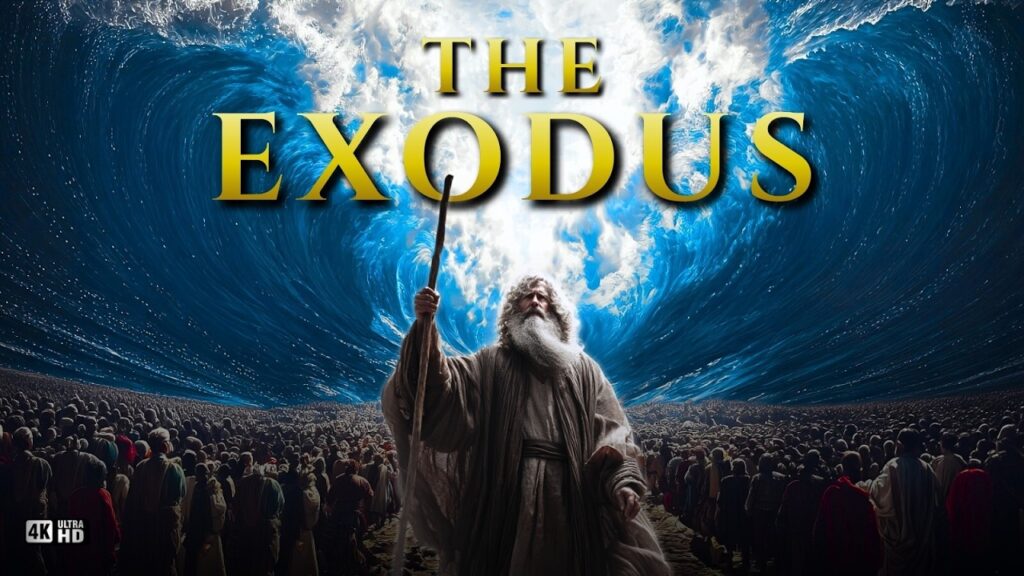

A burning bush, but the flames don’t consume it. From within the fire, a voice calls a name. Moses. That impossible encounter in the desert would trigger the confrontation with the most powerful man on earth. 10 devastating plagues. A night when death swept through Egypt and the moment when the sea literally split in half from the burning bush to the Red Sea. This is the complete story of the greatest deliverance ever recorded in history. Moses wasn’t looking for God. He was running from him. 40 years earlier, he had been a prince of Egypt, raised in the halls of ferionic power, educated in the mysteries of the court, destined perhaps for political greatness. But an act of violence, the death of an Egyptian taskmaster who was beating a Hebrew had destroyed everything. In a moment of righteous fury, Moses killed the oppressor and hid the body in the sand. But the secret leaked out. Pharaoh ordered his execution and Moses ran. Now he was in Midian, an arid land south of Si, married to Zippora, daughter of a local priest named Jethro. He was no longer a prince. He was a shepherd. His days consisted of guiding sheep over rocky slopes, protecting them from predators, finding water in dry waddies. The routine was silent, anonymous, safe. exactly what a fugitive needed. But the Egypt Moses left behind continued to bleed. His Hebrew brothers, descendants of Abraham, Isaac, and Jacob, groaned under the weight of brutal slavery. They made bricks without straw. They built storage cities for an empire that despised them. Their children were murdered at birth. Their prayers seemed to echo in a cosmic void. They cried out for deliverance, but the heavens remained silent. or so it seemed because while Moses shepherded sheep in the desert, something was about to happen. It was an ordinary day. Moses had led Jethro’s flock beyond the usual limits of pasture, penetrating deeper into the desert toward Mount Horeb, the mountain the locals called the mountain of God. The terrain was rugged, covered with dark volcanic rocks and thorny bushes that managed to survive on almost nothing. And then he saw it. In the middle of the arid vastness, a bush was on fire. There was nothing special about that. The Sinai sun was relentless, and occasionally dry bushes caught fire spontaneously or from lightning. What captured Moses’ attention wasn’t the fire. It was what the fire wasn’t doing. It wasn’t consuming. The flames danced over the dry branches of the bush, alive, bright, intense, but the branches remained intact. No black smoke, no falling ash, no smell of burning wood. The bush burned, but didn’t turn to charcoal. It was as if the fire existed in a parallel dimension, touching matter without destroying it. Moses stopped. His rational mind, trained in Egyptian sciences, searched for an explanation. Perhaps it was an optical illusion caused by heat. Perhaps natural vapors rising from the ground. But no, the fire was real, and it was defying all the laws of physics, he knew. I will now turn aside and see this great sight. Why the bush is not burnt. Exodus 3:3. He began to approach, and that’s when everything changed. A voice emerged from within the flames, not loud, not thundering, but unmistakably present, carrying a weight that made the surrounding air seemed dense. Moses, Moses, his name, repeated twice. There was no one nearby, only him, the sheep, and that impossible fire. Moses felt his heart race. Something in that voice was ancient, eternal, as if it had echoed since before the creation of the world. “Here am I,” he responded, almost without realizing he had spoken. Exodus 3:4. The voice continued, and its words carried absolute authority. “Draw not nigh hither, put off thy shoes from off thy feet, for the place whereon thou standest is holy ground.” Exodus 3:5. holy ground there in that anonymous piece of desert. Moses obeyed immediately, his fingers trembling as he untied his leather sandals. The ground under his bare feet was warm, but not from temperature. It was as if the very presence emanating from that fire made the ground sacred. And then came the revelation that would change his life forever. I am the God of thy father, the God of Abraham, the God of Isaac, and the God of Jacob. Exodus 3:6. Moses hid his face. Terror and reverence flooded him simultaneously. This wasn’t a nature spirit. It wasn’t a lesser deity among many. It was the God of his ancestors. The God who had been silent for 400 years was speaking again. What God said next wasn’t an invitation. It was a summons. I have surely seen the affliction of my people which are in Egypt, and have heard their cry by reason of their task masters, for I know their sorrows. Exodus 3:7. Each word carried the weight of centuries of suffering. God wasn’t distant. He had seen every lash, heard every mother’s lament over her son’s body drowned in the Nile, felt every tear shed under the scorching sun, while Hebrews made bricks for Egyptian monuments. Divine silence wasn’t indifference. It was strategic patience, waiting for the exact moment, and that moment had arrived. And I am come down to deliver them out of the hand of the Egyptians, and to bring them up out of that land, unto a good land, and a large, unto a land flowing with milk and honey. Exodus 3:8. A land flowing with milk and honey. The promise made to Abraham centuries before hadn’t been forgotten. The covenant remained active. But then came the part that made Moses blood freeze. Come now, therefore, and I will send thee unto Pharaoh, that thou mayest bring forth my people, the children of Israel, out of Egypt. Exodus 3:10. Silence, the crackling of flames, the hot desert wind. Moses processed what he had just heard. He, a fugitive, a wanted murderer, an 80-year-old sheep shepherd, should return to Egypt. Face Pharaoh, the most powerful man in the known world, demand the liberation of millions of slaves who sustained the Egyptian economy. It was madness. It was impossible. It was suicide. Who am I that I should go unto Pharaoh and that I should bring forth the children of Israel out of Egypt? Exodus 3:11. The first objection, not from rebellion, but from genuine terror. Moses knew Egypt. He knew Pharaoh’s absolute power. He knew the armies, the prisons, the methods of execution. He had witnessed the empire’s cruelty. How could a simple man challenge a living deity? Because that’s how Pharaoh was seen as an incarnation of the gods. God’s answer was simple but profound. Certainly, I will be with thee. Exodus 3:12. Not an explanation, not a detailed military plan, just a promise of presence and a sign. When Moses freed the people, they would return to this very mountain to worship God. Success itself would be the proof. But Moses still wasn’t convinced. His mind searched for loopholes, escape routes, logical reasons why someone more qualified should go. Behold, when I come unto the children of Israel, and shall say unto them, the God of your fathers hath sent me unto you, and they shall say to me, what is his name? What shall I say unto them? Exodus 3:13. The second objection. And this one was clever. In the ancient near east, names had power. They defined essence, authority, jurisdiction. The Egyptians had hundreds of gods, each with specific names and delimited domains. Rah governed the son. Osiris the afterlife. Horus royalty. If Moses came to the Hebrews saying, “A God sent me,” they would naturally ask, “which God? What authority does he have? Why should we obey?” And that’s when God revealed something never before declared with such clarity. I am that I am. Exodus 3:14. Four words that would forever change human theology. Not a name like the others, not a function or title, a pure ontological declaration, self-derived existence, non-contingent being, the eternal who depends on nothing and no one to exist. While all Egyptian gods were personified forces, the sun, the river, death, this god was different. He simply was. Thus shalt thou say unto the children of Israel, I am hath sent me unto you. Exodus 3:14. More than that, God added, “The Lord God of your fathers, the God of Abraham, the God of Isaac, and the God of Jacob, hath sent me unto you. This is my name forever, and this is my memorial unto all generations.” Exodus 3:15. This wasn’t a new God. It was the same one who had walked with Abraham, who had promised a nation, who had protected Jacob. Continuity was guaranteed. The covenant remained. But even in the face of this monumental revelation, Moses still hesitated. Fear was greater than faith, and his objections were just beginning. God had given Moses his name, had promised his presence, had guaranteed victory. But Moses was still paralyzed by fear. And now came his third objection, perhaps the most honest of all. Behold, they will not believe me, nor hearken unto my voice, for they will say, The Lord hath not appeared unto thee. Exodus 4:1. It was a legitimate concern. 400 years had passed since God clearly spoke with the patriarchs. Entire generations of Hebrews were born, suffered, and died without a single divine word. Why would they believe that now suddenly an unknown shepherd who had fled Egypt decades ago was the promised deliverer? God didn’t rebuke Moses doubt. Instead, he asked a simple question. What is that in thine hand? Exodus 4:2. Moses looked down. A rod. It was just a shepherd’s staff, a worn piece of wood used to guide sheep, ward off predators, lean on during long walks. There was nothing special about it. It was common, ordinary, mundane. Cast it on the ground, God commanded. Exodus 4:3. Moses obeyed. The rod fell on the stones, and the instant it touched the ground, it happened. The wood writhed, elongated, came to life. Scales sprouted where there had been bark. The rod transformed into a serpent. And not just any serpent, but a real living dangerous creature. Moses recoiled, his heart racing, the instinctive fear of a predator. Put forth thine hand and take it by the tail, God said. Exodus 4:4. By the tail. The most dangerous part. Anyone with common sense knows you don’t grab a serpent by the tail, it can turn instantly and strike. But this was a test of obedience, not logic. Moses took a deep breath, extended his trembling hand, his fingers closed around the cold, scaly tail, and at the moment of contact, the serpent became a rod in his hand again. that they may believe that the Lord God of their fathers, the God of Abraham, the God of Isaac, and the God of Jacob, hath appeared unto thee. Exodus 4:5. The first sign, a demonstration of creative and transformative power. But God didn’t stop there. Put now thine hand into thy bosom, God instructed. Exodus 4:6. Moses slid his hand under his tunic against his chest. When he withdrew it, his blood froze. His hand was leaprous, white as snow. The biblical text says the skin was covered with pale spots, the unmistakable mark of one of the most feared diseases of the ancient world. Leprosy meant isolation, social death, slow degeneration of the body. Put thine hand into thy bosom again, God said immediately. Exodus 4:7. Moses obeyed, fighting against panic. When he withdrew his hand again, it was completely restored. Healthy skin without marks as if nothing had happened. Two signs, transformation and healing, power over nature and power over disease. If the Hebrews didn’t believe the first sign, they would believe the second. And if they still doubted, and it shall come to pass, if they will not believe thee, neither hearken to the voice of the first sign, that they will believe the voice of the latter sign. And it shall come to pass, if they will not believe also these two signs, neither hearken unto thy voice, that thou shalt take of the water of the river, and pour it upon the dry land, and the water which thou takest out of the river shall become blood upon the dry land. Exodus 4:8-9. Water transformed into blood. The Nile, Egypt’s source of life, worshiped as a god, would be transformed into a symbol of death. It was a foreshadowing of what was to come. Three signs, undeniable authority, divine credentials. Any rational person would be satisfied. But Moses still had an objection. And this one revealed something deeper than fear. It revealed shame. Oh my Lord, I am not eloquent, neither hereto for, nor since thou hast spoken unto thy servant, but I am slow of speech and of a slow tongue. Exodus 4:10. The fourth objection. Moses stuttered or had some speech impediment, perhaps the result of trauma, perhaps a physical condition since childhood. He was being called to confront the most powerful speaker in the world. Pharaoh, trained in rhetoric, surrounded by eloquent scribes. And Moses could barely form fluent sentences. How could he persuade a king? How would he convince crowds? Words stumbled in his mouth before they were even pronounced. God’s answer was devastating in its simplicity. Who hath made man’s mouth? Or who maketh the dumb or deaf or the seeing or the blind? Have not I the Lord? Exodus 4:11. The creator of all things was questioning whether he had the capacity to use an imperfect instrument. Moses limitation wasn’t an obstacle for God. It was an opportunity because when deliverance happened, no one would credit human eloquence. The glory would be entirely divine. Now therefore, go and I will be with thy mouth and teach thee what thou shalt say. Exodus 4:12. But even now, after everything, the burning bush, the divine name, the three miraculous signs, the promise of empowerment, Moses made his final objection. And this was the most honest and desperate of all. Oh my Lord, send, I pray thee, by the hand of him whom thou wilt send. Exodus 4:13. In other words, send someone else. anyone else, just not me. And for the first time, divine patience wavered. And the anger of the Lord was kindled against Moses. Exodus 4:14. Five words that reveal something rarely discussed about God. He can get frustrated, not with sin or open rebellion, but with persistent refusal to trust. Moses had received everything. direct revelation, supernatural signs, personal promises, guarantee of divine presence, and still he refused to go. God’s anger, however, didn’t result in abandonment. It resulted in concession, but a concession that carried consequences. Is not Aaron the Levite thy brother? I know that he can speak well. And also, behold, he cometh forth to meet thee, and when he seeth thee, he will be glad in his heart. And thou shalt speak unto him, and put words in his mouth, and I will be with thy mouth, and with his mouth, and will teach you what ye shall do, and he shall be thy spokesman unto the people, and he shall be even he shall be to thee instead of a mouth, and thou shalt be to him instead of God. Exodus 4:14-16. Aaron would be the spokesman. Moses would speak with God. Aaron would speak with the people. It was a practical solution but also a demotion. The position that could have been exclusively Moses would now be shared. And later this same concession would bring problems. It would be Aaron who built the golden calf while Moses was on Mount Si. But for now it was what Moses needed to move forward. Take this rod in thine hand wherewith thou shalt do signs. Exodus 4:17. The same shepherd’s rod. But now it was no longer just a piece of wood. It was a scepter of divine authority. It would be used to transform the Nile into blood to divide the Red Sea to make water gush from rocks. The common tool in the hands of an extraordinary god. Moses finally accepted. He returned to Jethro and asked permission to return to Egypt. Go in peace, his father-in-law responded. Exodus 4:18. There was no way for Jethro to know he was releasing the man who would shake empires. God spoke again, “Go, return into Egypt, for all the men are dead which sought thy life.” Exodus 4:19. The Pharaoh who had ordered Moses’ execution was dead. A new pharaoh reigned, one who didn’t know Moses, nor cared about the story of Joseph and how a Hebrew had saved Egypt from famine centuries before. Moses took his wife and his sons, placed them on a donkey, and began the journey back. In his hand, he carried the rod of God. Exodus 4:20. But before reaching Egypt, God gave him a prophetic warning and a message for Pharaoh that revealed the true nature of the conflict about to begin. And thou shalt say unto Pharaoh, thus sayeth the Lord, Israel is my son, even my firstborn. And I say unto thee, let my son go that he may serve me. And if thou refuse to let him go, behold, I will slay thy son, even thy firstborn. Exodus 4:22-23. This wouldn’t just be a political battle between a liberator and a tyrant. It would be a theological confrontation between the God of Israel and the gods of Egypt. Each plague would attack a specific Egyptian deity. Each miracle would prove the supremacy of the God who revealed himself in the burning bush. And the climax would be personal. Son for son. Israel was called God’s firstborn. If Pharaoh refused to free God’s son, he would lose his own firstborn. The prophecy was cast. Destiny was sealed. But Pharaoh didn’t know it yet. Moses crossed the desert. Each step bringing him closer to Egypt. Aaron, moved by God, went out to meet him. The two brothers met at the mountain of God, the same place where the bush had burned. There Moses told everything, the voice, the fire, the name, the signs, the mission. And then together they began the final walk toward the confrontation that would change the world. But before facing Pharaoh, they needed to convince their own people. Because a nation enslaved for 400 years, rarely manages to imagine freedom. And hope, when repeatedly crushed, becomes harder to ignite than a bush in the desert. Moses and Aaron entered Egypt not as conquerors, but as messengers. Their first stop wasn’t Pharaoh’s palace, but the Hebrew communities scattered throughout the land of Goshan, the region where Jacob’s descendants had been confined for generations. What they found was a broken nation. 400 years of slavery had done more than destroy bodies. They had destroyed the collective soul. Men bent under the weight of bricks, women with empty eyes, having buried too many children. Children who knew only whips and orders shouted in Egyptian. The promise made to Abraham that his descendants would inherit a land seemed a distant legend, perhaps just a tale to calm children before they slept. Moses and Aaron summoned the elders, the tribal leaders who still maintained some structure of authority among the Hebrews. Old men, scars on their backs, memories of lashings, humiliation, sons drowned in the Nile during the genocidal decree decades ago. And there, before these weary men, Aaron spoke. He conveyed everything God had revealed to Moses at the burning bush. He spoke of the divine name I am. He spoke of the promise of deliverance. He spoke of a land flowing with milk and honey. He spoke of how God had seen, heard, and known their sorrows. But words, however beautiful, rarely convince those who have suffered too much. So Moses, through Aaron, performed the signs. The rod transformed into a serpent before their eyes. The hand became lepous and was instantly healed. These weren’t tricks. They weren’t illusions. They were impossibilities manifested in physical reality. And something extraordinary happened. And the people believed, and when they heard that the Lord had visited the children of Israel, and that he had looked upon their affliction, then they bowed their heads and worshiped. Exodus 4:31. After 400 years of silence, God had spoken. After generations of seemingly unanswered prayers, God had seen. And they didn’t just believe. They bowed. Old men fell to their knees. Tears ran down faces hardened by the sun and pain. Worship burst from hearts that had almost forgotten how to hope. It was the beginning of something impossible. But the impossible would require a price, and that price would begin in Pharaoh’s palace. Moses and Aaron left the Hebrew community and headed to the heart of Egyptian power. The palace was a monumental structure. Columns covered with hieroglyphs proclaiming Pharaoh’s divinity. Statues of gods with animal heads flanking each corridor. Guards armed with bronze spears watching every door. This was the center of the civilized world. Egypt was the unquestioned superpower of the era. Its pyramids defied time. Its armies were invincible. Its economy dominated international trade. And at the center of all this was Pharaoh. Not just a king, but a living God, mediator between heaven and earth, absolute lord. Moses had grown up there. He knew the corridors, the rituals, the language of power. But now he didn’t come as a prince. He came as an adversary. They were introduced into Pharaoh’s presence. The monarch sat on his elevated throne dressed in royal insignia. the striped neems, the ceremonial false beard, the crook and flail crossed over his chest. Around him, scribes, priests, counselors, court magicians, and then Moses through Aaron pronounced the words that would initiate the greatest confrontation in ancient history. Thus saith the Lord God of Israel, “Let my people go that they may hold a feast unto me in the wilderness.” Exodus 5:1. The hall fell silent. Counsillors exchanged glances. Some laughed discreetly. The audacity was incredible. Two Hebrews, members of the lowest slave class, entering the palace and demanding that Pharaoh free his workforce. Pharaoh’s answer was predictable and devastating. Who is the Lord that I should obey his voice to let Israel go? I know not the Lord, neither will I let Israel go. Exodus 5:2. It wasn’t just refusal. It was theological contempt. Pharaoh didn’t know this Lord in the Egyptian pantheon of hundreds of deities. Where was this God of the Hebrew slaves? What temples did he possess? What priests served him? What military victories proved his power? To Pharaoh, the God of Israel was non-existent or irrelevant. just another tribal deity of a conquered people. Why would a god king of Egypt bow before such a claim? Moses and Aaron tried again, adjusting the language. The God of the Hebrews hath met with us. Let us go, we pray thee, 3 days journey into the desert, and sacrifice unto the Lord our God. Exodus 5:3. They appealed to religious reasons, not political, just 3 days, just a festival. But Pharaoh saw through the strategy, and his response wasn’t just refusal, it was punishment. Wherefore do ye, Moses and Aaron, let the people from their works get you unto your burdens. Exodus 5:4. And then he issued a cruel decree. Ye shall no more give the people straw to make brick as hereto for. Let them go and gather straw for themselves. And the tail of the bricks which they did make hereto for, ye shall lay upon them. Ye shall not diminish ought thereof. Exodus 5:7 to8. It was a brutal move. Before the Egyptians provided the straw necessary to make bricks, straw acted as structural reinforcement in the clay. Now the Hebrews would have to find their own straw while maintaining the same production quotota. It was physically impossible. It was deliberately cruel. The decrees spread through the Hebrew communities like fire. Egyptian task masters shouted the new orders. Hebrew officers, men of their own people forced to enforce the quotas, trembled as they realized the impossibility that had been imposed on them. The Hebrews scattered across the fields, searching for straw, stubble, anything that could serve. But Egypt was an efficient agricultural civilization. Straw didn’t just lie scattered on the ground. It was collected, stored, controlled. Finding it meant wandering for miles, negotiating with Egyptian farmers who despised them, sifting through garbage heaps. And meanwhile, time was running. The quotas didn’t change. The numbers remained the same. At the end of the day, the count didn’t add up. It could never add up. And the Egyptian task masters did what they always did when quotas weren’t met. And the officers of the children of Israel did see that they were in evil case. Exodus 5:14, not the common workers, the Hebrew officers, those who were responsible for supervising their own people, men who already carried the impossible weight of mediating between oppressors and oppressed. Now they were publicly whipped, humiliated. Blood stained their backs while Egyptian voices shouted, “Wherefore have ye not fulfilled your task in making brick both yesterday and today as hereto for?” Exodus 5:14. The answer was obvious. It was impossible, and everyone knew it. But systems of oppression don’t care about impossibilities. They thrive on them. The Hebrew officers, desperate and humiliated, did what anyone would do. They went directly to the one responsible, not to the Egyptians. They knew there would be no mercy there. They went to Pharaoh, the only one who could change the decree. Wherefore dealest thou thus with thy servants? They cried before him. There is no straw given unto thy servants, and they say to us, make brick, and behold, thy servants are beaten, but the fault is in thine own people. Exodus 5:15-16. They appealed to logic, to basic justice, to economic efficiency itself. How could Pharaoh expect production if workers were made unable to work? Pharaoh’s answer was cold and calculated. Ye are idle. Ye are idol. Therefore ye say, Let us go and do sacrifice to the Lord. Go therefore now and work, for there shall no straw be given you, yet shall ye deliver the tail of bricks. Exodus 5:17 to18. He transformed his cruelty into accusation. They weren’t overworked. They were lazy. Their religion wasn’t legitimate. It was an excuse to avoid work. And the solution was to work more, not less. The officers left the palace destroyed. The hope they had felt days ago when Moses brought the signs when God seemed to finally answer 400 years of prayers. That hope now seemed a cruel trap. And then they saw Moses and Aaron waiting outside the palace. All the anger, all the pain, all the frustration exploded. The Lord look upon you and judge because ye have made our savor to be abhored in the eyes of Pharaoh and in the eyes of his servants to put a sword in their hands to slay us. Exodus 5:21. It wasn’t gratitude. It was accusation. You made everything worse. Before you came, our slavery was bearable. Brutal, yes. Unjust, yes, but survivable. Now you awakened Pharaoh’s wrath and he’s killing us. You didn’t bring deliverance. you brought destruction. Moses stood there in silence absorbing the words. He had obeyed God. He had done exactly what he was commanded. And the result, his own people hated him. The situation had worsened dramatically. Pharaoh was more entrenched than ever. For the first time since the burning bush, Moses questioned not just his capacity, but the divine plan itself. He turned not toward the palace, not toward his people, but toward God. And what came from him wasn’t a reverent prayer. It was a desperate cry, almost an accusation. Lord, wherefore hast thou so evil intreated this people? Why is it that thou hast sent me? For since I came to Pharaoh to speak in thy name, he hath done evil to this people, neither hast thou delivered thy people at all. Exodus 5:22-23. It was the brutal honesty of a man who had risked everything and seen everything crumble. Why? Why would God send him only to make things worse? Why awaken hope only to crush it? Why promise deliverance and then allow intensified cruelty? Moses was at the breaking point. His people rejected him. Pharaoh despised him. And now he was alone in the spiritual desert questioning whether he had heard correctly at the burning bush. But God wasn’t silent and his answer wouldn’t be empty comfort. It would be the revelation of a much larger plan. A plan where present darkness was necessary prelude to coming light. God’s answer didn’t come immediately. There was no thunder. There was no fire. Just the heavy silence of the desert under the night sky. And then, as if the air itself became dense with divine presence, God spoke, “Now shalt thou see what I will do to Pharaoh, for with a strong hand shall he let them go, and with a strong hand shall he drive them out of his land.” Exodus 6:1. It wasn’t an explanation of present suffering. It was a promise of what was to come. And then God did something extraordinary. He revealed deeper layers of his own identity. I am the Lord, and I appeared unto Abraham, unto Isaac, and unto Jacob, by the name of God Almighty, but by my name Jehovah, was I not known to them. Exodus 6:2:3. This was a monumental theological revelation. The patriarchs had known God as El Shadai, God Almighty, the provider, the one who blesses. But now through Moses, a deeper dimension would be revealed. The name Yahweh I am wasn’t just a title. It was the essence of a God who acts in history, who fulfills promises, who liberates. And I have also established my covenant with them to give them the land of Canaan, the land of their pilgrimage, wherein they were strangers. Exodus 6:4. The covenant hadn’t been forgotten. The promise made centuries ago remained active. And now finally it would be fulfilled. And I have also heard the groaning of the children of Israel whom the Egyptians keep in bondage. And I have remembered my covenant. Exodus 6:5. Every tear had been seen. Every cry had been heard. Divine silence wasn’t absence. It was strategic timing. And now the prophetic clock had struck midnight. God then gave Moses a series of linked promises. each building on the previous seven declarations that shaped Israel’s identity as a nation. Wherefore say unto the children of Israel, I am the Lord, and I will bring you out from under the burdens of the Egyptians, and I will rid you out of their bondage, and I will redeem you with a stretched out arm, and with great judgments, and I will take you to me for a people, and I will be to you a god. And ye shall know that I am the Lord your God, which bringeth you out from under the burdens of the Egyptians, and I will bring you in unto the land concerning the which I did swear to give it to Abraham, to Isaac, and to Jacob, and I will give it you for an heritage. I am the Lord. Exodus 66 to8 7 I wills, I will bring, I will rid, I will redeem, I will take, I will be, I will bring in, I will give. Each promise was a divine commitment. Each verb was a guarantee of action. And twice as a frame for this monumental declaration, God repeated, “I am the Lord.” Not a God among many, not a limited force. The Lord, the only one, the eternal, the absolute sovereign over all things. But there was something more in this revelation. The great judgments God mentioned wouldn’t just be demonstrations of power. They would be surgical theological attacks against the entire Egyptian religious system. Each plague would dismantle an Egyptian deity. Each miracle would prove that Egypt’s gods were powerless before Israel’s God. Moses returned to the Hebrews with these promises. He spoke the exact words God had given. But something had changed. But they hearkened not unto Moses for anguish of spirit and for cruel bondage. Exodus 6:9. Pain had become a barrier to faith. The intensified suffering had closed their hearts. They couldn’t hear promises of deliverance because they were too busy trying to survive the next day. Hope when repeatedly crushed eventually dies. And resurrecting it requires more than words. It requires action. And God was about to act in a way he had never acted before. Not through arguments, not through diplomacy, but through 10 progressive demonstrations of power that would shake the most powerful empire on earth. Go in, speak unto Pharaoh, king of Egypt, that he let the children of Israel go out of his land. God commanded again. Exodus 6:11. Moses hesitated one last time, repeating his old objection. Behold, the children of Israel have not hearkened unto me. How then shall Pharaoh hear me, who am of uncircumcised lips? Exodus 6:12. But this time there was no negotiation. God simply commissioned both Moses and Aaron and gave them clear authority. And then he revealed something crucial. And I will harden Pharaoh’s heart and multiply my signs and my wonders in the land of Egypt. Exodus 7:3. Here was the divine mystery. God would harden Pharaoh’s heart. Not to make him a villain, but because Pharaoh already was a villain. Divine hardening would only confirm and intensify what already existed in the tyrant’s heart. And the purpose to multiply signs and wonders. Each refusal from Pharaoh would be an opportunity for another miracle, another demonstration, another revelation of divine supremacy. And the Egyptians shall know that I am the Lord when I stretch forth mine hand upon Egypt and bring out the children of Israel from among them. Exodus 7:5. This wouldn’t just be a rescue of slaves. It would be theological education on a national scale. All of Egypt, from Pharaoh to peasants, would learn that there is only one true God, and his name is I am. Moses and Aaron, now 80 and 83 years old, respectively, were finally ready. Not because they had conquered their fears, not because they trusted in their own abilities, but because they had finally accepted that the battle didn’t depend on them. They returned to the palace. And this time they didn’t come just with words. They came with power. Moses and Aaron entered the throne room again. This time the atmosphere was different. There was no nervousness. There was no hesitation. They carried the authority of those who had been in the presence of the eternal. Pharaoh received them with the same disdain as before. Around him his magicians, priests of Rah, masters of Egyptian occult arts, men who claimed to manipulate cosmic forces through incantations and rituals. They had studied for decades in the temples. They knew the secrets of sacred serpents, chemical transformations, illusions that impressed crowds. Show a miracle, Pharaoh challenged. Exodus 7:9. If this Hebrew god was so powerful, let him demonstrate. Egypt had its own wonders, its own gods, its own marvels. Aaron cast his rod before Pharaoh and before his servants, and it became a serpent. Exodus 7:10. Not a common snake. The Hebrew word used here, tannin, can mean a great serpent, even a dragon or monstrous creature. It was impressive, threatening, unmistakably supernatural. But Pharaoh wasn’t shaken. He gestured to his magicians. Do the same, and they did, or at least seemed to. Then Pharaoh also called the wise men and the sorcerers. Now the magicians of Egypt, they also did in like manner with their enchantments, for they cast down every man his rod, and they became serpents. Exodus 7:11 to12. The hall was now full of serpents. The rods of the Egyptian magicians through some combination of trickery, occult art, or demonic power also transformed. It was an apparent tie. Egypt’s gods could match Israel’s god. The magician smiled. Pharaoh leaned back on his throne, satisfied. See, his eyes said, “You have nothing we can’t replicate.” But then something happened that no one expected. But Aaron’s rod swallowed up their rods. Exodus 7:12. Aaron’s serpent, larger and more powerful, opened its mouth and swallowed each of the magicians serpents. It wasn’t a battle. It was complete absorption. The Egyptian serpents simply disappeared inside the Hebrew creature as if they had never existed. It was a symbolic statement impossible to ignore. Israel’s God doesn’t just rival Egypt’s gods. He consumes them. He is categorically superior, totally sovereign. But Pharaoh didn’t bow. On the contrary, and he hardened Pharaoh’s heart that he hearkened not unto them, as the Lord had said. Exodus 7:13. Pride stubbornness political self-preservation, perhaps all of it together. Admitting that the Hebrews had a more powerful god meant admitting that the entire Egyptian worldview was wrong, that Pharaoh wasn’t divine, that the temples, the rituals, the centuries of theology, all was empty. For a man who saw himself as an incarnate God, such admission was impossible. So God intensified the conflict. No more symbolic demonstrations. Now would come real, tangible, devastating judgment. The next morning, Moses found Pharaoh at the banks of the Nile. The king came daily to the river for private rituals. Some scholars speculate he secretly used the river as a toilet. An irony considering he was worshiped as a god. But the Nile was more than a river to Egypt. It was the source of all life, the artery that fed civilization. The Nile itself was deified as happy, the god of the annual flood that made agriculture possible. Attacking the Nile was attacking Egypt’s theological heart. Thus saith the Lord, in this thou shalt know that I am the Lord. Behold, I will smite with the rod that is in mine hand upon the waters which are in the river, and they shall be turned to blood, and the fish that is in the river shall die, and the river shall stink, and the Egyptians shall loathe to drink of the water of the river. Exodus 7:17 to 18. Moses raised the rod. Aaron stretched it over the waters of the Nile, and instantly something impossible happened, and all the waters that were in the river were turned to blood, and the fish that was in the river died, and the river stank, and the Egyptians could not drink of the water of the river, and there was blood throughout all the land of Egypt. Exodus 7:20 to 21. It wasn’t metaphorical. It wasn’t red algae bloom. It was literal blood. The water that sustained the entire nation became liquid of death. The smell of decomposition filled the air. Fish rotted on the banks. Water reservoirs, wells, clay jars in houses, everything containing Nile water was contaminated. The river god was dead. But the Egyptian magicians, desperate to maintain their relevance, performed their enchantments again. And the magicians of Egypt did so with their enchantments. Exodus 7:22. They transformed water, presumably from some source not yet contaminated, into blood as well. It was an empty victory. They proved they could replicate the plague, but couldn’t reverse it. They could create more destruction, but couldn’t offer a solution. It was the essence of powerlessness disguised as power. And Pharaoh, seeing that his magicians apparently matched the miracle, hardened his heart, and hearkened not unto them, as the Lord had said. Exodus 7:22. The Egyptians dug around the river, searching for drinking water in the soil. Exodus 7:24. For 7 days, Egypt suffered with thirst. 7 days of the smell of death. Seven days of water crisis in a nation that depended totally on a single river. And then came the second plague. And the third and the fourth frogs, millions of them. They emerged from the Nile like a living flood, jumping over the banks, invading homes, covering beds, leaping into ovens still hot, filling food bowls. The goddess Hecet, represented as a woman with a frog’s head, was a symbol of fertility and birth in Egypt. Now her image was everywhere, but not as blessing, as plague. And the river shall bring forth frogs abundantly, which shall go up and come into thine house, and into thy bed chamber, and upon thy bed, and into the house of thy servants, and upon thy people, and into thine ovens, and into thy kneading troughs. Exodus 8:3. There was no escape. Rich and poor, priests and slaves, everyone woke with frogs on their faces, stepped on them while walking, found them inside their food. The Egyptian magicians, still trying to prove relevance, made more frogs appear. Exodus 8:7. Again, destruction without solution. They could intensify the problem, but not resolve it. For the first time, Pharaoh wavered. He called Moses and Aaron and made an offer. Entreat the Lord that he may take away the frogs from me and from my people, and I will let the people go, that they may do sacrifice unto the Lord. Exodus 88. Moses prayed, and God responded. The frogs died all at the same time, and they gathered them together upon heaps, and the land stank. Exodus 8:14. Heaps of frog corpses rotting under the Egyptian sun. The smell was unbearable. But when relief came, Pharaoh broke his promise. But when Pharaoh saw that there was restbite, he hardened his heart and hearkened not unto them, as the Lord had said. Exodus 8:15. It was a pattern that would repeat. Crisis, promise, relief, broken promise. The third plague came without warning. Aaron stretched out his rod and struck the dust of the earth, and all the dust became lice, tiny creatures that infested men and animals throughout all Egypt. Exodus 8:17. It was a direct attack on Egyptian priests who needed to maintain absolute ritual purity. They shaved their entire bodies to avoid contamination. Now they were covered with parasitic insects. They couldn’t perform rituals. They couldn’t enter the temples. Egyptian religion was paralyzed and for the first time the magicians completely failed and the magicians did so with their enchantments to bring forth lice but they could not. Exodus 8:18 They tried. They repeated their enchantments. They invoked their gods but nothing happened. There was a limit to their powers and that limit had just been reached. And then they said something extraordinary to Pharaoh. This is the finger of God. Exodus 8:19. The magicians themselves, representatives of the Egyptian religious system, admitted they were being overcome by genuine divine power, not magic, not trickery, but direct intervention from the creator of the universe. Pharaoh, however, refused to listen, and Pharaoh’s heart was hardened, and he hearkened not unto them, as the Lord had said. Exodus 8:19. Flies, not just common flies, dense swarms, living clouds of insects that filled houses, covered faces, made it impossible to breathe without inhaling flies. The Hebrew description suggests flies that bit that stung that carried diseases. But this time God made a crucial distinction. And I will sever in that day the land of Goshan in which my people dwell that no swarms of flies shall be there to the end thou mayest know that I am the Lord in the midst of the earth. Exodus 8:22. The Hebrews who had suffered alongside the Egyptians in the first plagues were now protected. An invisible line divided Egypt. On the Egyptian side, devastation. On the Hebrew side, peace. It was impossible to attribute this to natural causes. Natural phenomena don’t make ethnic distinctions, but Israel’s God does. Pharaoh, desperate, called Moses, again, made concessions. First he offered sacrifice but stay in Egypt. Moses refused. Then go but not very far. Still controlling, still dictating terms. Exodus 8:25-28. Moses prayed. The flies disappeared. And Pharaoh predictably hardened his heart at this time also. Neither would he let the people go. Exodus 8:32. Then came the fifth plague. Pestilence that killed Egyptian livestock. Horses, donkeys, camels, oxen, sheep, all the animals that sustained the Egyptian economy and transportation died on mass. Exodus 96. But of the cattle of the children of Israel died, not one. Exodus 9:7. Pharaoh sent investigators. They confirmed no Hebrew animal had died. The miracle was verifiable, documented. And even so, the heart of Pharaoh was hardened, and he did not let the people go. Exodus 9:7. The sixth plague brought boils, painful sores that erupted on the skin of men and animals. Moses threw ashes from the furnace into the air, and they spread like fine dust throughout all Egypt. Where the dust touched, sores appeared. Exodus 9:10. The magicians couldn’t even stand before Moses because of the boils. For the boil was upon the magicians and upon all the Egyptians. Exodus 9:11. Egypt’s theological defenders were defeated, covered with sores, unable to perform rituals, humiliated before the entire nation. The seventh plague was different. This time, God sent a detailed warning. Moses went to Pharaoh and declared that hail would come like had never fallen in Egypt since its foundation. Stones of hail mixed with fire, a supernatural storm that would destroy everything outdoors. Exodus 9:18. And for the first time some Egyptians believed, “He that feared the word of the Lord among the servants of Pharaoh made his servants and his cattle flee into the houses. And he that regarded not the word of the Lord left his servants and his cattle in the field. Exodus 9:20-21. The word of God was creating divisions within Egypt itself. Some saw the truth. Some still refused to believe. Moses stretched out his rod, and from the heavens descended terror. And the Lord sent thunder and hail, and the fire ran along upon the ground, and the Lord rained hail upon the land of Egypt. So there was hail, and fire mingled with the hail, very grievous, such as there was none like it in all the land of Egypt, since it became a nation. And the hail smoked throughout all the land of Egypt, all that was in the field, both man and beast. and the hail smoke every herb of the field and break every tree of the field. Exodus 9:23-2 But only in the land of Gan where the children of Israel were, was there no hail. Exodus 9:26. Pharaoh terrified for the first time confessed, “I have sinned this time. The Lord is righteous and I and my people are wicked.” Exodus 9:27. It seemed like genuine repentance, but it was just more manipulation. When the storm stopped, when Pharaoh saw that the rain and the hail and the thunders were ceased, he sinned yet more and hardened his heart, he and his servants. Exodus 9:34. Three plagues were still to come, and they would be the most devastating of all. The eighth plague was announced with an even more severe warning. Moses entered the palace and declared that locusts would come. Not a small cloud, but a biblical invasion that would cover the face of the earth and eat everything the hail had left. Exodus 10:4 to5. For the first time, Pharaoh’s own counselors rebelled against him. How long shall this man be a snare unto us? Let the men go that they may serve the Lord their God. Knowest thou not yet that Egypt is destroyed? Exodus 10:7. They saw what Pharaoh refused to admit. The empire was collapsing. The economy was in ruins. The livestock dead, the crops destroyed, the infrastructure broken. Continuing to resist was national suicide. Pharaoh called Moses back and tried to negotiate again. Go serve the Lord your God. But who are they that shall go? Exodus 10:8. Moses’s answer was absolute. We will go with our young and with our old, with our sons and with our daughters, with our flocks and with our herds will we go. For we must hold a feast unto the Lord. Exodus 10:9. Everyone, no exceptions, no guarantees left behind, complete freedom or nothing. Pharaoh exploded in anger. Not so. Go now, ye that are men, and serve the Lord, for that ye did desire, and they were driven out from Pharaoh<unk>s presence. Exodus 10:11. He saw through the strategy, if the women and children stayed, the men would return. Hostages guarantee return, but there would be no negotiation. Moses stretched out his rod over the land. And the Lord brought an east wind upon the land all that day and all that night. And when it was morning, the east wind brought the locusts. Exodus 10:13. What came wasn’t natural. It was apocalyptic. And the locusts went up over all the land of Egypt and rested in all the coasts of Egypt. Very grievous were they. Before them there were no such locusts as they, neither after them shall be such. For they covered the face of the whole earth, so that the land was darkened. And they did eat every herb of the land and all the fruit of the trees which the hail had left. And there remained not any green thing in the trees or in the herbs of the field through all the land of Egypt. Exodus 10:14-15. Imagine the sky blocked by insects. The sound of millions of jaws chewing. Every leaf, every grain, every green sprout disappearing in minutes. Egypt. The grainery of the ancient world reduced to a brown desert. Pharaoh called Moses hastily, “I have sinned against the Lord your God and against you. Now therefore forgive, I pray thee, my sin only this once, and entreat the Lord your God that he may take away from me this death only.” Exodus 10:16-17. Moses prayed. A strong west wind blew and carried all the locusts to the Red Sea. There remained not one locust in all the coasts of Egypt. Exodus 10:19. But when relief came, the story repeated. But the Lord hardened Pharaoh’s heart so that he would not let the children of Israel go. Exodus 10:20. Then came the ninth plague, and this one attacked the very heart of Egyptian religion. Stretch out thine hand toward heaven, that there may be darkness over the land of Egypt, even darkness which may be felt. Exodus 10:21. Moses stretched out his hand, and darkness descended upon Egypt, but not normal darkness. This was dense, tangible, oppressive. Darkness which may be felt, the text says, as if light itself had been removed from existence, leaving only pure void. And there was a thick darkness in all the land of Egypt. 3 days they saw not one another, neither rose any from his place for 3 days. Exodus 10:22-23. 3 days. 72 hours of absolute darkness. They couldn’t light lamps. The darkness swallowed them. They couldn’t see their own hands before their faces. They were frozen where they were, paralyzed by terror and the physical impossibility of navigating. It was a direct attack on Rah, the sun god, the supreme deity of the Egyptian pantheon. Pharaoh was considered Rah’s son. The entire Egyptian cosmological system revolved around the sun’s daily cycle. And now for 3 days, Rah was dead, silent, powerless. But all the children of Israel had light in their dwellings. Exodus 10:23. The division was crystal clear. Egyptians lived in darkness that could be touched. Hebrews had full light. There was no way to explain this naturally. It was pure miracle, deliberate judgment, undeniable theological revelation. When light finally returned, Pharaoh called Moses again. This time his offer was different. Go ye serve the Lord only. Let your flocks and your herds be stayed. Let your little ones also go with you. Exodus 10:24. Almost there. But still wanting control through the animals, the wealth, the sustenance of the Hebrews. Moses categorically refused. Thou must give us also sacrifices and burnt offerings that we may sacrifice unto the Lord our God. Our cattle also shall go with us. There shall not an hoof be left behind. Exodus 10:25-26. It was principle, not negotiation. Either total freedom or nothing. Pharaoh<unk>s anger exploded. Get thee from me. Take heed to thyself. See my face no more. For in that day thou seeest my face, thou shalt die. And Moses said, Thou hast spoken well. I will see thy face again no more. Exodus 10:28-29. The break was final. There would be no more audiences, no more negotiations. What would come now would be different from all previous plagues. It would be personal. It would be devastating. It would be remembered for 3,500 years. Because God was about to take from every Egyptian house what they had taken from the Hebrews for centuries, their children. God revealed to Moses that one last plague would come, and this would be so devastating that Pharaoh would not only allow the Hebrews to go, he would expel them. Thus saith the Lord, about midnight will I go out into the midst of Egypt, and all the firstborn in the land of Egypt shall die, from the firstborn of Pharaoh that sitth upon his throne, even unto the firstborn of the maidservant that is behind the mill, and all the firstborn of beasts. Exodus 11:4-5. It wouldn’t be random. It wouldn’t be natural. It would be direct divine judgment. The angel of death traveling through Egypt, house by house, palace to hut, taking the life of every firstborn son. It was proportional justice. For generations, Pharaoh had ordered Hebrew sons to be drowned in the Nile. Now, in a single night, God would take Egypt’s sons. But there would be a crucial difference. The Hebrews would be spared, not by their own merit, but through a specific ritual God was about to institute. A ritual that would become the defining event of Jewish identity, Passover. God gave meticulous instructions to Moses. On the 10th day of the month, each Hebrew family should take a lamb without blemish, a male of the first year. For 4 days, this lamb would live with the family. Children would play with it. It would become familiar, almost a member of the household. Exodus 12 3-5. And then on the 14th day at evening, each family should sacrifice the lamb, and they shall take of the blood and strike it on the two sideposts and on the upper doorpost of the houses, wherein they shall eat it. Exodus 12:7. Blood on the doors, not inside the house, but visible from the outside, a sign, a mark of protection. And the blood shall be to you for a token upon the houses where ye are. And when I see the blood, I will pass over you, and the plague shall not be upon you to destroy you when I smite the land of Egypt. Exodus 12:13. The Hebrew word is pesak. To pass over, to spare. Passover. It wasn’t magic. It wasn’t superstition. It was obedience to a specific divine promise. The blood of the innocent lamb covered the house, and death would pass. But the ritual didn’t end with the sacrifice. The lamb’s flesh should be roasted and eaten entirely that night, along with unleavened bread and bitter herbs. Exodus 12:8. And it should be eaten in a specific way, and thus shall ye eat it with your loins girded, your shoes on your feet, and your staff in your hand. And ye shall eat it in haste. It is the Lord’s Passover. Exodus 12:11. Dressed for travel, ready to leave. At any moment, the order would come. The bitter herbs symbolized the years of bitter slavery. The unleavened bread prepared hastily without time to ferment represented the urgency of deliverance. And the lamb, it pointed to something much greater than that night. It pointed to a future sacrifice that would cover not just houses but souls. The night arrived. Throughout Egypt, Egyptian families slept without knowing what was about to happen. In Hebrew homes, no one slept. They ate the lamb as commanded, the blood marking their doors, their hearts oscillating between hope and terror. Midnight. And it came to pass that at midnight the Lord smokeote all the firstborn in the land of Egypt, from the firstborn of Pharaoh that sat on his throne, unto the firstborn of the captive that was in the dungeon, and all the firstborn of cattle. Exodus 12:29. There was no sound of swords. There was no battle, only silent, instantaneous, universal death. In every Egyptian house, from the royal palace to underground prisons, the firstborn son simply stopped breathing. And Pharaoh rose up in the night, he and all his servants, and all the Egyptians. And there was a great cry in Egypt, for there was not a house where there was not one dead. Exodus 12:30. Imagine screams erupting simultaneously throughout the nation. Mothers discovering lifeless children. Fathers running from room to room. The heir to the throne dead. The servant’s son dead. Even the firstborn of animals dead. But in the houses marked with blood, silence, peace, life. The angel of death had passed over. Pharaoh, his own son, dead in his arms, completely broke. He called Moses and Aaron in the middle of the night. something unthinkable for a Pharaoh, calling them as if they were his superiors. Rise up and get you forth from among my people, both ye and the children of Israel, and go serve the Lord as ye have said. Also take your flocks and your herds, as ye have said, and be gone, and bless me also. Exodus 12:31-32. It was no longer refusal. It was desperate plea. Go, take everything. just leave and bless me. As if the blessing of slaves could reverse the curse he himself had brought upon his people. The Egyptians, terrified that everyone would die if the Hebrews remained, began to push the Hebrews out. And the Egyptians were urgent upon the people, that they might send them out of the land in haste. For they said, “We be all dead men.” Exodus 12:33. More than that, they began to give the Hebrews everything they asked for. And the children of Israel did according to the word of Moses. And they borrowed of the Egyptians jewels of silver and jewels of gold and raignment. And the Lord gave the people favor in the sight of the Egyptians, so that they lent unto them such things as they required, and they spoiled the Egyptians. Exodus 12:35-36. It wasn’t theft. It was back payment for 400 years of slave labor. Wages never received. Finally compensated in a single night. 600,000 men besides women and children, perhaps 2 million people in total, began the march out of Egypt. Exodus 12:37. They carried their unleavened dough on their backs, their animals, their children, and Egypt’s wealth. And with them went something more, Joseph’s bones. Centuries before, Joseph had made his brothers swear that when God visited them, they would carry his bones back to the promised land. Genesis 50:25. Moses didn’t forget. And Moses took the bones of Joseph with him. Exodus 13:19. The promise was being fulfilled exactly as God had told Abraham. 430 years before. Know of assurityity that thy seed shall be a stranger in a land that is not theirs, and shall serve them, and they shall afflict them 400 years. And also that nation whom they shall serve will I judge, and afterward shall they come out with great substance. Genesis 15:13-14. Every word had been fulfilled literally. But the journey was just beginning because Pharaoh, even in his mourning, hadn’t truly changed, and the Red Sea was ahead. God didn’t lead the Hebrews by the shortest route to Canaan. The coastal road, which would take only days, was full of Philistine military fortresses. A newly freed people without military training would be massacred. Exodus 13:17. Instead, God led them by the way of the desert toward the Red Sea, and he went before them in visible form, a pillar of cloud during the day, a pillar of fire at night. Exodus 13:21. It wasn’t metaphor. It was physically manifested divine presence guiding every step of the journey. The Hebrews camped by the sea at Pihahiroth between Migdal and the sea before Balzafon. Exodus 14:2. They were trapped. Mountains on one side, desert on another, and the Red Sea ahead. It was an apparently suicidal position, but it was exactly where God wanted them. In Egypt, days had passed since the 10th plague. The initial mourning began to give way to anger. Pharaoh looked around and saw his economy in collapse, his empty fields, his workforce, 2 million people, simply gone. Why have we done this that we have let Israel go from serving us? Exodus 14:5. His regret wasn’t moral. It was economic. He didn’t regret having enslaved the Hebrews. He regretted having lost them. And so, even after everything, after the 10 plagues, after the death of his own son, after seeing Israel’s god crush all of Egypt’s gods, Pharaoh made a fatal decision. He gathered his army. And he made ready his chariot and took his people with him. And he took 600 chosen chariots and all the chariots of Egypt and captains over every one of them. Exodus 14:6-7. 600 elite war chariots, plus all the rest of the Egyptian army. Horses trained for battle. Soldiers armed with the best bronze weapons, archers, spearmen, the most advanced military machine of the era against a people of former slaves, unarmed, carrying children and elderly. Pharaoh’s pride, the same pride that had resisted nine plagues, was leading him to his last act of rebellion. And God had foreseen exactly this. And I will harden Pharaoh’s heart that he shall follow after them. And I will be honored upon Pharaoh and upon all his host, that the Egyptians may know that I am the Lord. Exodus 14:4. One last lesson, one last demonstration, not just for Israel, but for Egypt, so that all the earth would know I am the Lord. The Hebrews saw the dust on the horizon first. Then they heard distant thunder, not from a storm, but from thousands of horses hooves pounding the sand. And then they saw a massive cloud of Egyptian war chariots coming toward them. Absolute terror seized the people. And when Pharaoh drew nigh, the children of Israel lifted up their eyes, and behold, the Egyptians marched after them, and they were sore afraid. And the children of Israel cried out unto the Lord. Exodus 14:10. But the cry quickly transformed into accusation against Moses. Because there were no graves in Egypt, hast thou taken us away to die in the wilderness? Wherefore hast thou dealt thus with us to carry us forth out of Egypt? Is not this the word that we did tell thee in Egypt, saying, Let us alone that we may serve the Egyptians, for it had been better for us to serve the Egyptians than that we should die in the wilderness. Exodus 14:11 to2. It was the cry of a traumatized people. We prefer the known slavery to certain death. At least in Egypt, we were alive. They were trapped. The most powerful army in the world behind them. an impossible sea ahead, no visible way out. But Moses, the man who had trembled before the burning bush, who had given five excuses not to go, who had doubted at every step, that same man now stood firm. Fear ye not, stand still, and see the salvation of the Lord, which he will show to you today. For the Egyptians whom ye have seen today, ye shall see them again no more forever. The Lord shall fight for you and ye shall hold your peace. Exodus 14:13-14. It wasn’t confidence in himself. It was confidence in the God who had revealed himself as I am. The same God who transformed rod into serpent. The same God who struck Egypt with 10 plagues. The same God who led through pillar of fire and cloud. That God hadn’t brought them this far to let them die. And then God spoke to Moses, “Wherefore criest thou unto me, Speak unto the children of Israel, that they go forward, but lift thou up thy rod, and stretch out thine hand over the sea, and divide it, and the children of Israel shall go on dry ground through the midst of the sea.” Exodus 14:15-16. Divide the sea. It was impossible. But after everything Moses had seen impossible had lost its meaning. The pillar of cloud which was guiding ahead of the people moved. It positioned itself between the Israelite camp and the Egyptian army. On the Hebrews side it was light. On the Egyptians side dense darkness. Exodus 14:19 to20. A wall of divine separation. The Egyptians couldn’t advance. And the Hebrews had time. Moses stretched out his rod over the sea, and the Lord caused the sea to go back by a strong east wind all that night, and made the sea dry land, and the waters were divided. Exodus 14:21. It wasn’t gradual. It wasn’t natural. Supernatural wind pushed the waters to both sides, creating a dry corridor in the middle of the sea. and not just dry. And the children of Israel went into the midst of the sea upon the dry ground, and the waters were a wall unto them on their right hand and on their left. Exodus 14:22. Walls of water suspended in air, defying gravity, held in place only by the power of him who created them. 2 million people began to cross. Children holding parents’ hands, elderly leaning on staffs, flocks of sheep and cattle, all walking on dry ground where there should be ocean. It was the definitive miracle, impossible to rationalize, impossible to explain. When morning came, the Egyptians saw the open path and blinded by arrogance, decided to pursue. And the Egyptians pursued and went in after them to the midst of the sea. Even all Pharaoh’s horses, his chariots, and his horsemen. Exodus 14:23. They entered the corridor, war chariots rolling over the seafloor, horses galloping where fish should swim. It was madness. It was hubris. It was suicide. And God waited until they were completely inside. And it came to pass that in the morning watch the Lord looked unto the host of the Egyptians through the pillar of fire and of the cloud and troubled the host of the Egyptians and took off their chariot wheels that they drove them heavily. Exodus 14:24-2. The chariot wheels began to come loose. Axles broke. The horses bulked. And suddenly the Egyptian soldiers realized where they were. surrounded by walls of water held only by a power they didn’t control. Let us flee from the face of Israel, for the Lord fightth for them against the Egyptians. Exodus 14:25. But it was too late. The last Israelites reached the opposite shore. And then God said to Moses, “Stretch out thine hand over the sea, that the waters may come again upon the Egyptians, upon their chariots, and upon their horsemen.” Exodus 14:26 Moses stretched out his hand, the walls collapsed, and the waters returned and covered the chariots and the horsemen and all the host of Pharaoh that came into the sea after them. There remained not so much as one of them. But the children of Israel walked upon dry land in the midst of the sea, and the waters were a wall unto them on their right hand, and on their left. Exodus 14:28-29. The entire army annihilated in seconds. Not a single survivor. The empire that had enslaved Israel for 400 years was broken. The military force that terrorized nations was destroyed. And Pharaoh, whether he himself survived or died in the sea, the text doesn’t clearly specify, had lost everything. Thus, the Lord saved Israel that day out of the hand of the Egyptians. And Israel saw the Egyptians dead upon the seashore. And Israel saw that great work which the Lord did upon the Egyptians. And the people feared the Lord and believed the Lord and his servant Moses. Exodus 14:30-31. It was the final fulfillment, the complete deliverance. And it all had begun with an impossible fire in a common bush.