#1 Evidence for Israel’s Conquest of the Promised Land…other than the Bible!
Evidence for Israel's Conquest of the Promised Land...other than the Bible!
0:00 /
0:00
For this project, my son Barry and I flew from Aman Jordan, where I live, to Cairo in Egypt. And then we took a very long drive south up the Nile River to the ruins on the Nile’s east bank called locally Telarna. So we are here at Tel Elam. And in 1887, this is the place where the Amarna letters were discovered. In 1887, uh, Wallace Budge, who worked for the British Museum, was actually under house arrest in Luxor when he was brought these clay tablets, uh, with cuneaoiform writing on them, which ended up being one of the most remarkable discoveries in all of biblical archaeology. Budge wrote, >> “A man arrived bringing with him some halfozen of the clay tablets which had been found accidentally by a woman at Tel Alamana, and he asked me to look at them and to tell him if they were genuine or forgeries. Whilst I was examining the halfozen tablets, a second man arrived with 76 more of the tablets, some of them quite large. I felt certain that the tablets were both genuine and of great historical importance.” Budge believed that these tablets were addressed to the king of Egypt and this was confirmed in 1891 when the British archaeologist Flender Petri started excavating at Teloma and found that it was the capital called Aatan. What makes these tablets so significant is what is written on them. And many of them are written from the kings of the Canaanite citystates. And together, these form the most powerful evidence outside of the Bible for the Israelite conquest of the promised land. Don’t forget to hit that subscribe button. I’ll leave a link in the description where you can order a copy of my book where God came down the archaeological evidence. Thanks for making it number one in archaeology. I’ll also leave a link where you can make a taxdeductible donation. These are greatly appreciated and used for the production of future videos. So we are in Tel Amarna and behind me here is an administrative building that in 1887 a local woman was digging probably for agricultural reasons and she found a cuneaoifor tablet. This led to locals finding more tablets here and then they were uh sold to local dealers who then sold them to others. And this is how the hundreds of cuneaoifor tablets found right here known as the amarna letters ended up in museums and private collections around the world. So after the frenzy of bartering and buying was over, then the largest cache of tablets from Amarna went to the museum in Berlin. So I went to Berlin to see this amazing collection of 160 Amarna letters and I was greatly disappointed because I could only find one of them on display. So I’ve searched through all of the museums here in Berlin. The only place that I can find the Amarna letters on display is this one Amarna letter here which is written from Jerusalem, the king of Jerusalem and sent to the pharaoh of Egypt, Aman Hoteep III. This is the label for this tablet which is in German but the English translation reads letter from the city mayor Abdiha of Jerusalem to Aman Hotep III. At this time, Jerusalem was a Canaanite city-state and its ruler’s name was Abdiha, also spelled Heba. And to his own people, Abdi Heb was a king. But when he was addressing the Pharaoh of Egypt, he took on the lesser title of mayor. And this was the typical relationship between the rulers of Canaan and the throne of Egypt. Just to be clear, tablet number 288 was sent from Jerusalem to Aman Hotep III in thieves and later moved to the royal archive found at Tel Amarna. Aenatan is the son of Aman Hotep III and he began his reign as Aman Hotep IV. But at some point after the death of his father, he began worshiping the sundisk Atan and changed his name from Aman Hoteep IV to Aenatan. and he moved his capital from thieves to Aatan. And so this is where his palace was. This is where his royal archive was. And this is where this tablet came from that’s on display in Berlin. But interestingly, it’s not addressed to Aenatan. It’s addressed to his father, Aman Hotep III. And this is the case with several of the letters that are coming from Canaan being addressed to Aman Hotep III. And what this means is that when Aenatan moved his capital from thieves, then he took at least some of the royal archive with him, which then later would eventually be discovered at Tel A. So this letter that is on display in the Berlin Museum, what does it actually say? Message of Abdiha. The land of the king is lost. I am at war. I am situated like a ship in the midst of the sea. Now the Hobbyir have taken the very cities of the king. Not a single mayor remains to the king. My lord, all are lost. The king does nothing. May the king provide archers. If there are no archers this year, all the lands of the king, my lord, are lost. After seeing this Berlin tablet, I wanted to go back to Jerusalem just to take in the context of what this letter describes. So, behind me are the ruins of Jerusalem. And in the Amarna letter, the Canaanite ruler of the city’s name is Abdi Hehba. and he is one of the most vocal of the Canaanite rulers during this period. What Abdhaba is doing is like the others, he’s asking the Pharaoh for military help. Uh the hobby he describes as coming in and taking over all the land of Jerusalem. And he describes at one point Jerusalem being like a ship in the midst of the sea. The king of Jerusalem says that he is at war with the people that he calls the hobby. And so the obvious question is who are the hobbyir? And we have a way that we can examine this. We can examine in the Amarna letters the details of the events covered there. And then we can look at other historical sources and the details found there. And if we have a match between historical sources, then we can clearly identify who the hobby people are. And this letter of Jerusalem is a good example of this because it talks about the detail that the cities surrounding Jerusalem have all been destroyed except for Jerusalem itself. Next, we traveled north from Jerusalem to the biblical city of Sheckchum. So Sheckchham here where I’m standing in the ruins of is an important and interesting city in regards to the Amarna letters because we have letters that are sent from the ruler of Sheckchham himself named Labayou as well as uh letters that are sent from other rulers that are referring to him. And one that is really very interesting is letter number 289. And this is sent from Abdu Heba the ruler of Jerusalem to the pharaoh of Egypt. And he is complaining that earlier Labaiu the the ruler of Sheckchham has given all the land of Sheckchham over to the Hobbyir. Abdihaba says or shall we do like Labayou who gave the land of Sheckchham to the Hobbyir. So we learn in the Amarna letters that the hobbyri get the land of Sheckchham without a battle. So in the 1920s when the Germans were excavating here the German archaeologist Ern Selin found two cuneaoifor tablets in his excavations here at Sheckchham that dated to 1400 BC. So this is huge because it gives us an approximate date of 1400 BC and we have the approximate dates of the pharaohs and their reigns that are being addressed in the tablets. And so this is very important chronological information that will help to identify who the hobby people are. From Sheckchham we continued on to Lkesh. Behind me is the ancient city of Lakesh. And in the Amarna letters, we have the ruler of Lkesh that’s killed in a separate incident. And then later, the Hobbyir take control of the city. In the Amarna letters, we have two different rulers of Lkesh named. In letter number 329, Zimreddi is the ruler of Lisa. But then in letter number 288, the Hobby Za of Lisu and later letter number 330 is a message of Septi Balu, the new ruler of Lkesh. The note for these translations at the bottom of the page explain this by saying zamreda was prince of lakesh and shipyalu was to succeed him. The hobby killed the king of lakesh and we know that the city of lkesh continues as a canaanite city because another Canaanite king begins to rule after the first king was killed. Uh then in a separate event covered in another place in the Amarna letters we have the city of Lkesh being taken by the Hobbyir. Next we traveled west to the city of Gazer. Letter number 299 is a message of Yapahu the ruler of Gazeru. This is the city of Gazer in the Bible. And a Yapahu wrote, “To the king, my lord, since the hobby are stronger than we, may the king, my lord, give me his help. And may the king, my lord, get me away from the hobbyir, lest the hobbyir destroy us.” Behind me here is the Canaanite gate at the ancient city of Gzer. And in the Amarna letters, we have the ruler of Gzer who is pleading with the Pharaoh of Egypt to send help because the Hobbyir are fighting against him. He says the war against Ahabu is severe and they are more powerful than he is and he’s asking the pharaoh to send troops to save him or else he’s going to be destroyed along with the city of Gazer. The ruler of Gzer is asking for military help from the Pharaoh of Egypt because he’s in this severe conflict with the Hobbyir. And despite all this, nowhere in the Amarna letters does it say that Gzer is taken by the Hobbyir. This matches with the archaeology of Gzer because there’s no destruction level at this period. And in fact, the archaeology shows that Gzer continues as an occupied Canaanite city. Finally, we travel from Gazer to the northern city of Hazor. In Hebrew, the name is pronounced Hatsor, while in English, it’s pronounced Hazor. Amarna letter number 227 is a message of the king of Hazuru. This is the city of Hatsor in the Bible. In Amarna, letter number 148, the king of Ty says that the Habiru has taken over Hadzor. Now, the ancient city that I’m standing in, Hazor, is very interesting in the Amarna letters because we both have letters that the king of Hazor sends to Pharaoh because of this conflict with the Hobbyir. And we also have a very important letter, letter number 148 that comes from the king of Ty who is uh on the Mediterranean coast, not too far away from here. And so the king of Ty is writing to the pharaoh and mentions that the city of Hazor is now under the control of the hobby. So in the Bible, Hazor is called the head of all these kingdoms. This is the largest tell in the land of Canaan. And the king of Hatsor who calls himself a king is writing to the pharaoh asking for help because of this attack of the hobbyir. I mean this is how powerful the hobbyir are that the largest city in all of Canaan is begging for help from the pharaoh of Egypt. So who are the hobbyir? Who are these people that are conquering these powerful Canaanite citystates? Well, the question is actually easily answered because when we look into historical sources right around this time period of 1400, are there any people that are claiming to conquer the land of Canaan? And the answer is clearly yes. The Israelites of the Old Testament, the Hobbyir, are the Hebrew Israelites. And this isn’t just my opinion. This is the opinion of early scholars who are making these obvious connections. Jorgan Alexander Nutson, the scholar who wrote the landmark work on the Amarna letters, wrote, “There is little objection to the view the Hobbyir are equated with the Hebrews.” This theory is actually easy to test because all we have to do is take the details in the Amarna letters and then compare them to the Israelite conquest in the Bible and see if we have a match. To begin our comparison, we’ll go back to Lkesh and see what the biblical record says. In Joshua 10, we read, “So they brought the five kings out of the cave, the kings of Jerusalem Hebron Jarmuth Lkesh and Eglon. Then Joshua put the kings to death. Then Joshua and all Israel with him moved on from Libna to Lakesh. He took up positions against it and attacked it. The Lord gave Lkesh into Israel’s hands. And Joshua took it on the second day. Behind me is the ancient city of Lkesh. And in the Amarna letters, we have the ruler of Lakesh that’s killed in a separate incident and then later the hobby take control of the city. We have this same detail in the biblical account where in the book of Joshua we have the king of Lakesh who is killed in a battle and then later in verse 32 the Israelites take the city of Lakesh. Now in the next verse Joshua 10:33 the Bible mentions the king of Gazer. In the Amarna letters the king of Gazer is begging for help from the Pharaoh of Egypt. And yet in all of the Amarna letters, we have no mention of the city of Gzer being taken by the Hobbyir. Now, this war that we read about in the Amarna letters between the ruler of Gazer and the Hobbyir is really interesting when we take into account the biblical record. The Bible says that the Israelites were not able to take this Canaanite city and that gazer did not become Israelite until the reign of King Solomon. Later in Joshua 11, the Bible talks about the Israelites battle at Hazar. Joshua 11 says, “At that time Joshua turned back and captured Hazor and put its king to the sword. Everyone in it they put to the sword. They totally destroyed them and he burned Hazor itself.” Now this is a very intriguing site when it comes to the Amarna letters because letter 148 is a letter that is sent from the ruler of Ty that says that the Habiru have taken Hatsor. So in Joshua 11, we have Hatsor destroyed by Joshua and the Israelites. And we know that the city of Hatsor continued as a Canaanite city after that because later in Judges 4, we have another conflict that is between the Israelites and the king of Hatsor. And so we have two burn destructions here at Hazar. One from the Joshua period, which is the lower uh one that’s down underneath our feet here. And then the upper one is from the judges period because for whatever reason after they took this city in the time of Joshua, it remained a Canaanite city. We know this because there’s another conflict with Hazor in the time of the judges at the time of Deborah and Barack. In Judges 4, we read that again the Israelites did evil so that the Lord sold them into the hands of Jabin, king of Canaan, who reigned in Hatsor. So Deborah and Barack pressed harder and harder against Jabin, king of Canaan, until they destroyed him. >> And then it’s after that later destruction that this city then becomes Israelite. When the Amarna letters mention that Hatsor has been taken control of by the Hobbyir, this fits best with the details in the judges chapter 4 conflict between the Israelites and the king of Hatsor. So in the mound of Hatsur we have this massive destruction which is the end of Canaanite Hatsor and then later a new city is built over the ruins of Canaanite Hatsor and this is the Israelite city. So when we’re thinking about the destruction of the Canaanite city of Hatsor that brings it to an end. The question is is who did it? Now I’ve been coming to Hazar for many many years and uh Dr. Ben Tour who um passed away this year. Uh I’ve interviewed him many many times and he has this spiel, this famous spiel that he goes through about who destroyed the city of Hazor and he goes through all the possibilities. There’s only a few possibilities and he goes through all the reasons why those aren’t actually possibilities. And then he gets to the Israelites where he says the Israelites say that they did it. And uh this is true for this city of Hazor. It’s also true for all of the land of Canaan. Uh who conquered the land of Canaan? The Hobbyir and the Amarna are conquering the land of Canaan. They’re taking Canaanite city. So who are these people? Who is this group that is conquering the land of Canaan? Well, the Israelites say at this same time period that they’re the ones who did it. They conquered the land of Canaan. And that is why archaeologically we have all these Canaanite cities becoming Israelite cities. And then in general, the land of Canaan becomes what afterwards? The land of Israel. Why? Because it’s the Hebrew Israelites who conquer the land of Canaan. And that’s why we know that the people in the Amarna letters called the Habiru are the Hebrew Israelites. Next, we’ll go back to Sheckchham to compare the Amarna account to the biblical account. In the Amarna letters, we have the ruler of Sheckchham that gives his land over to the Hobbyir. And so, does this match with the biblical record? And the answer is clearly yes. In Joshua 24, Joshua gathers the tribes of Israel to Sheckchham and made a covenant with the people. This is very strange because in the book of Joshua, we don’t have a battle for Sheckchum mentioned. And also in the book of Joshua, we have this list of all these Canaanite kings that are killed by the Israelites. And the king of Sheckchham is not listed among them. So somehow we have Sheckchum being taken over by the Israelites without a battle. And this is exactly what we have in the Amarna letters. This is not my interpretation. And this is the interpretation of John Garstang who excavated many Canaanite cities within the borders of Canaan and who believed and followed the biblical date for the conquest of 1400 BC. And like Nutson, he considered the Habiru and the Amarna letters that were attacking Canaan to be equivalent with the Hebrew Israelites of the Old Testament. In his book Joshua and Judges in regard to Joshua’s entry into Sheckchham, Garang wrote, “Joshua’s last years during which the settlement of the tribes began may have over overlapped to some extent the period covered by the Amarna letters.” The point is of great interest as in some of these direct reference is made to Sheckchham and the part played by its chief Labaiu in the anti-Egyptian revolution of the day. Garstain believed that the Amarna letter account that Labaiu had given over the land of Sheckchham to the Hobbyir that this was directly related to the covenant renewal ceremony that takes place at the end of the book of Joshua in Joshua chapter 24. Garstain points out that the covenant renewal event at Sheckchham was at the end of Joshua’s life because in the chapter before chapter 23 is Joshua’s farewell to the leaders where it says that Joshua by then was a very old man. Then comes the covenant renewal at Sheckchham as a kind of final act followed by verse 29 which says after these things Joshua son of noon the servant of the Lord died at the age of 110 and therefore he saw the end of Joshua’s life contemporary with this sheckchum event recorded in the Amarna letters however this was not by any means the end of the conquest since the book of judges opens with the heading Israel fights the remaining Canaanites and says, “After the death of Joshua, the Israelites ask the Lord, who of us is to go up first to fight against the Canaanites?” So, the conquest continues on from the book of Joshua into the book of Judges. And it’s really a lot of the details and this later Israelite conquest that match so well with the details found in the Amarna letters of the Hobbyir. And a good example of this is the city of Jerusalem. So behind me are the ruins of ancient Jerusalem and during the Amarna period uh the ruler of Jerusalem his name is Abdiha. We know that the biblical conquest takes place over a long period of time from Joshua all the way into the book of judges. So the question is is where does Abdihaba fit into it all? We know that he’s not early in the conquest because the king that is killed in Joshua 11 by the Israelites uh is named Adoni Zetic. So it makes the most sense that Abdihaba comes later in the conquest because by his time uh then the land has already been lost. The cities have already been conquered. Uh Jerusalem has already become like a ship in the midst of the sea. And so these details fit very well with the biblical record because Jerusalem remains Jebusite. Jebusi being one of the Canaanite tribes all the way up until the time King David uh conquers it. So, Jerusalem, a Canaanite city surrounded by Israelite cities in the Bible, matches very well with the details in the Amarna letters saying that Jerusalem is like this Canaanite ship being surrounded by a sea of hobby. Also, uh through the excavations of Dr. Ilot Mazar in Jerusalem. She found a fragment of an Amarna letter uh here in Jerusalem that she believes is written by the same scribe as the letters that were found in Amarna from that archive. This is amazing because so many scholars argue that Jerusalem was not an occupied city in the time period of the late Bronze one period when the Bible says that the conquest took place. Well, if it’s not an occupied city, then why is there a Mara letter here? And why is the ruler of Jerusalem writing letters to the Pharaoh in Egypt? The evidence clearly shows that there is a city here at that time. And the description of what happens to that city becoming like a ship in the midst of the sea is exactly what we read in the Bible. That Jerusalem is like a ship in the midst of the sea as a Canaanite city until it finally becomes Israelite having been conquered by King David himself. One thing that’s important to understand is that there are many many Amarna letters that are being sent to Aman Hotep III and to his son Akenatan in Egypt. Uh I’ve just chosen five Canaanite cities that uh serve as an example, but there are many many more. And despite all this, the majority view of scholars today is that the hobby of the Amarna letters are not the Hebrew Israelites of the Bible. But if you think about it, uh who else could they be? People forget that archaeologists, all archaeologists agree and historians that deal with these periods agree that Canaan, the land of Canaan becomes the land of Israel and that these Canaanite cities, something happens to them. Of course, they don’t agree what it is that happened to them, but they all agree that they cease to be Canaanite. And then what do they become next? Israelite. And there’s no archaeological uh layers in between the Canaanite layers and the Israelite layers. And there’s no historical events recorded in the historical sources in between the Canaanite cities that then become Israelite cities or the land of Canaan becoming Israel. It’s so obvious. And the reason that it’s not obvious today is because the secular view presumes that uh Israel didn’t exist in this period that the conquest, the Bible says the conquest happened. And so they presume that they didn’t exist then. Therefore, the hobby can’t possibly be the Hebrew Israelites. In the same way, the late daters who believe in the Exodus and the conquest believe that it happened a couple centuries later in the 13th century BC rather than the 15th century BC. And so they presume also that the Israelites of conquest hadn’t happened at this time period. Therefore, the Hobbyir can’t be the Hebrew Israelites. What is obvious according to the evidence itself is that these letters are referring to the Hebrew Israelites. That’s who the hobby are because they come in, they take over the land. Jerusalem becomes like a ship in the midst of the sea which it remains until it’s conquered by King David who was born in Bethlehem which in the Amarna letters also says was conquered by the Hobbyir. It’s so plain and simple and to early scholars they understood these things. They understood the connection. They identified the Hobbyiru as the Hebrew Israelites. It wasn’t until later that all these arguments and all this skepticism came about to uh to disconnect the evidence from the biblical account. The land of Canaan becomes the land of Israel because Israel is the one who conquered the land of Canaan. And these are the Hebrews of the Old Testament and the Hobbyir of the Amarnal letters. So why does this even matter? Well, it matters because what has happened in the ancient past is as real as what’s still going to happen in the future. In the past, Joshua and the Israelites really did come in and conquer the land of Canaan and made it into the kingdom of Israel. In the future, Jesus is going to return and he’s going to conquer the earth and make the whole earth his kingdom. And you don’t want to be against him. You want to be for him. You don’t want to be on the side of those being conquered, but on the side of the conqueror. And we do this by believing and following Jesus. I quickly want to tell you about a friend of mine named Nathan Lungquist. And he used to live with me in Jerusalem and was part of Expedition Bible. and he’s coming out with a documentary called Offschool Property. This documentary is about bringing the Bible back into the public school day. And so it’s going to be shown in a thousand theaters across America on October 23rd. And I’m going to leave a link so that you can see where those showings are happening and you can watch the movie trailer. I really encourage you to check it out. Don’t forget to hit that subscribe button. It really helps get this information out. I’ll leave a link where you can order a copy of my book, Where God Came Down, the Archaeological Evidence. Thanks for making it number one in archaeology. I’ll also leave a donation link where you can leave a taxdeductible donation. And uh we have a whole YouTube channel with uh videos like this. You can watch another one here. And thanks for watching and I’ll see you next time.
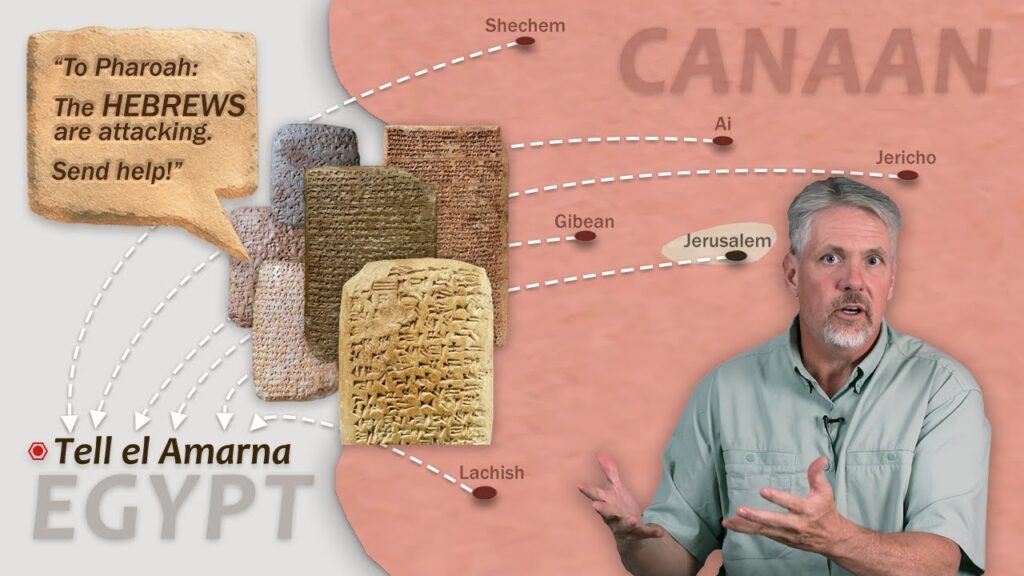


For this project, my son Barry and I flew from Aman Jordan, where I live, to Cairo in Egypt. And then we took a very long drive south up the Nile River to the ruins on the Nile’s east bank called locally Telarna. So we are here at Tel Elam. And in 1887, this is the place where the Amarna letters were discovered. In 1887, uh, Wallace Budge, who worked for the British Museum, was actually under house arrest in Luxor when he was brought these clay tablets, uh, with cuneaoiform writing on them, which ended up being one of the most remarkable discoveries in all of biblical archaeology. Budge wrote, >> “A man arrived bringing with him some halfozen of the clay tablets which had been found accidentally by a woman at Tel Alamana, and he asked me to look at them and to tell him if they were genuine or forgeries. Whilst I was examining the halfozen tablets, a second man arrived with 76 more of the tablets, some of them quite large. I felt certain that the tablets were both genuine and of great historical importance.” Budge believed that these tablets were addressed to the king of Egypt and this was confirmed in 1891 when the British archaeologist Flender Petri started excavating at Teloma and found that it was the capital called Aatan. What makes these tablets so significant is what is written on them. And many of them are written from the kings of the Canaanite citystates. And together, these form the most powerful evidence outside of the Bible for the Israelite conquest of the promised land. Don’t forget to hit that subscribe button. I’ll leave a link in the description where you can order a copy of my book where God came down the archaeological evidence. Thanks for making it number one in archaeology. I’ll also leave a link where you can make a taxdeductible donation. These are greatly appreciated and used for the production of future videos. So we are in Tel Amarna and behind me here is an administrative building that in 1887 a local woman was digging probably for agricultural reasons and she found a cuneaoifor tablet. This led to locals finding more tablets here and then they were uh sold to local dealers who then sold them to others. And this is how the hundreds of cuneaoifor tablets found right here known as the amarna letters ended up in museums and private collections around the world. So after the frenzy of bartering and buying was over, then the largest cache of tablets from Amarna went to the museum in Berlin. So I went to Berlin to see this amazing collection of 160 Amarna letters and I was greatly disappointed because I could only find one of them on display. So I’ve searched through all of the museums here in Berlin. The only place that I can find the Amarna letters on display is this one Amarna letter here which is written from Jerusalem, the king of Jerusalem and sent to the pharaoh of Egypt, Aman Hoteep III. This is the label for this tablet which is in German but the English translation reads letter from the city mayor Abdiha of Jerusalem to Aman Hotep III. At this time, Jerusalem was a Canaanite city-state and its ruler’s name was Abdiha, also spelled Heba. And to his own people, Abdi Heb was a king. But when he was addressing the Pharaoh of Egypt, he took on the lesser title of mayor. And this was the typical relationship between the rulers of Canaan and the throne of Egypt. Just to be clear, tablet number 288 was sent from Jerusalem to Aman Hotep III in thieves and later moved to the royal archive found at Tel Amarna. Aenatan is the son of Aman Hotep III and he began his reign as Aman Hotep IV. But at some point after the death of his father, he began worshiping the sundisk Atan and changed his name from Aman Hoteep IV to Aenatan. and he moved his capital from thieves to Aatan. And so this is where his palace was. This is where his royal archive was. And this is where this tablet came from that’s on display in Berlin. But interestingly, it’s not addressed to Aenatan. It’s addressed to his father, Aman Hotep III. And this is the case with several of the letters that are coming from Canaan being addressed to Aman Hotep III. And what this means is that when Aenatan moved his capital from thieves, then he took at least some of the royal archive with him, which then later would eventually be discovered at Tel A. So this letter that is on display in the Berlin Museum, what does it actually say? Message of Abdiha. The land of the king is lost. I am at war. I am situated like a ship in the midst of the sea. Now the Hobbyir have taken the very cities of the king. Not a single mayor remains to the king. My lord, all are lost. The king does nothing. May the king provide archers. If there are no archers this year, all the lands of the king, my lord, are lost. After seeing this Berlin tablet, I wanted to go back to Jerusalem just to take in the context of what this letter describes. So, behind me are the ruins of Jerusalem. And in the Amarna letter, the Canaanite ruler of the city’s name is Abdi Hehba. and he is one of the most vocal of the Canaanite rulers during this period. What Abdhaba is doing is like the others, he’s asking the Pharaoh for military help. Uh the hobby he describes as coming in and taking over all the land of Jerusalem. And he describes at one point Jerusalem being like a ship in the midst of the sea. The king of Jerusalem says that he is at war with the people that he calls the hobby. And so the obvious question is who are the hobbyir? And we have a way that we can examine this. We can examine in the Amarna letters the details of the events covered there. And then we can look at other historical sources and the details found there. And if we have a match between historical sources, then we can clearly identify who the hobby people are. And this letter of Jerusalem is a good example of this because it talks about the detail that the cities surrounding Jerusalem have all been destroyed except for Jerusalem itself. Next, we traveled north from Jerusalem to the biblical city of Sheckchum. So Sheckchham here where I’m standing in the ruins of is an important and interesting city in regards to the Amarna letters because we have letters that are sent from the ruler of Sheckchham himself named Labayou as well as uh letters that are sent from other rulers that are referring to him. And one that is really very interesting is letter number 289. And this is sent from Abdu Heba the ruler of Jerusalem to the pharaoh of Egypt. And he is complaining that earlier Labaiu the the ruler of Sheckchham has given all the land of Sheckchham over to the Hobbyir. Abdihaba says or shall we do like Labayou who gave the land of Sheckchham to the Hobbyir. So we learn in the Amarna letters that the hobbyri get the land of Sheckchham without a battle. So in the 1920s when the Germans were excavating here the German archaeologist Ern Selin found two cuneaoifor tablets in his excavations here at Sheckchham that dated to 1400 BC. So this is huge because it gives us an approximate date of 1400 BC and we have the approximate dates of the pharaohs and their reigns that are being addressed in the tablets. And so this is very important chronological information that will help to identify who the hobby people are. From Sheckchham we continued on to Lkesh. Behind me is the ancient city of Lakesh. And in the Amarna letters, we have the ruler of Lkesh that’s killed in a separate incident. And then later, the Hobbyir take control of the city. In the Amarna letters, we have two different rulers of Lkesh named. In letter number 329, Zimreddi is the ruler of Lisa. But then in letter number 288, the Hobby Za of Lisu and later letter number 330 is a message of Septi Balu, the new ruler of Lkesh. The note for these translations at the bottom of the page explain this by saying zamreda was prince of lakesh and shipyalu was to succeed him. The hobby killed the king of lakesh and we know that the city of lkesh continues as a canaanite city because another Canaanite king begins to rule after the first king was killed. Uh then in a separate event covered in another place in the Amarna letters we have the city of Lkesh being taken by the Hobbyir. Next we traveled west to the city of Gazer. Letter number 299 is a message of Yapahu the ruler of Gazeru. This is the city of Gazer in the Bible. And a Yapahu wrote, “To the king, my lord, since the hobby are stronger than we, may the king, my lord, give me his help. And may the king, my lord, get me away from the hobbyir, lest the hobbyir destroy us.” Behind me here is the Canaanite gate at the ancient city of Gzer. And in the Amarna letters, we have the ruler of Gzer who is pleading with the Pharaoh of Egypt to send help because the Hobbyir are fighting against him. He says the war against Ahabu is severe and they are more powerful than he is and he’s asking the pharaoh to send troops to save him or else he’s going to be destroyed along with the city of Gazer. The ruler of Gzer is asking for military help from the Pharaoh of Egypt because he’s in this severe conflict with the Hobbyir. And despite all this, nowhere in the Amarna letters does it say that Gzer is taken by the Hobbyir. This matches with the archaeology of Gzer because there’s no destruction level at this period. And in fact, the archaeology shows that Gzer continues as an occupied Canaanite city. Finally, we travel from Gazer to the northern city of Hazor. In Hebrew, the name is pronounced Hatsor, while in English, it’s pronounced Hazor. Amarna letter number 227 is a message of the king of Hazuru. This is the city of Hatsor in the Bible. In Amarna, letter number 148, the king of Ty says that the Habiru has taken over Hadzor. Now, the ancient city that I’m standing in, Hazor, is very interesting in the Amarna letters because we both have letters that the king of Hazor sends to Pharaoh because of this conflict with the Hobbyir. And we also have a very important letter, letter number 148 that comes from the king of Ty who is uh on the Mediterranean coast, not too far away from here. And so the king of Ty is writing to the pharaoh and mentions that the city of Hazor is now under the control of the hobby. So in the Bible, Hazor is called the head of all these kingdoms. This is the largest tell in the land of Canaan. And the king of Hatsor who calls himself a king is writing to the pharaoh asking for help because of this attack of the hobbyir. I mean this is how powerful the hobbyir are that the largest city in all of Canaan is begging for help from the pharaoh of Egypt. So who are the hobbyir? Who are these people that are conquering these powerful Canaanite citystates? Well, the question is actually easily answered because when we look into historical sources right around this time period of 1400, are there any people that are claiming to conquer the land of Canaan? And the answer is clearly yes. The Israelites of the Old Testament, the Hobbyir, are the Hebrew Israelites. And this isn’t just my opinion. This is the opinion of early scholars who are making these obvious connections. Jorgan Alexander Nutson, the scholar who wrote the landmark work on the Amarna letters, wrote, “There is little objection to the view the Hobbyir are equated with the Hebrews.” This theory is actually easy to test because all we have to do is take the details in the Amarna letters and then compare them to the Israelite conquest in the Bible and see if we have a match. To begin our comparison, we’ll go back to Lkesh and see what the biblical record says. In Joshua 10, we read, “So they brought the five kings out of the cave, the kings of Jerusalem Hebron Jarmuth Lkesh and Eglon. Then Joshua put the kings to death. Then Joshua and all Israel with him moved on from Libna to Lakesh. He took up positions against it and attacked it. The Lord gave Lkesh into Israel’s hands. And Joshua took it on the second day. Behind me is the ancient city of Lkesh. And in the Amarna letters, we have the ruler of Lakesh that’s killed in a separate incident and then later the hobby take control of the city. We have this same detail in the biblical account where in the book of Joshua we have the king of Lakesh who is killed in a battle and then later in verse 32 the Israelites take the city of Lakesh. Now in the next verse Joshua 10:33 the Bible mentions the king of Gazer. In the Amarna letters the king of Gazer is begging for help from the Pharaoh of Egypt. And yet in all of the Amarna letters, we have no mention of the city of Gzer being taken by the Hobbyir. Now, this war that we read about in the Amarna letters between the ruler of Gazer and the Hobbyir is really interesting when we take into account the biblical record. The Bible says that the Israelites were not able to take this Canaanite city and that gazer did not become Israelite until the reign of King Solomon. Later in Joshua 11, the Bible talks about the Israelites battle at Hazar. Joshua 11 says, “At that time Joshua turned back and captured Hazor and put its king to the sword. Everyone in it they put to the sword. They totally destroyed them and he burned Hazor itself.” Now this is a very intriguing site when it comes to the Amarna letters because letter 148 is a letter that is sent from the ruler of Ty that says that the Habiru have taken Hatsor. So in Joshua 11, we have Hatsor destroyed by Joshua and the Israelites. And we know that the city of Hatsor continued as a Canaanite city after that because later in Judges 4, we have another conflict that is between the Israelites and the king of Hatsor. And so we have two burn destructions here at Hazar. One from the Joshua period, which is the lower uh one that’s down underneath our feet here. And then the upper one is from the judges period because for whatever reason after they took this city in the time of Joshua, it remained a Canaanite city. We know this because there’s another conflict with Hazor in the time of the judges at the time of Deborah and Barack. In Judges 4, we read that again the Israelites did evil so that the Lord sold them into the hands of Jabin, king of Canaan, who reigned in Hatsor. So Deborah and Barack pressed harder and harder against Jabin, king of Canaan, until they destroyed him. >> And then it’s after that later destruction that this city then becomes Israelite. When the Amarna letters mention that Hatsor has been taken control of by the Hobbyir, this fits best with the details in the judges chapter 4 conflict between the Israelites and the king of Hatsor. So in the mound of Hatsur we have this massive destruction which is the end of Canaanite Hatsor and then later a new city is built over the ruins of Canaanite Hatsor and this is the Israelite city. So when we’re thinking about the destruction of the Canaanite city of Hatsor that brings it to an end. The question is is who did it? Now I’ve been coming to Hazar for many many years and uh Dr. Ben Tour who um passed away this year. Uh I’ve interviewed him many many times and he has this spiel, this famous spiel that he goes through about who destroyed the city of Hazor and he goes through all the possibilities. There’s only a few possibilities and he goes through all the reasons why those aren’t actually possibilities. And then he gets to the Israelites where he says the Israelites say that they did it. And uh this is true for this city of Hazor. It’s also true for all of the land of Canaan. Uh who conquered the land of Canaan? The Hobbyir and the Amarna are conquering the land of Canaan. They’re taking Canaanite city. So who are these people? Who is this group that is conquering the land of Canaan? Well, the Israelites say at this same time period that they’re the ones who did it. They conquered the land of Canaan. And that is why archaeologically we have all these Canaanite cities becoming Israelite cities. And then in general, the land of Canaan becomes what afterwards? The land of Israel. Why? Because it’s the Hebrew Israelites who conquer the land of Canaan. And that’s why we know that the people in the Amarna letters called the Habiru are the Hebrew Israelites. Next, we’ll go back to Sheckchham to compare the Amarna account to the biblical account. In the Amarna letters, we have the ruler of Sheckchham that gives his land over to the Hobbyir. And so, does this match with the biblical record? And the answer is clearly yes. In Joshua 24, Joshua gathers the tribes of Israel to Sheckchham and made a covenant with the people. This is very strange because in the book of Joshua, we don’t have a battle for Sheckchum mentioned. And also in the book of Joshua, we have this list of all these Canaanite kings that are killed by the Israelites. And the king of Sheckchham is not listed among them. So somehow we have Sheckchum being taken over by the Israelites without a battle. And this is exactly what we have in the Amarna letters. This is not my interpretation. And this is the interpretation of John Garstang who excavated many Canaanite cities within the borders of Canaan and who believed and followed the biblical date for the conquest of 1400 BC. And like Nutson, he considered the Habiru and the Amarna letters that were attacking Canaan to be equivalent with the Hebrew Israelites of the Old Testament. In his book Joshua and Judges in regard to Joshua’s entry into Sheckchham, Garang wrote, “Joshua’s last years during which the settlement of the tribes began may have over overlapped to some extent the period covered by the Amarna letters.” The point is of great interest as in some of these direct reference is made to Sheckchham and the part played by its chief Labaiu in the anti-Egyptian revolution of the day. Garstain believed that the Amarna letter account that Labaiu had given over the land of Sheckchham to the Hobbyir that this was directly related to the covenant renewal ceremony that takes place at the end of the book of Joshua in Joshua chapter 24. Garstain points out that the covenant renewal event at Sheckchham was at the end of Joshua’s life because in the chapter before chapter 23 is Joshua’s farewell to the leaders where it says that Joshua by then was a very old man. Then comes the covenant renewal at Sheckchham as a kind of final act followed by verse 29 which says after these things Joshua son of noon the servant of the Lord died at the age of 110 and therefore he saw the end of Joshua’s life contemporary with this sheckchum event recorded in the Amarna letters however this was not by any means the end of the conquest since the book of judges opens with the heading Israel fights the remaining Canaanites and says, “After the death of Joshua, the Israelites ask the Lord, who of us is to go up first to fight against the Canaanites?” So, the conquest continues on from the book of Joshua into the book of Judges. And it’s really a lot of the details and this later Israelite conquest that match so well with the details found in the Amarna letters of the Hobbyir. And a good example of this is the city of Jerusalem. So behind me are the ruins of ancient Jerusalem and during the Amarna period uh the ruler of Jerusalem his name is Abdiha. We know that the biblical conquest takes place over a long period of time from Joshua all the way into the book of judges. So the question is is where does Abdihaba fit into it all? We know that he’s not early in the conquest because the king that is killed in Joshua 11 by the Israelites uh is named Adoni Zetic. So it makes the most sense that Abdihaba comes later in the conquest because by his time uh then the land has already been lost. The cities have already been conquered. Uh Jerusalem has already become like a ship in the midst of the sea. And so these details fit very well with the biblical record because Jerusalem remains Jebusite. Jebusi being one of the Canaanite tribes all the way up until the time King David uh conquers it. So, Jerusalem, a Canaanite city surrounded by Israelite cities in the Bible, matches very well with the details in the Amarna letters saying that Jerusalem is like this Canaanite ship being surrounded by a sea of hobby. Also, uh through the excavations of Dr. Ilot Mazar in Jerusalem. She found a fragment of an Amarna letter uh here in Jerusalem that she believes is written by the same scribe as the letters that were found in Amarna from that archive. This is amazing because so many scholars argue that Jerusalem was not an occupied city in the time period of the late Bronze one period when the Bible says that the conquest took place. Well, if it’s not an occupied city, then why is there a Mara letter here? And why is the ruler of Jerusalem writing letters to the Pharaoh in Egypt? The evidence clearly shows that there is a city here at that time. And the description of what happens to that city becoming like a ship in the midst of the sea is exactly what we read in the Bible. That Jerusalem is like a ship in the midst of the sea as a Canaanite city until it finally becomes Israelite having been conquered by King David himself. One thing that’s important to understand is that there are many many Amarna letters that are being sent to Aman Hotep III and to his son Akenatan in Egypt. Uh I’ve just chosen five Canaanite cities that uh serve as an example, but there are many many more. And despite all this, the majority view of scholars today is that the hobby of the Amarna letters are not the Hebrew Israelites of the Bible. But if you think about it, uh who else could they be? People forget that archaeologists, all archaeologists agree and historians that deal with these periods agree that Canaan, the land of Canaan becomes the land of Israel and that these Canaanite cities, something happens to them. Of course, they don’t agree what it is that happened to them, but they all agree that they cease to be Canaanite. And then what do they become next? Israelite. And there’s no archaeological uh layers in between the Canaanite layers and the Israelite layers. And there’s no historical events recorded in the historical sources in between the Canaanite cities that then become Israelite cities or the land of Canaan becoming Israel. It’s so obvious. And the reason that it’s not obvious today is because the secular view presumes that uh Israel didn’t exist in this period that the conquest, the Bible says the conquest happened. And so they presume that they didn’t exist then. Therefore, the hobby can’t possibly be the Hebrew Israelites. In the same way, the late daters who believe in the Exodus and the conquest believe that it happened a couple centuries later in the 13th century BC rather than the 15th century BC. And so they presume also that the Israelites of conquest hadn’t happened at this time period. Therefore, the Hobbyir can’t be the Hebrew Israelites. What is obvious according to the evidence itself is that these letters are referring to the Hebrew Israelites. That’s who the hobby are because they come in, they take over the land. Jerusalem becomes like a ship in the midst of the sea which it remains until it’s conquered by King David who was born in Bethlehem which in the Amarna letters also says was conquered by the Hobbyir. It’s so plain and simple and to early scholars they understood these things. They understood the connection. They identified the Hobbyiru as the Hebrew Israelites. It wasn’t until later that all these arguments and all this skepticism came about to uh to disconnect the evidence from the biblical account. The land of Canaan becomes the land of Israel because Israel is the one who conquered the land of Canaan. And these are the Hebrews of the Old Testament and the Hobbyir of the Amarnal letters. So why does this even matter? Well, it matters because what has happened in the ancient past is as real as what’s still going to happen in the future. In the past, Joshua and the Israelites really did come in and conquer the land of Canaan and made it into the kingdom of Israel. In the future, Jesus is going to return and he’s going to conquer the earth and make the whole earth his kingdom. And you don’t want to be against him. You want to be for him. You don’t want to be on the side of those being conquered, but on the side of the conqueror. And we do this by believing and following Jesus. I quickly want to tell you about a friend of mine named Nathan Lungquist. And he used to live with me in Jerusalem and was part of Expedition Bible. and he’s coming out with a documentary called Offschool Property. This documentary is about bringing the Bible back into the public school day. And so it’s going to be shown in a thousand theaters across America on October 23rd. And I’m going to leave a link so that you can see where those showings are happening and you can watch the movie trailer. I really encourage you to check it out. Don’t forget to hit that subscribe button. It really helps get this information out. I’ll leave a link where you can order a copy of my book, Where God Came Down, the Archaeological Evidence. Thanks for making it number one in archaeology. I’ll also leave a donation link where you can leave a taxdeductible donation. And uh we have a whole YouTube channel with uh videos like this. You can watch another one here. And thanks for watching and I’ll see you next time.